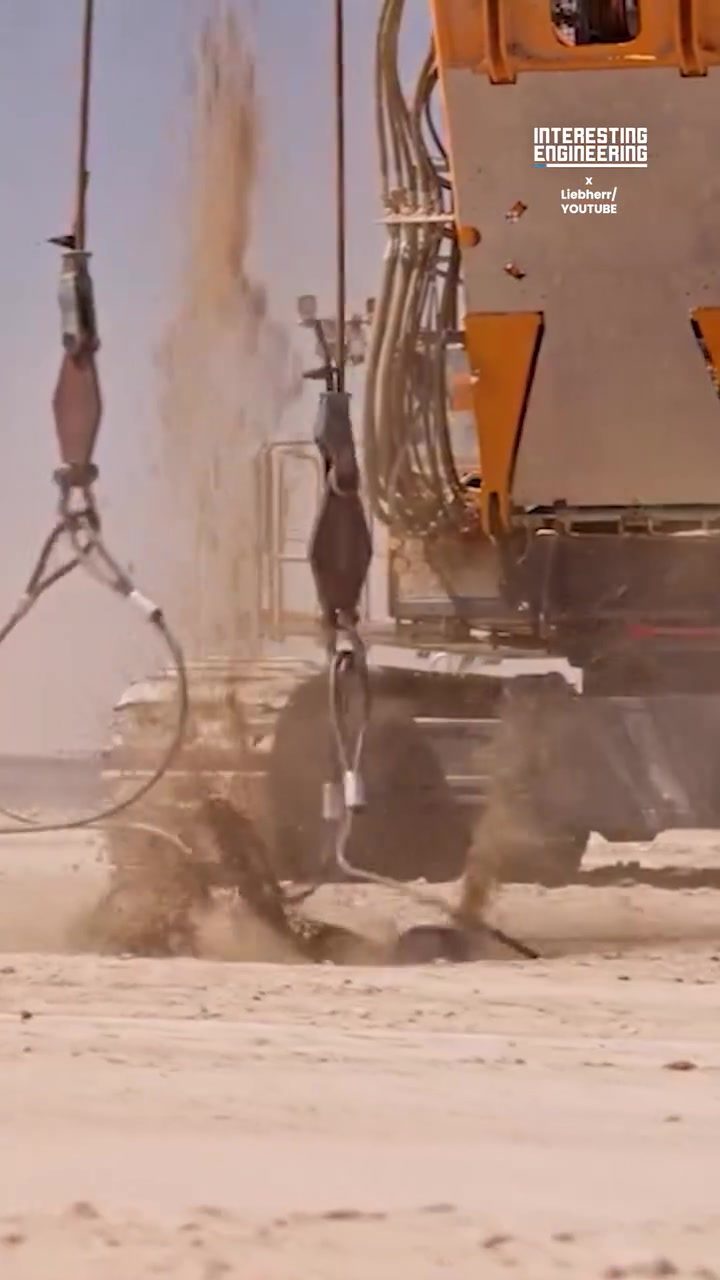
Liebherr Pile Driver Machines: Foundation and Soil Stabilization
When it comes to large-scale infrastructure and foundation projects, the preparation of the soil is a critical step. This is where pile driver machines, such as those manufactured by Liebherr, play a pivotal role. These machines are essential for driving piles into the ground, creating a stable foundation for various construction projects. In this article, we will delve into the working principles and applications of pile driver machines, with a focus on Liebherr's dynamic compaction technology.
Why This Matters
Soil stabilization is a cornerstone of successful infrastructure projects. Whether building roads, bridges, or buildings, a stable foundation ensures the longevity and safety of the structure. Pile driver machines are specifically designed to create this stability by driving piles deep into the ground, thus reinforcing the soil. Liebherr, a renowned name in the construction equipment industry, has developed techniques like dynamic compaction to make this process more efficient and effective.
Understanding Pile Driver Machines
The Basics of Pile Driving
Pile driver machines are designed to drive piles into the ground. These piles can be made of various materials, including concrete, steel, or wood, and their purpose is to transfer the load of the structure to the deeper, more stable layers of the soil. The process involves repeatedly dropping a heavy weight onto the pile, which gradually forces it deeper into the ground.
Liebherr's Dynamic Compaction
Liebherr's dynamic compaction technology takes this concept a step further. Instead of using a traditional drop hammer, Liebherr employs duty cycle crawler cranes to repeatedly drop heavy weights. This method is particularly effective for densifying weak soils, making it ideal for large-scale infrastructure projects, foundation work, and ground improvement initiatives.
The process is straightforward yet powerful. The crawler crane, equipped with a heavy weight, lifts and drops this weight onto the soil repeatedly. Each impact compacts the soil, increasing its density and stability. This technique is not only efficient but also ensures that the soil is capable of supporting the load of the planned structure.
Applications of Pile Driver Machines
Infrastructure Projects
One of the primary applications of pile driver machines is in large-scale infrastructure projects. These projects often require deep foundations to support heavy structures like bridges, tall buildings, and highways. Pile driver machines ensure that the soil beneath these structures is stable enough to bear the load.
Foundation Work
In foundation work, the stability of the soil is paramount. Pile driver machines are used to drive piles deep into the ground, creating a stable base for the foundation. This is particularly important in areas with weak or unstable soil, where traditional foundation techniques might not be sufficient.
Ground Improvement
Ground improvement projects often involve enhancing the soil's properties to make it suitable for construction. Pile driver machines, through dynamic compaction, can densify weak soils, making them more stable and capable of supporting construction loads.
Practical Tips for Effective Pile Driving
Choosing the Right Pile Driver
Selecting the right pile driver machine is crucial for the success of your project. Consider factors such as the type of soil, the depth required for the piles, and the load-bearing capacity of the structure. Liebherr offers a range of pile driver machines designed to handle various soil conditions and project requirements.
Prepping the Site
Proper site preparation is essential before starting the pile driving process. This includes clearing the site of any debris, leveling the ground, and ensuring that the soil is free of obstacles. Proper site preparation can significantly enhance the efficiency and effectiveness of the pile driving process.
Regular Maintenance
Regular maintenance of the pile driver machine ensures that it operates at peak performance. This includes checking the hydraulic systems, lubricating moving parts, and inspecting the machine for any signs of wear and tear. Regular maintenance not only prolongs the life of the machine but also ensures that it performs reliably during the project.
Important Takeaways
- Soil Stabilization: Pile driver machines are essential for stabilizing the soil, making it suitable for construction.
- Efficiency: Liebherr's dynamic compaction technology enhances the efficiency of the pile driving process, making it ideal for large-scale projects.
- Versatility: Pile driver machines are used in various applications, including infrastructure projects, foundation work, and ground improvement.
- Maintenance: Regular maintenance of the pile driver machine is crucial for its efficient operation and longevity.
Conclusion
Pile driver machines, particularly those equipped with Liebherr's dynamic compaction technology, are indispensable in modern construction. They play a vital role in soil stabilization, ensuring that the foundation of any structure is strong and stable. Whether you're working on a large-scale infrastructure project, foundation work, or ground improvement, understanding and utilizing pile driver machines can significantly enhance the success and longevity of your project.
Watch the Reel
Questions readers ask
What are Liebherr pile drivers and how do they work?
Liebherr pile drivers are heavy-duty machines designed for deep foundation construction. They operate by using a crawler crane to repeatedly drop heavy weights onto the ground, a process known as dynamic compaction. This technique densifies weak soils, creating a stable foundation for large-scale construction projects.
What is dynamic compaction and why is it important in soil stabilization?
Dynamic compaction is a method used to increase the density of soil. It involves dropping heavy weights from significant heights to compact the ground. This process is crucial for soil stabilization as it enhances the soil's load-bearing capacity, reducing the risk of settlement and ensuring a sturdy foundation for infrastructure.
What role do crawler cranes play in the operation of Liebherr pile drivers?
Crawler cranes are integral to the operation of Liebherr pile drivers. They provide the necessary lifting power and stability to repeatedly drop heavy weights onto the soil. By doing so, they facilitate the dynamic compaction process, ensuring effective soil densification for construction projects.
Can Liebherr pile drivers be used for various types of construction projects?
Yes, Liebherr pile drivers are versatile and can be used in a wide range of construction projects. They are suitable for building infrastructure such as roads, bridges, and buildings where a stable foundation is essential. Their ability to densify soil makes them ideal for large-scale projects that require deep foundation construction.
What are the benefits of using Liebherr pile drivers for soil stabilization?
Using Liebherr pile drivers for soil stabilization offers several benefits. They enhance the load-bearing capacity of the soil, ensure a stable foundation, and reduce the risk of soil settlement. Additionally, their efficiency in densifying soil helps in maintaining the integrity of the infrastructure over time.
How does the duty cycle of a crawler crane affect the operation of a Liebherr pile driver?
The duty cycle of a crawler crane determines how frequently and efficiently it can operate to drop the heavy weights. An optimized duty cycle ensures that the compaction process is both effective and time-efficient, which is crucial for the overall performance of the Liebherr pile driver in soil stabilization projects.
What types of soil can be stabilized using Liebherr pile drivers?
Liebherr pile drivers are effective in stabilizing a variety of soil types, including weak and loose soils. By repeatedly dropping heavy weights, they densify the soil, improving its strength and stability. This makes them suitable for projects involving sand, silt, clay, and other types of soil that require stabilization for construction.
Recent articles
Fresh deep dives from the latest Reels we unpacked.




Comments
Be the first to comment.