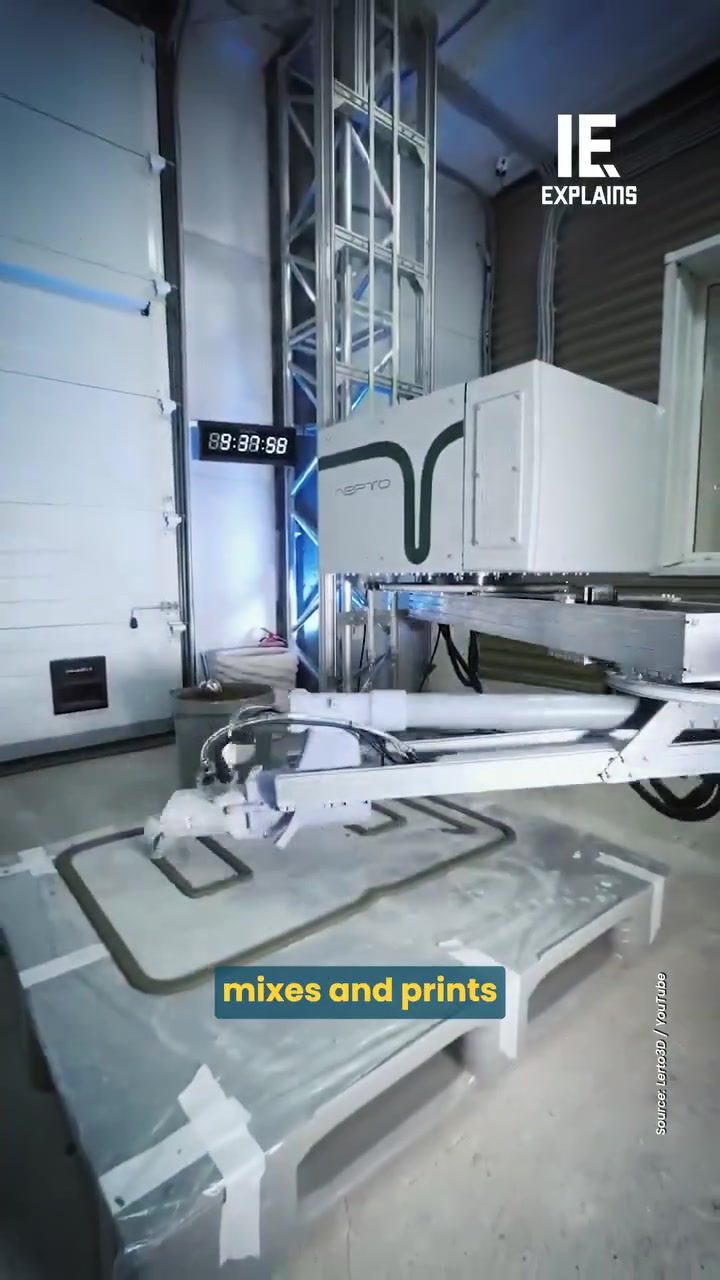
3D Concrete Printing Robots
The future of construction is increasingly automation and digital integration, and one of the most striking examples of this trend is the development of 3D concrete printing. 3D printers like those built by Lerto can turn digital models into physical structures, revolutionizing the construction industry.
What are 3D Concrete Printing Robots?
3D concrete printers are automated machines that dispense concrete layer by layer to create three-dimensional structures. Unlike traditional construction methods, which often rely on manual labor and prefabricated materials, 3D concrete printing allows for precise, customizable, and efficient construction processes. These printers are becoming increasingly sophisticated, capable of producing a wide range of building components and structures.
Why This Matters
With its ability to quickly produce complex shapes and forms, 3D concrete printing represents a significant advancement in construction technology. The integration of these printers into the construction industry allows for more efficient, cost-effective, and environmentally friendly building practices. This technology is particularly relevant in areas where traditional construction methods are labor-intensive or resource-constrained.
Automation and Efficiency
One of the key advantages of 3D concrete printing is its automation. Printers like those developed by Lerto are designed to operate with minimal human intervention. The advanced SCARA robotic arms in these printers can handle the mixing and dispensing of concrete with high precision.
Environmental Benefits
3D concrete printing can significantly reduce waste in the construction process. Traditional construction methods often result in a large amount of material waste and dust, contributing to environmental pollution. 3D concrete printing, on the other hand, uses only the amount of concrete required for the specific structure, minimizing waste and reducing the environmental impact.
SCARA Robotic Arms in 3D Concrete Printers
The SCARA (Selective Compliance Assembly Robot Arm) is a type of robotic arm commonly used in manufacturing and assembly processes. These arms are well-suited for tasks that require high precision and repeatability, making them ideal for 3D concrete printing.
How SCARA Robotic Arms Work
SCARA arms have a parallel-linkage structure that allows for high-speed and accurate positioning. This design enables the arm to move quickly and precisely, which is crucial for creating intricate concrete structures. The SCARA robotic arm in 3D concrete printers is used to dispense concrete, creating various shapes and forms with high accuracy.
Advantages of SCARA Robotic Arms
- Precision: SCARA robotic arms can position the concrete nozzle with high accuracy, ensuring that the printed structure meets the required specifications.
- Speed: The parallel-linkage structure allows for fast movements, making the printing process more efficient.
- Durability: SCARA arms are rugged and can withstand the harsh conditions of a construction site.
Applications of 3D Concrete Printing
3D concrete printers are versatile and can produce a wide range of building components and structures. The possibilities of 3D concrete printing include:
Furniture and Decorative Elements
3D concrete printers can create unique furniture pieces and decorative elements. These items can be custom-designed to fit specific aesthetic or functional requirements. The use of 3D concrete printing for furniture and decorative elements allows for the creation of intricate designs that would be difficult or impossible to achieve with traditional manufacturing methods.
Benches, Sculptures, and Landscape Elements
These printers can also produce benches, sculptures, and other landscape elements. The ability to create custom designs allows for the creation of unique and visually appealing outdoor spaces. Additionally, 3D concrete printing can be used to create durable and long-lasting landscape elements that can withstand outdoor conditions.
Prefabricated Wall Kits and Facade Panels
For larger-scale construction projects, 3D concrete printers can produce prefabricated wall kits and facade panels. These components can be printed indoors and then transported to the construction site for assembly. This approach allows for the creation of high-quality, customizable building components that can be quickly and easily installed.
Prefabricated Wall Kits for Houses
3D concrete printers can produce prefabricated wall kits for houses, allowing for the rapid construction of buildings. These kits can be printed indoors, eliminating the need for on-site concrete pouring and reducing the potential for weather-related delays.
How 3D Concrete Printers Operate
The operation of 3D concrete printers involves several key components and processes:
Concrete Mixing and Dispensing
Concrete 3D printers use a flow-through concrete mixer integrated directly into the extruder. Dry mix is fed into the system and mixed with water to create a concrete slurry. The mixed concrete is then dispensed through the nozzle, creating the desired shape layer by layer.
Digital Models and CAM Software
The process begins with a digital model of the desired structure. This model is then converted into a series of instructions using CAM (Computer-Aided Manufacturing) software. The CAM software generates the toolpath for the robotic arm, guiding it through the movements required to create the 3D structure.
Fully Automated Dark Factories
The concept of fully automated dark factories represents a significant shift in the way concrete structures are produced. Dark factories are manufacturing facilities that operate with minimal human intervention, relying on automated machinery and digital control systems to produce high-quality products efficiently.
Benefits of Automated Dark Factories
Fully automated dark factories offer several advantages over traditional manufacturing methods. These include:
- Consistency: Automated systems ensure that each printed structure is produced to the same high standard, reducing the risk of defects and inconsistencies.
- Speed: With minimal human intervention, automated factories can operate 24/7, significantly increasing production speed.
- Cost Efficiency: Automation reduces the need for labor, lowering operational costs and making production more cost-effective.
The Future of Dark Factories
The use of automated dark factories for 3D concrete printing is still in its early stages, but it holds great promise for the future. As technology continues to advance, these factories are expected to become more efficient and capable, allowing for the production of increasingly complex and high-quality concrete structures.
Practical Tips for 3D Concrete Printing
If you're considering using 3D concrete printing for a construction project, here are some practical tips to help you get started:
Choose the Right 3D Printer
Select a 3D printer that is well-suited to your specific needs. Consider factors such as the size and complexity of the structures you need to print, as well as the required production volume and speed.
Invest in High-Quality Materials
The quality of the printed concrete structures depends on the quality of the materials used. Invest in high-quality concrete mixes and additives to ensure the best possible results.
Maintain and Calibrate Your Printer Regularly
Regular maintenance and calibration are essential for ensuring the accuracy and reliability of your 3D printer. Follow the manufacturer's guidelines for maintenance and calibration to keep your printer in optimal condition.
Utilize CAM Software for Precision Design
Use CAM software to create precise and detailed designs for your concrete structures. This software will guide the 3D printer through the printing process, ensuring that the final product meets your specifications.
Important Takeaways
The future of construction is increasingly driven by automation and digital integration, and 3D concrete printing is at the forefront of this trend. These advanced printers, equipped with SCARA robotic arms, offer a range of benefits, including precision, speed, and cost efficiency. The development of fully automated dark factories represents a significant step forward in the production of high-quality, customizable concrete structures.
Conclusion
3D concrete printing is transforming the construction industry by offering a more efficient, precise, and environmentally friendly alternative to traditional methods. With the continued advancement of technology, 3D concrete printers are poised to play an increasingly important role in shaping the future of construction.
Watch the Reel
Questions readers ask
What makes Lerto's 3D concrete printers unique in the construction industry?
Lerto's 3D concrete printers stand out due to their advanced automation and precision. Unlike traditional methods, they can create customizable structures directly from digital models, layer by layer, reducing the need for manual labor and prefabricated materials.
How does 3D concrete printing technology benefit the construction process?
3D concrete printing enhances construction through increased efficiency, cost savings, and reduced environmental impact. By automating the construction process, it minimizes waste and lowers labor costs, making projects more sustainable and affordable.
What types of structures can be created using 3D concrete printing technology?
3D concrete printing technology can produce a wide range of structures, from residential buildings to commercial facilities and even infrastructure projects. The customizability allows for unique designs and efficient use of materials.
What role does digital integration play in 3D concrete printing?
Digital integration is crucial in 3D concrete printing as it allows for precise control over the construction process. Digital models are converted into physical structures, ensuring accuracy and allowing for real-time adjustments and modifications.
How does Lerto ensure the precision and quality of their 3D printed structures?
Lerto achieves precision and quality through advanced automation and sophisticated technology. Their 3D printers are designed to dispense concrete with high accuracy, ensuring that each layer is perfectly aligned and smooth, resulting in strong and durable structures.
What are the environmental benefits of using 3D concrete printing in construction?
3D concrete printing reduces environmental impact by minimizing waste, using materials more efficiently, and lowering labor costs. This technology can lead to a reduction in carbon emissions and energy consumption, making construction projects more eco-friendly.
What kind of training is required to operate a Lerto 3D concrete printer?
The complexity of the printer factory since 2020 means that Lerto has designed their 3D concrete printers for use by operators with experience in construction or technical fields. Comprehensive training programs are provided to help operators understand the technology, ensuring safe and effective operation.
Recent articles
Fresh deep dives from the latest Reels we unpacked.




Comments
Be the first to comment.