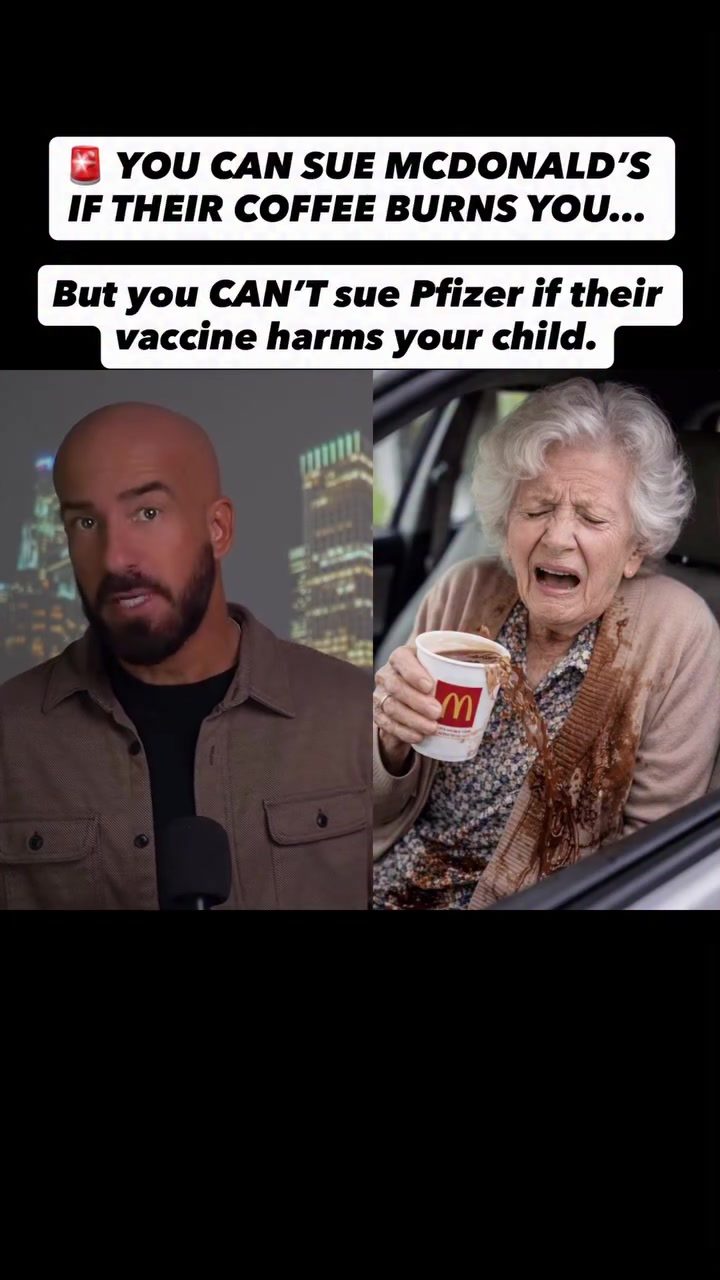
The Legal Disparity Between Suing McDonald's for Coffee Burns and Suing Pfizer for Vaccine Injuries
The stark difference in legal recourse between suing McDonald's for burns from their coffee and suing Pfizer for vaccine injuries raises significant questions about legal immunity and corporate liability. This disparity is not just a legal curiosity; it has real implications for consumers and public health.
Why This Matters
Understanding the legal landscape surrounding product liability and corporate immunity is crucial. It affects how consumers are protected and how companies are held accountable for their products. The difference in legal treatment between a fast-food giant and a pharmaceutical company highlights broader issues in corporate governance and public health policy.
The McDonald's Coffee Case
McDonald's has faced numerous lawsuits related to its coffee. The most famous case, Liebeck v. McDonald's Restaurants, involved a woman who suffered third-degree burns from spilling hot coffee on herself. The case highlighted the importance of product safety and consumer warnings. The public's awareness of this case has made people more conscious of the legal recourse available to them when consuming products that can cause harm.
The Pfizer Vaccine Issue
On the other hand, suing pharmaceutical companies like Pfizer for vaccine injuries is far more complex. Pharmaceutical companies often have significant legal protections, including indemnification clauses and diplomatic immunity in some cases. This legal disparity raises questions about why certain industries are granted more protections than others.
Main Discussion
Diplomatic Immunity and Corporate Liability
Pharmaceutical companies like Pfizer are often based in countries with strong diplomatic protections. For example, Switzerland, where Pfizer is headquartered, grants diplomatic immunity to certain companies. This immunity can shield these companies from legal action in other countries, making it difficult for individuals to seek recourse for vaccine injuries. Why would a corporation need diplomatic immunity, and why would it be granted? This is a critical question that deserves deeper examination.
The Role of Diplomatic Immunity
Diplomatic immunity is typically granted to official representatives of foreign governments, not to corporations. However, the precedent set by organizations like the World Health Organization (WHO) and the World Economic Forum (WEF), both based in Switzerland, suggests a broader application of diplomatic protections. This raises questions about the extent to which corporations can leverage diplomatic immunity to avoid legal accountability.
The Pan-National Issue
The issue of corporate immunity and liability is not limited to the United States and Canada. It is a pan-national problem affecting Western nations. Countries like Australia, the UK, and many others have faced similar challenges. This pan-national issue underscores the need for international legal frameworks that ensure fair and consistent treatment of consumers and corporations alike.
Practical Tips
For Consumers
- Stay Informed: Stay informed about the legal landscape surrounding the products and services you consume. Understanding your rights and the protections available to you is crucial.
- Document Everything: If you experience an injury or harm from a product, document everything. Keep records of medical treatment, product information, and any communications with the company.
- Seek Legal Advice: Consult with a legal professional if you believe you have a case. They can help you navigate the complexities of product liability and corporate immunity.
For Policymakers
- Review Immunity Laws: Policymakers should review and potentially revise laws that grant corporations diplomatic immunity. Ensuring fair and consistent legal treatment for all consumers is essential.
- Strengthen Consumer Protections: Strengthen consumer protection laws to ensure that individuals have legal recourse when harmed by products, including vaccines.
- International Collaboration: Work towards international collaboration to create a consistent legal framework for corporate liability and consumer protection.
Important Takeaways
- Legal Disparity: There is a significant legal disparity between suing a fast-food chain like McDonald's and a pharmaceutical company like Pfizer. This disparity affects consumer rights and corporate accountability.
- Diplomatic Immunity: Pharmaceutical companies often have significant legal protections, including diplomatic immunity, which can shield them from legal action.
- Pan-National Issue: The issue of corporate immunity and liability is not limited to a single country. It is a pan-national problem affecting Western nations.
- Consumer Awareness: Consumers need to stay informed about their rights and the protections available to them. Documenting incidents and seeking legal advice are crucial steps.
The Need for Change
The current legal landscape surrounding corporate liability and immunity raises serious concerns about consumer protection and corporate accountability. Policymakers, legal professionals, and consumers must work together to address these issues and ensure fair and consistent treatment for all.
The Future of Legal Recourse
As the legal landscape continues to evolve, it is essential to stay informed about changes in laws and policies that affect consumer rights and corporate accountability. By working towards a more transparent and fair legal system, we can ensure that consumers are protected and that corporations are held accountable for their products.
Conclusion
The legal disparity between suing McDonald's for coffee burns and suing Pfizer for vaccine injuries highlights a broader issue in corporate governance and public health policy. Understanding the complexities of corporate liability and immunity is crucial for consumers, policymakers, and legal professionals. By staying informed, documenting incidents, and seeking legal advice, consumers can protect their rights and hold corporations accountable. Policymakers must work towards creating a fair and consistent legal framework that ensures consumer protection and corporate accountability.
Watch the Reel
Questions readers ask
Why can I sue McDonald's for burns from their coffee but not Pfizer for vaccine injuries?
The primary reason lies in the difference in legal frameworks governing these products. McDonald's coffee is a consumer good, and companies can be held liable for injuries caused by their products under product liability laws. Vaccines, on the other hand, are regulated differently due to their public health implications, and pharmaceutical companies often have legal immunity for certain vaccine-related injuries.
What is the significance of the McDonald's hot coffee lawsuit?
The McDonald's hot coffee lawsuit, also known as the Liebeck v. McDonald's Restaurants case, is significant because it brought attention to product liability and the duty of companies to warn consumers about potential hazards. The case set a precedent for holding companies accountable for injuries resulting from their products.
Why is suing Pfizer for vaccine injuries more complicated?
Suing Pfizer for vaccine injuries is more complicated due to the National Vaccine Injury Compensation Program (VICP) in the United States. The VICP provides a no-fault system for compensating vaccine injuries, and suing outside of this system is restricted, which can limit the legal avenues available to injured parties. This is one of the main reasons why suing a pharmaceutical company for a vaccine injury is more challenging.
What role does legal immunity play in the context of pharmaceutical companies?
Legal immunity plays a significant role in protecting pharmaceutical companies from civil liability for certain vaccine-related injuries. This immunity is often granted to encourage the development and distribution of vaccines, which are crucial for public health. However, it also means that individuals seeking compensation for vaccine injuries must navigate a more complex legal landscape.
How do product liability laws apply to fast-food corporations like McDonald's?
Product liability laws apply to fast-food corporations like McDonald's by holding them accountable for injuries caused by their products. This means that consumers can sue for damages if they are injured by a company's product, such as burns from hot coffee. These laws ensure that companies are responsible for the safety of their products and that consumers are adequately protected.
What are the implications of the uneven legal landscape between fast-food corporations and pharmaceutical companies?
The uneven legal landscape has several implications. It affects consumer protection by determining how easily individuals can seek compensation for injuries. It also influences corporate governance by setting different standards for accountability between industries. This disparity highlights broader issues in public health policy and the need for consistent consumer protection laws.
Recent articles
Fresh deep dives from the latest Reels we unpacked.




Comments
Be the first to comment.