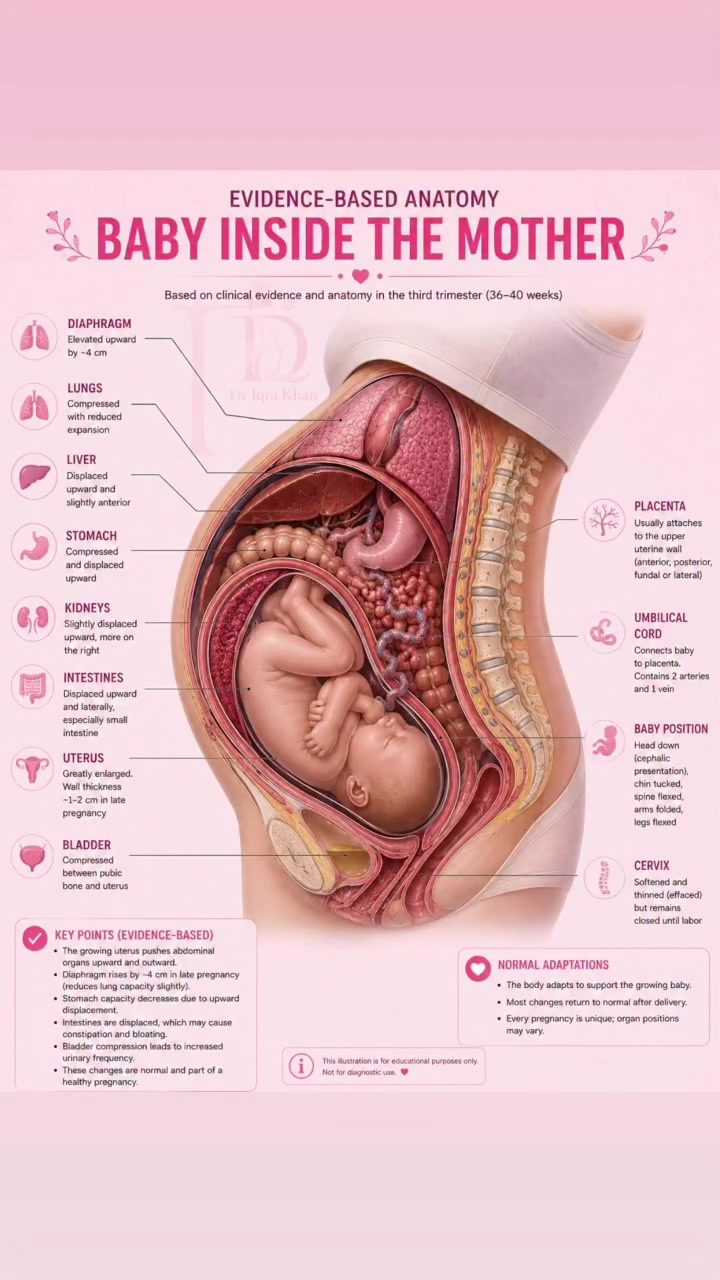
Pregnancy Anatomy: Understanding the Body's Adaptations in the Third Trimester
Pregnancy is a remarkable journey that showcases the human body's incredible ability to adapt and support new life. As the uterus expands to accommodate a growing baby, nearby organs naturally shift position to make room. These changes are normal and are well-documented in medical anatomy and obstetric research. Let’s dive into the specifics of these adaptations, particularly focusing on the third trimester (36-40 weeks).
Context: The Body's Adaptations
Pregnancy brings about significant anatomical changes, especially in the third trimester. These changes are essential for creating a safe and supportive environment for the baby. Understanding these adaptations can help expecting mothers anticipate and manage discomforts and symptoms that arise during this period.
The Anatomical Changes
Diaphragm and Lungs
As the uterus enlarges, the diaphragm—the muscle responsible for breathing—is elevated upward by about 4 centimeters. This elevation reduces the space available for lung expansion, which can make deep breaths feel more labored. Consequently, many women experience mild shortness of breath, especially during the third trimester. This is a normal adaptation, and the diaphragm typically returns to its normal position after delivery.
Stomach and Intestines
The growing uterus pushes the stomach and intestines upward, which can lead to several discomforts. These include heartburn, bloating, and constipation. The upward displacement means that the stomach has less room to function comfortably, and the intestines may experience reduced motility, contributing to digestive issues.
Kidneys and Bladder
The kidneys are slightly displaced upward and to the right, which can affect how they function. This displacement usually has minimal impact on kidney function. However, the bladder is significantly compressed between the public bone and the uterus. This compression increases the frequency of urination and can lead to urgency and discomfort. These changes are temporary and usually resolve post-delivery.
Uterus and Placenta
The uterus, which starts as a small pelvic organ, grows significantly to become an abdominal organ. This growth creates a safe and nurturing environment for the baby. The placenta, a temporary organ, and the umbilical cord play crucial roles in delivering oxygen and nutrients to the baby while removing waste products.
Baby Position
Most babies naturally move into a head-down (cephalic) position between 32 and 36 weeks. This positioning prepares the baby for birth and ensures that the head is aligned correctly for delivery. This is an important adaptation that helps facilitate a smoother birthing process.
Practical Tips for Managing Symptoms
While these adaptations are normal, they can also be challenging. Here are some practical tips for managing common symptoms:
Managing Shortness of Breath
- Practice Deep Breathing Exercises: Gentle breathing exercises can help you manage shortness of breath. Focus on taking slow, deep breaths to maximize the use of available lung space.
- Maintain Good Posture: Keep your back straight to ensure optimal lung expansion. Avoid slouching, which can further reduce lung capacity.
- Stay Active: Regular, gentle exercise can improve lung function and overall fitness.
Dealing with Digestive Issues
- Eat Smaller, Frequent Meals: Instead of three large meals, try eating smaller, more frequent meals throughout the day. This can help reduce heartburn and bloating.
- Avoid Trigger Foods: Certain foods, like spicy or acidic foods, can exacerbate digestive issues. Pay attention to your body’s reactions and avoid known triggers.
- Stay Hydrated: Drink plenty of water to help with digestion and prevent constipation.
Managing Frequent Urination
- Empty Your Bladder Regularly: Don’t hold in urine for too long. Frequent, small voids can help reduce discomfort.
- Lean Forward: When urinating, leaning forward can help completely empty the bladder.
- Kegel Exercises: These exercises can strengthen the pelvic floor muscles, which can help manage urinary issues during and after pregnancy.
Important Takeaways
- Normal Adaptations: The anatomical changes during pregnancy, particularly in the third trimester, are normal adaptations that support the growing baby.
- Evidence-Based Understanding: These changes are supported by clinical evidence and obstetric research, making them well-documented and understood.
- Temporary Nature: Most of these changes are temporary and return to normal after delivery.
- Individual Variations: Every pregnancy is unique, and the positions of organs may vary slightly from person to person.
Conclusion
Understanding the anatomical changes that occur during the third trimester can provide valuable insights for expecting mothers. These adaptations, while challenging at times, are designed to support the healthy growth and development of the baby. By recognizing and preparing for these changes, mothers can better navigate the final stages of pregnancy and anticipate the symptoms that may arise. Emphasizing a balanced diet, regular activity, and gentle self-care can significantly enhance the overall experience of this transformative journey.
Watch the Reel
Questions readers ask
Why does the uterus expand during the third trimester of pregnancy?
The uterus expands during the third trimester to accommodate the rapid growth of the baby. This expansion is necessary to provide enough space for the developing fetus, and it also prepares the body for childbirth. The uterus can grow from about 12 cm to 40 cm and can increase 100 times in weight by the end of the third trimester. This significant change is crucial for supporting the baby's growth and development.
What causes shortness of breath in the third trimester?
Shortness of breath in the third trimester is primarily caused by the growing uterus, which pushes up on the diaphragm, reducing its range of motion. As the baby grows, the uterus presses upwards, leading to a decrease in lung capacity and making it harder to take deep breaths. This symptom is usually more pronounced in the third trimester as the baby grows rapidly.
How do the stomach and intestines adapt during the third trimester?
As the uterus expands, it pushes the stomach and intestines upwards and to the sides, altering their usual positions. This displacement can lead to digestive issues such as heartburn, indigestion, and constipation. These symptoms are a result of the increased pressure on the digestive system and the hormonal changes that slow down digestion.
What is the position of the uterus in the third trimester?
In the third trimester, the uterus is positioned much higher in the abdomen, often reaching up to the ribcage. This upward shift is necessary to make room for the growing baby and can cause the uterus to press against other organs, leading to various symptoms such as shortness of breath and digestive discomfort.
What are some common symptoms of the third trimester related to organ changes?
Common symptoms in the third trimester related to organ changes include shortness of breath, heartburn, indigestion, constipation, and frequent urination. These symptoms occur due to the uterus pushing on nearby organs, altering their positions and functions, and the hormonal changes that prepare the body for childbirth. These symptoms are typically temporary and should resolve post-delivery.
Recent articles
Fresh deep dives from the latest Reels we unpacked.




Comments
Be the first to comment.