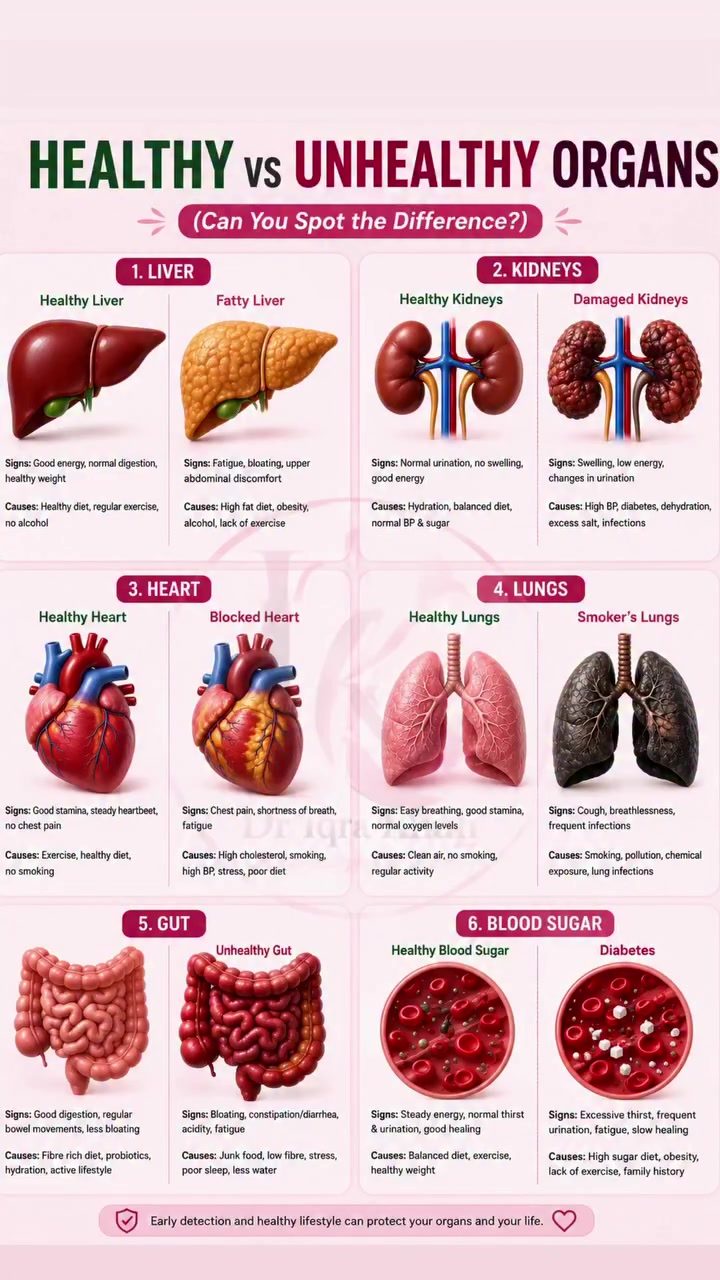
Healthy vs. Unhealthy Organs: A Comprehensive Look at Signs and Causes
Your daily habits and lifestyle choices significantly impact the health of your organs. Understanding the differences between healthy and unhealthy organs can help you make informed decisions about your diet, exercise, and overall lifestyle.
Context / Why This Matters
Many organ diseases develop silently and often go unnoticed until they reach an advanced stage. Regular health checkups can aid in early detection, but being aware of the signs and causes of organ health issues is the first step toward prevention.
Main Discussion
Liver Health
Healthy Liver A healthy liver is characterized by good energy levels, normal digestion, and a healthy weight. This state is achieved through a healthy diet, regular exercise, and avoiding alcohol.
Key indicators of a healthy liver include:
- Good energy levels
- Normal digestion
- Healthy weight
Fatty Liver A fatty liver, on the other hand, is marked by fatigue, upper abdominal bloating, and discomfort. This condition is often caused by a high-fat diet, obesity, alcohol consumption, and a lack of physical activity.
Key indicators of a fatty liver include:
- Fatigue
- Upper abdominal bloating
- Abdominal discomfort
Kidney Health
Healthy Kidneys Healthy kidneys function optimally with normal urination, no swelling, and good energy levels. This is maintained through adequate hydration, a balanced diet, and keeping blood pressure and sugar levels in check.
Key indicators of healthy kidneys include:
- Normal urination
- No swelling
- Good energy levels
Damaged Kidneys Damaged kidneys show signs such as swelling, low energy, and changes in urination. High blood pressure, diabetes, dehydration, excess salt intake, and infections are common causes.
Key indicators of damaged kidneys include:
- Swelling
- Low energy
- Changes in urination
Heart Health
Healthy Heart A healthy heart is marked by good stamina, a steady heartbeat, and the absence of chest pain. This is supported by regular exercise, a healthy diet, and avoiding smoking.
Key indicators of a healthy heart include:
- Good stamina
- Steady heartbeat
- No chest pain
Blocked Heart A blocked heart presents with chest pain, shortness of breath, and fatigue. High cholesterol, smoking, high blood pressure, stress, and a poor diet are the primary causes.
Key indicators of a blocked heart include:
- Chest pain
- Shortness of breath
- Fatigue
Lung Health
Healthy Lungs Healthy lungs allow for easy breathing, good stamina, and normal oxygen levels. This is promoted by clean air, avoiding smoking, and regular physical activity.
Key indicators of healthy lungs include:
- Easy breathing
- Good stamina
- Normal oxygen levels
Smoker's Lungs Smoker's lungs are affected by frequent coughing, breathlessness, and infections. Smoking, pollution, chemical exposure, and lung infections are the main culprits.
Key indicators of smoker's lungs include:
- Cough
- Breathlessness
- Frequent infections
Gut Health
Healthy Gut A healthy gut is supported by a fiber-rich diet, probiotics, hydration, and an active lifestyle. This results in good digestion, regular bowel movements, and less bloating.
Key indicators of a healthy gut include:
- Good digestion
- Regular bowel movements
- Less bloating
Unhealthy Gut An unhealthy gut is characterized by bloating, constipation or diarrhea, acidity, and fatigue. This condition is often a result of an unhealthy diet, stress, and lack of physical activity.
Key indicators of an unhealthy gut include:
- Bloating
- Constipation or diarrhea
- Acidity
- Fatigue
Blood Sugar Health
Healthy Blood Sugar Healthy blood sugar levels are maintained through a balanced diet, exercise, and a healthy weight. This results in steady energy levels, normal thirst and urination, and good healing.
Key indicators of healthy blood sugar include:
- Steady energy
- Normal thirst and urination
- Good healing
Diabetes Diabetes is characterized by excessive thirst, frequent urination, fatigue, and slow healing. A high-sugar diet, obesity, lack of exercise, and family history are common risk factors.
Key indicators of diabetes include:
- Excessive thirst
- Frequent urination
- Fatigue
- Slow healing
Practical Tips
Maintaining organ health involves a combination of healthy habits and regular checkups. Here are some practical tips to keep your organs in top condition:
- Balanced Diet: Include plenty of fruits, vegetables, and whole grains in your diet. This provides essential nutrients and helps maintain healthy weight.
- Regular Exercise: Aim for at least 30 minutes of physical activity most days of the week. This helps keep your heart, lungs, and other organs functioning optimally.
- Hydration: Drink enough water to stay hydrated. This is crucial for kidney health and overall bodily functions.
- Avoid Smoking and Limit Alcohol: Both smoking and excessive alcohol consumption can severely impact your organs, particularly the lungs, liver, and heart.
- Regular Checkups: Schedule regular health checkups to detect any potential issues early. This is vital as many organ diseases develop silently.
Important Takeaways
Understanding the signs and causes of healthy and unhealthy organs is crucial for maintaining overall health. Regular exercise, a balanced diet, and avoiding harmful habits like smoking and excessive alcohol consumption can significantly improve organ health. Regular health checkups are essential for early detection and management of organ-related issues.
Conclusion
Your daily habits play a pivotal role in determining the health of your organs. By adopting a healthy lifestyle and being aware of the signs and causes of organ health issues, you can take proactive steps to maintain your well-being. Regular checkups and a balanced approach to diet and exercise are key to keeping your organs in optimal condition.
Watch the Reel
Questions readers ask
What are some signs of a healthy liver?
A healthy liver typically supports good energy levels, normal digestion, and helps maintain a healthy weight. Additionally, it plays a crucial role in detoxifying the body and producing proteins essential for blood clotting and other functions.
How does a high sugar intake affect organ health?
Excessive sugar intake can lead to various health issues, including increased risk of diabetes, which can impair the function of several organs, such as the kidneys, eyes, and heart. It can also lead to non-alcoholic fatty liver disease, impacting liver health.
What are the signs of unhealthy lungs?
Unhealthy lungs may exhibit symptoms such as persistent coughing, wheezing, shortness of breath, or chest tightness. Lifestyle habits like smoking can significantly contribute to these issues by damaging the lung tissue and reducing their capacity.
How does smoking affect the health of organs?
Smoking has detrimental effects on multiple organs. It can damage the heart by increasing the risk of heart disease and stroke, harm the lungs by causing chronic obstructive pulmonary disease (COPD) and lung cancer. Smoking can also impair liver function, and is linked to numerous forms of cancer.
What are some indicators of good kidney health?
Good kidney health is indicated by the regular production of urine, maintaining normal blood pressure, and proper regulation of electrolytes. A healthy diet, regular exercise, and staying hydrated are key to supporting kidney function.
How can lifestyle choices improve organ health?
Healthy lifestyle choices such as maintaining a balanced diet, engaging in regular physical activity, and avoiding harmful substances like alcohol and tobacco can greatly improve organ health. These habits support normal organ function and help prevent diseases.
Recent articles
Fresh deep dives from the latest Reels we unpacked.




Comments
Be the first to comment.