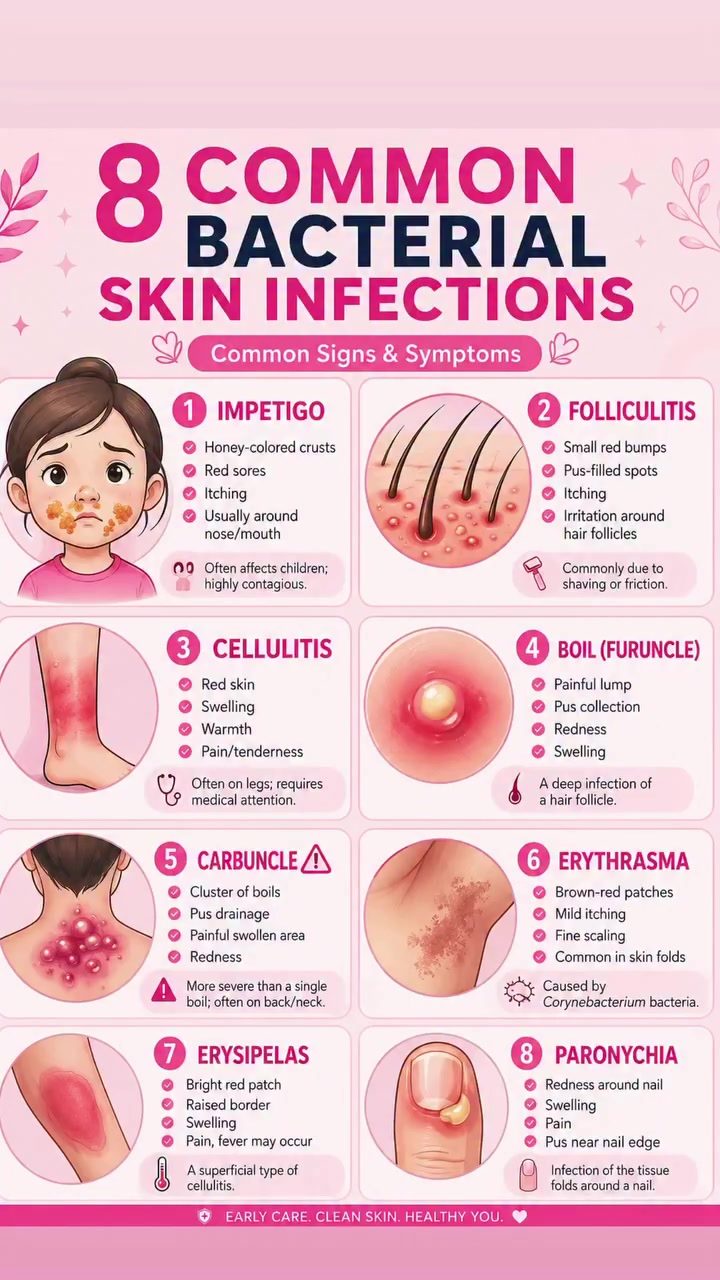
Bacterial skin infections are a common health issue that can range from mild to severe. Recognizing the signs and symptoms of these infections is crucial for early diagnosis and proper treatment. Here, we'll delve into eight common bacterial skin infections, their symptoms, and general advice on how to maintain healthy skin.
Context / Why This Matters
Bacterial skin infections can affect anyone, regardless of age or overall health. These infections often present with symptoms such as redness, swelling, pain, pus, itching, or warmth. Identifying these signs early can help prevent complications and ensure timely medical intervention. Good hygiene practices are essential in maintaining skin health and preventing the spread of infections.
8 Common Bacterial Skin Infections
Impetigo
Impetigo is one of the most commonly encountered bacterial skin infections, particularly among children. It is characterized by clusters of blisters that burst, leaving behind honey-colored crusts. These sores are often found around the nose and mouth and are highly contagious. Early care typically involves topical antibiotics to prevent the infection from spreading.
Folliculitis
Folliculitis presents as small red bumps or pus-filled spots around hair follicles. This infection is often caused by irritation or blockage of the hair follicles, leading to itching and discomfort. Treatment usually involves keeping the affected area clean and applying topical antibiotics. In more severe cases, oral antibiotics may be prescribed.
Cellulitis
Cellulitis is a deeper skin infection that affects the dermis and subcutaneous tissues. It is marked by red skin, swelling, warmth, and tenderness. This condition can spread rapidly and may cause fever and chills. Prompt medical attention is necessary, often involving oral antibiotics. If the infection is severe, intravenous antibiotics may be required.
Boil (Furuncle)
A boil, also known as a furuncle, is a painful lump that develops when bacteria infect and inflame a hair follicle. It typically starts as a red, tender lump and progresses to a pus-filled bump. Boils can occur anywhere on the body but are most common on the face, neck, armpits, and buttocks. Treatment involves warm compresses to promote drainage and topical or oral antibiotics to clear the infection.
Carbuncle
A carbuncle is a larger, more severe form of a boil. It is a cluster of boils that merge under the skin and form a painful, swollen area with pus drainage. Carbuncles are often found on the back of the neck or thighs and can cause significant discomfort. Treatment usually involves surgical drainage and antibiotics to combat the infection.
Erythrasma
Erythrasma presents as brown-red patches with fine scaling and mild itching, commonly found in skin folds such as the armpits, groin, and under the breasts. This condition is caused by a bacterium called Corynebacterium minutissimum and can be treated with topical or oral antibiotics.
Erysipelas
Erysipelas is a superficial form of cellulitis that typically affects the face and legs. It is characterized by redness and swelling around the nail, often with a raised, well-defined border. This condition can cause fever and chills and requires prompt medical treatment, usually involving antibiotics.
Paronychia
Paronychia is an infection of the tissue folds around a nail, often caused by bacteria or fungi. It can affect both fingernails and toenails, leading to swelling, redness, and pain. Treatment may involve soaking the affected area in warm water, keeping the nails short and clean, and applying topical antibiotics. In severe cases, oral antibiotics or surgical drainage may be required.
Practical Tips for Managing Bacterial Skin Infections
Maintain Good Hygiene
Good hygiene practices are crucial in preventing and managing bacterial skin infections. Regular hand washing, keeping your skin clean, and avoiding sharing personal items like towels and razors can help reduce the risk of infection.
Early Diagnosis and Treatment
Early diagnosis and treatment of bacterial skin infections can prevent complications and ensure timely recovery. If you suspect a skin infection, seek medical advice promptly. Early intervention can help clear the infection more effectively and reduce the risk of recurrence.
Keep Skin Healthy
Healthy skin acts as a barrier against infections. Maintaining a balanced diet, staying hydrated, and avoiding harsh skin care products can help keep your skin healthy. Regularly moisturizing and protecting your skin from excessive sun exposure can also enhance its natural defenses.
Important Takeaways
Bacterial skin infections are prevalent and can range from mild to severe. Recognizing the signs and symptoms early is key to effective treatment and prevention of complications. Common bacterial skin infections, such as impetigo, folliculitis, and cellulitis, each have distinct symptoms and treatment options. Maintaining good hygiene, seeking early medical attention, and keeping your skin healthy are essential for managing and preventing these infections.
Conclusion
Understanding the signs, symptoms, and treatments for common bacterial skin infections can empower individuals to take proactive steps in maintaining skin health. Whether it's keeping your skin clean, recognizing the early signs of infection, or seeking prompt medical attention, these practices can significantly improve outcomes. By staying informed and vigilant, you can safeguard your skin and overall well-being.
Watch the Reel
Questions readers ask
What are the early signs of a bacterial skin infection?
Early signs of a bacterial skin infection include redness, swelling, and pain in the affected area. You might also notice warmth, itching, or the presence of pus. If you observe these symptoms, it's important to seek medical attention promptly.
How can I tell if I have impetigo or cellulitis?
Impetigo typically presents as red sores that burst and develop honey-colored crusts, often around the nose and mouth. Cellulitis, on the other hand, appears as a red, swollen, and tender area of skin that is usually warm to the touch and can spread rapidly.
What should I do if I suspect a bacterial skin infection?
If you suspect a bacterial skin infection, avoid scratching or picking at the affected area to prevent spreading the infection. Clean the area gently with soap and warm water, then cover it with a clean bandage. Schedule an appointment with a healthcare provider for proper diagnosis and treatment.
Are bacterial skin infections contagious?
Yes, many bacterial skin infections are contagious and can spread through direct contact with the infected area or by sharing personal items like towels or clothing. Maintaining good hygiene and avoiding close contact with others until the infection clears can help prevent transmission.
What are some general tips for maintaining healthy skin and preventing infections?
Regular hand washing, keeping wounds clean and covered, and avoiding sharing personal items can help prevent bacterial skin infections. Additionally, maintaining a strong immune system through a healthy diet and regular exercise can bolster your skin's natural defenses.
Can bacterial skin infections be treated at home?
Mild cases of bacterial skin infections might be treated at home with proper wound care and over-the-counter topical antibiotics. However, it's crucial to consult a healthcare provider for any infection that worsens or does not improve with home care, as oral antibiotics or other medical interventions may be necessary.
How can I recognize the signs of a severe skin infection?
Signs of a severe skin infection include fever, chills, and the infection spreading rapidly or becoming increasingly painful. If you experience these symptoms, seek immediate medical attention, as severe infections can lead to serious complications if left untreated.
Recent articles
Fresh deep dives from the latest Reels we unpacked.




Comments
Be the first to comment.