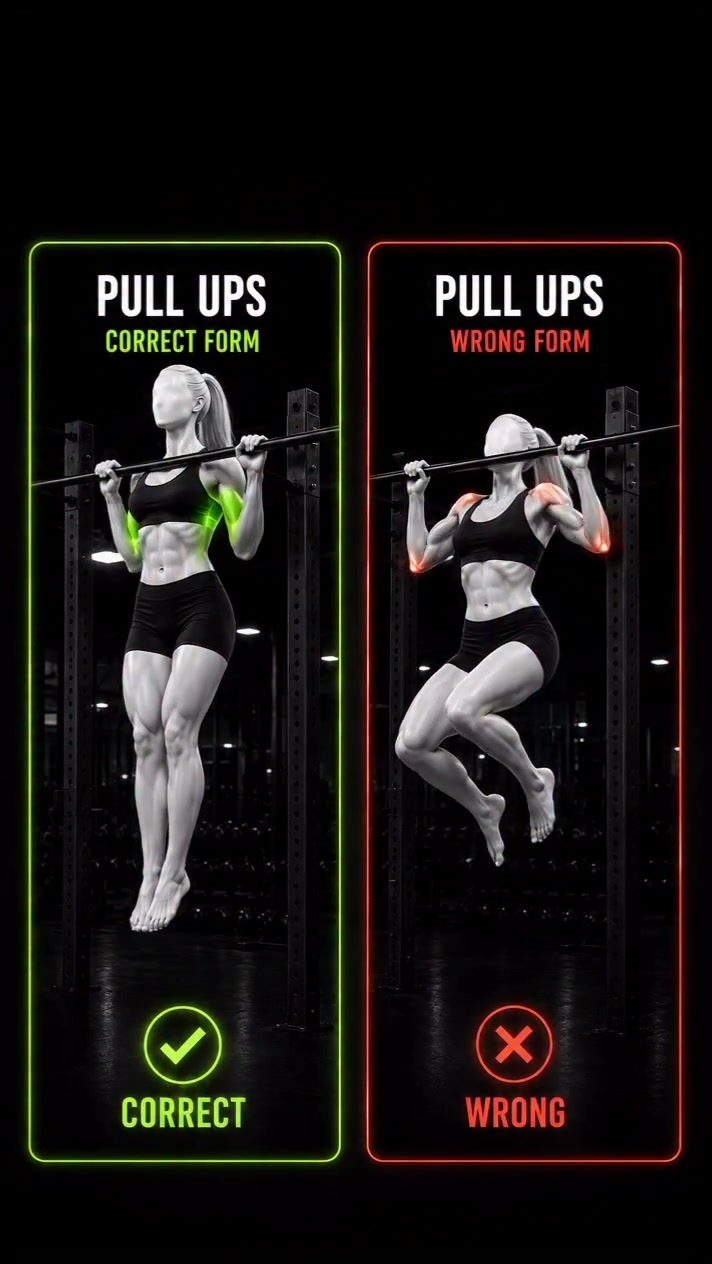
Pull-ups: Mastering the Form for Maximum Gain
Pull-ups are a staple exercise for upper body strength. They engage multiple muscle groups and are an essential movement in any fitness routine. However, the benefits of pull-ups are heavily dependent on correct execution. Proper form ensures that you are effectively targeting the right muscles and minimizing the risk of injury.
Why Proper Pull-up Form Matters
A lot of people fall into common traps that turn pull-ups into ineffective or even harmful movements. These traps include relying on momentum, performing half reps, shoulder shrugging, arm-dominant pulling, and doing ego reps with no control. These mistakes can lead to various issues, such as a lack of back development, elbow pain, shoulder irritation, and the persistent struggle to improve pull-up performance.
The primary goal of a pull-up is not just to get your chin over the bar; it's to control your body through the entire movement. Correct pull-up form involves keeping your shoulders engaged, maintaining a proud chest, and controlling the tempo of the movement. Minimal swinging, elbows driving down, and lats doing the work are key indicators of proper form. Additionally, achieving a full stretch at the bottom and a clean rep at the top completes the effective pull-up.
Correct Pull-up Form: Step-by-Step
Proper pull-up form can be broken down into several key components. Each component plays a crucial role in ensuring that you are getting the most out of your pull-ups and avoiding common mistakes.
Engaging the Right Muscles
One of the most important aspects of a correct pull-up is engaging the right muscles. This means focusing on your back muscles, particularly the lats, rather than relying on your arms. When you engage your back muscles, you are able to perform the movement more efficiently and effectively. This also helps in maintaining proper posture and reducing the strain on your shoulders and elbows.
Maintaining Control
Control is crucial in pull-up form. This means avoiding momentum swings and performing the movement with a controlled tempo. A controlled tempo ensures that you are using your muscles effectively and not relying on momentum to get your chin over the bar. This also helps in maintaining proper form throughout the entire range of motion.
Full Range of Motion
A full range of motion is essential for maximizing the benefits of pull-ups. This means starting with a full stretch at the bottom and finishing with a clean rep at the top. A full range of motion ensures that you are working your muscles through their entire range, which helps in building strength and muscle mass.
Minimizing Swinging
Minimizing swinging is another key aspect of proper pull-up form. Swinging can lead to loss of tension and overload the shoulders. It also reduces the effectiveness of the exercise by taking the focus off the back muscles. By minimizing swinging, you can ensure that you are getting the most out of your pull-ups and reducing the risk of injury.
Shoulder and Elbow Positioning
Proper shoulder and elbow positioning is crucial for effective pull-ups. This means keeping your shoulders engaged and your elbows driving down. This positioning helps in targeting the right muscles and reducing the strain on your shoulders and elbows. It also ensures that you are performing the movement correctly and avoiding common mistakes.
Practical Tips for Improving Pull-up Form
Improving your pull-up form requires consistent practice and attention to detail. Here are some practical tips to help you master the correct pull-up technique:
Focus on the Eccentric Phase
The eccentric phase, or the lowering phase of the pull-up, is just as important as the concentric phase. Focus on lowering yourself with control, maintaining a full range of motion, and keeping your body stable. This will help you build strength and improve your overall pull-up form.
Start with Assisted Pull-ups
If you are new to pull-ups or struggling with proper form, consider starting with assisted pull-ups. This can help you build the necessary strength and muscle memory to perform pull-ups correctly. Use resistance bands or an assisted pull-up machine to support some of your body weight and focus on maintaining proper form.
Incorporate Accessory Exercises
Incorporating accessory exercises into your routine can help you build the necessary strength and stability for proper pull-up form. Exercises like rows, lat pulldowns, and face pulls can help you build a strong back and shoulders, which are essential for effective pull-ups.
Film Your Workouts
Filming your workouts can be a helpful tool for improving your pull-up form. Watching yourself perform pull-ups can help you identify areas for improvement and ensure that you are maintaining proper form throughout the entire movement.
Important Takeaways
Mastering proper pull-up form is essential for maximizing the benefits of this exercise. By focusing on engaging the right muscles, maintaining control, and minimizing swinging, you can ensure that you are getting the most out of your pull-ups and reducing the risk of injury. Consistency and attention to detail are key in improving your pull-up form and achieving your fitness goals.
Conclusion
Pull-ups are a powerful exercise for upper body strength, but their effectiveness relies heavily on proper form. By understanding the key components of correct pull-up form and following practical tips for improvement, you can enhance your pull-up performance and achieve real, noticeable results. Whether you're a beginner or an experienced lifter, mastering the basics of pull-up form will set you on the right track to a stronger, more sustainable fitness journey.
Watch the Reel
Questions readers ask
Why is proper pull-up form so important?
Proper pull-up form is crucial because it ensures that you are effectively targeting the back muscles and other key muscle groups. Poor form can lead to injuries and reduce the benefits you gain from the exercise. By maintaining correct technique, you engage your back muscles more effectively, which promotes better strength development.
What are some common mistakes to avoid during pull-ups?
Common mistakes include using momentum to swing your body, performing partial reps, and shrugging your shoulders. These errors can shift the focus away from the back muscles and onto other muscle groups, leading to imbalances and potential injuries. Additionally, these mistakes can reduce the overall effectiveness of your workout.
How can I engage my back muscles properly during pull-ups?
To engage your back muscles properly, focus on initiating the pull-up movement by retracting your shoulder blades and keeping your elbows close to your body. This technique ensures that your back muscles, particularly the latissimus dorsi, are doing the majority of the work rather than your arms. Maintain control and avoid swinging to keep the focus on your back muscles.
What is the correct way to start a pull-up?
To start a pull-up correctly, begin by hanging from the bar with your arms fully extended and your shoulders engaged. Pull your shoulder blades back and down, then initiate the pull-up by bending your elbows and bringing your chest towards the bar. Avoid using momentum or swinging, and focus on controlled movement.
How can I improve my pull-up technique as a beginner?
As a beginner, focus on mastering the fundamentals. Start with assisted pull-ups if necessary, using resistance bands or a pull-up assist machine. Practice controlled movements, and avoid rushing through reps. Consider incorporating pull-down exercises to build foundational strength. Gradually increase the difficulty as you become more comfortable with the movement.
What should I do if I experience shoulder pain during pull-ups?
If you experience shoulder pain during pull-ups, it may indicate that you are not using proper form or that you are overstressing your shoulders. Ensure that you are retracting your shoulder blades and not shrugging them up towards your ears. It may also help to perform a shoulder mobility routine as part of your warm-up to prepare your joints and muscles for the exercise. If the pain persists, consult a healthcare professional.
How can I add variety to my pull-up workout to target different muscle groups?
To add variety to your pull-up workout, try different grip variations such as wide-grip, close-grip, or neutral-grip pull-ups. You can also incorporate chin-ups, which target the biceps more, and front lever holds for advanced users. Additionally, changing the tempo of your reps and incorporating pause reps can help engage your muscles in different ways, providing a more comprehensive workout.
Recent articles
Fresh deep dives from the latest Reels we unpacked.




Comments
Be the first to comment.