Fruit Selection Tips: Choosing the Best Produce for Better Taste and Enjoyment
Grocery shopping often feels like a guessing game when it comes to fruit selection. Will that pomegranate be juicy, or will it be a disappointment? Will the melon be sweet, or will it be bland? These questions are common, but the good news is that small details can make a big difference. Understanding how to choose the best fruit can transform your grocery trips and enhance your enjoyment of healthy eating.
Why This Matters
The quality of fruit significantly impacts your overall satisfaction with eating healthily. When fruit tastes good, you crave it more, making healthy habits sustainable. Knowing how to pick the best produce helps you avoid disappointment and ensures that every bite is enjoyable. This knowledge can turn grocery shopping into an easy, rewarding experience, making it simpler to maintain a healthy diet.
Picking the Perfect Pomegranate
Pomegranates are a nutrient-packed fruit, but choosing the right one can be tricky. Here are some tips to help you pick a pomegranate that's juicy and flavorful:
Check the Crown
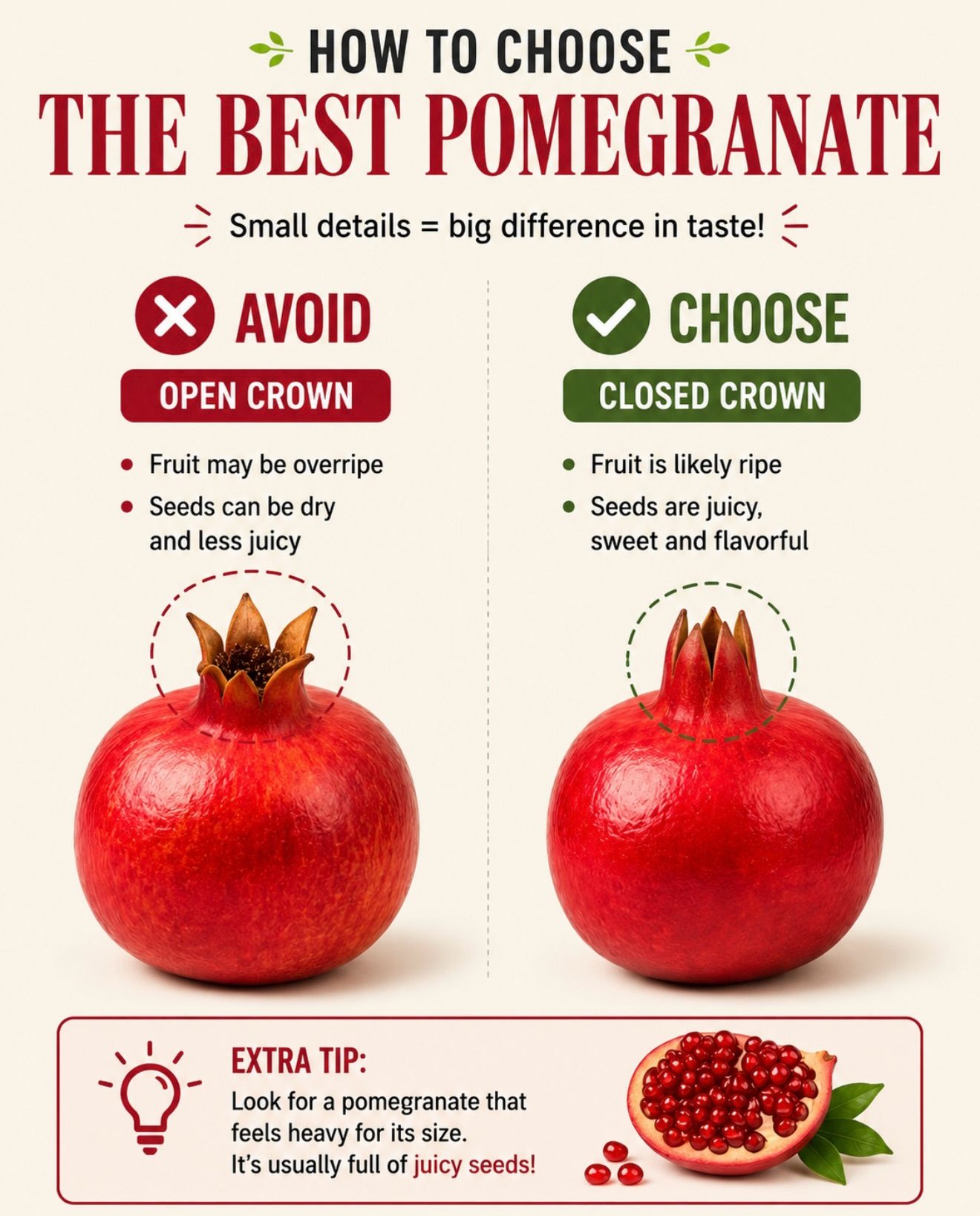
The crown of the pomegranate, the part where the fruit was attached to the tree, is a good indicator of ripeness. Avoid pomegranates with an open crown, as they may be overripe and have dry, less juicy seeds. Look for pomegranates with a closed crown, which usually indicates the fruit is ripe and full of juicy, sweet seeds.
Feel the Weight
Another crucial tip is to feel the weight of the pomegranate. A pomegranate that feels heavy for its size is likely full of juicy seeds. This simple check can help you avoid dry, disappointing fruit.
Selecting a Sweet Cantaloupe
Cantaloupes, or muskmelons, can vary greatly in sweetness. A simple trick can help you pick the best one:
Look for the Center Mark
Check the bottom of the cantaloupe for a center mark. A larger center mark usually indicates a fully ripe, sweeter melon. Smaller marks suggest the melon is less ripe and less sweet. This trick ensures you get a melon that's both ripe and flavorful.
Choosing Sweet and Fresh Grapes
Grapes are a popular fruit, but their quality can vary. Here's how to pick the sweetest, juiciest grapes:
Inspect the Stem
Always check the stem of the grapes. A dark and dry stem indicates the grapes may be overripe and less juicy. Look for grapes with a green and fresh stem, as these were recently picked and are likely to be crisp, juicy, and sweet.
Practical Tips for Better Fruit Selection
Use Your Senses
Beyond the visual cues, use your senses to pick the best fruit. Smell can be a strong indicator of ripeness and freshness. A fruit that smells good is likely to taste good.
Check for Texture
Fruit texture can tell you a lot about its ripeness. For example, a ripe melon should have a slightly soft spot when pressed gently. Similarly, pomegranates with a firm outer skin are usually better than those with a soft or dented skin.
Opt for Seasonal Produce
Seasonal fruits are often fresher and tastier. They are picked at their peak ripeness and have had less time to degrade in transit.
Important Takeaways
Grocery shopping for fruit doesn't have to be a gamble. By paying attention to small details, you can choose the best produce and make your healthy eating habits more enjoyable. Focus on the crown of the pomegranate, the center mark of the melon, and the stem of the grapes. These simple tips can transform your fruit-picking experience and ensure you always get the juiciest, sweetest, and most flavorful produce.
Conclusion
Choosing the right fruit can greatly enhance your enjoyment of healthy eating. By understanding these small but crucial details, you can make smarter choices and ensure every bite is satisfying. The next time you're at the grocery store, remember these tips and pick fruit like a pro. Your taste buds will thank you!
Watch the Reel
Questions readers ask
How can I tell if a pomegranate is ripe and juicy?
To pick a ripe pomegranate, look for a fruit that is plump and heavy for its size. The skin should be taut and have a consistent red or reddish-yellow colour. Avoid pomegranates with wrinkled skin or soft spots, as these may be overripe or dry.
What are the signs of a sweet, juicy melon?
When choosing melons, look for ones that have a slight give when pressed gently near the stem end. They should also have a sweet, fragrant smell. For cantaloupes, check for a webbed pattern on the stem end, which indicates ripeness. For watermelons, look for a creamy yellow spot on the underside, where it rested on the ground.
How do I select fresh and sweet grapes?
To choose fresh grapes, look for bunches that have plump, firmly attached grapes with vibrant colour. The stems should be green and flexible, not brown or brittle. Give the bunch a gentle smell; it should have a slight, pleasant grape scent. Avoid bunches with shrivelled or wrinkled grapes, as these may be dried out.
Can I pick pomegranates before they are fully ripe?
It's best to avoid picking pomegranates before they are fully ripe, as they may not develop their full flavour and juiciness. If you must pick them slightly early, store them at room temperature until they soften slightly, then refrigerate. However, be aware that the quality may not be as good as a fully ripened pomegranate.
What should I look for when picking a ripe cantaloupe?
A ripe cantaloupe should have a fragrant, sweet smell. It should also have a slight give when pressed gently near the stem end. Look for a webbed pattern on the stem end, which is a sign of ripeness. The skin should be golden or beige, not green, and the cantaloupe should feel heavy for its size.
How can I tell if grapes are overly ripe or fermenting?
If grapes are overly ripe or beginning to ferment, they may have a strong, alcoholic, or off-smelling aroma. They may also be soft, mushy, or have a dull colour. The stems may be brown and brittle, and the grapes themselves may be shriveled or have leaks of liquid. It's best to avoid these grapes, as they may not taste good and could potentially make you ill.
What is the best way to store pomegranates, melons, and grapes after purchase?
After purchasing, store pomegranates and melons at room temperature for a day or two to ripen further if needed, then refrigerate. Grapes should be refrigerated immediately and stored in a plastic bag with holes to allow air circulation. This will help maintain their freshness and prevent them from drying out or becoming overly ripe.
Recent articles
Fresh deep dives from the latest Reels we unpacked.




Comments
Be the first to comment.