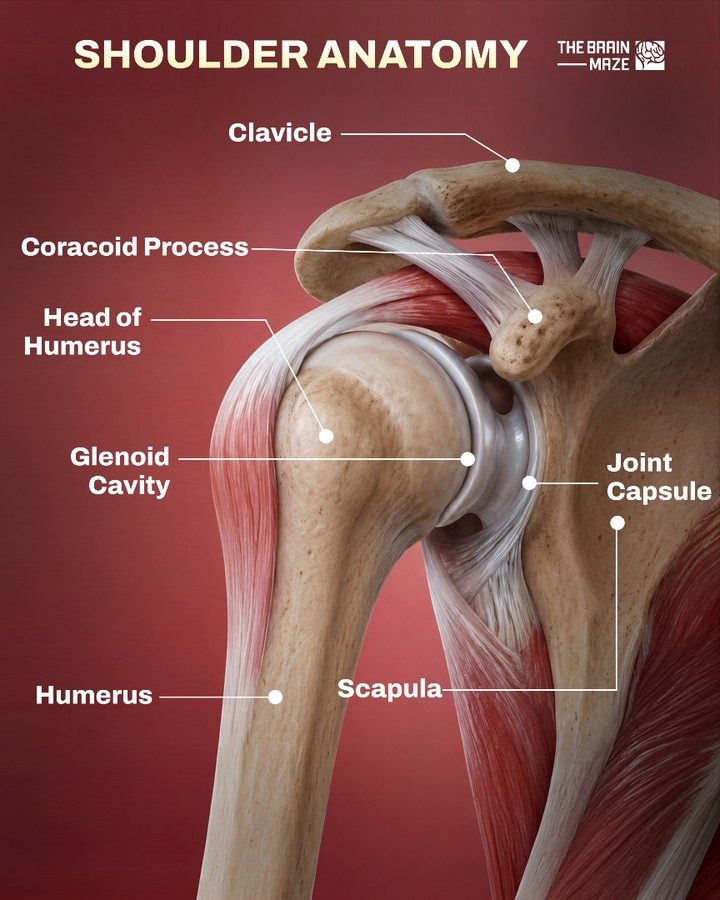
Shoulder Anatomy
The shoulder is an intricate and mobile joint that plays a vital role in the human body, enabling a wide range of movements. This joint is composed of several key structures that work together to provide both mobility and stability. Understanding the anatomy of the shoulder can help in appreciating its functionality and the importance of maintaining its health.
Context / Why This Matters
The shoulder's unique design allows for an extensive range of motion, making it essential for various daily activities, from lifting objects to reaching overhead. However, this mobility comes with a trade-off: the shoulder is also one of the most frequently injured joints due to its complexity and the forces it endures. Knowing the anatomy of the shoulder can help in preventing injuries and understanding treatment options if injuries do occur.
Shoulder Anatomy
Key Components
The shoulder is primarily formed by the articulation of the humerus (upper arm bone) with the glenoid cavity of the scapula (shoulder blade). This articulation, known as the glenohumeral joint, is a ball-and-socket joint that allows for a wide range of movement.
-
Clavicle: Commonly known as the collarbone, the clavicle connects the shoulder to the chest and supports the positioning of the shoulder. It acts as a strut to keep the shoulder joint stable and ensures the proper alignment of the arm.
-
Scapula: The shoulder blade provides a base for the muscles that move the arm. The scapula has several key features:
- Glenoid Cavity: This shallow socket in the scapula articulates with the head of the humerus to form the glenohumeral joint.
- Coracoid Process: This small hook-like structure on the scapula serves as an attachment point for muscles and ligaments, providing stability to the shoulder joint.
-
Humerus: The upper arm bone has a rounded head that fits into the glenoid cavity. The shaft of the humerus extends down to the elbow.
-
Joint Capsule: A fibrous structure that surrounds the shoulder joint, the joint capsule provides stability and encloses the synovial fluid, which lubricates the joint and reduces friction during movement.
Supporting Structures
While the primary components form the basic structure of the shoulder, several other structures play crucial roles in its stability and mobility.
-
Ligaments: These strong, fibrous tissues connect bones to other bones and provide stability to the shoulder joint. Key ligaments in the shoulder include the coracoclavicular ligaments, which stabilize the clavicle, and the glenohumeral ligaments, which stabilize the glenohumeral joint.
-
Rotator Cuff Muscles: These are a group of four muscles (supraspinatus, infraspinatus, teres minor, and subscapularis) that stabilize the shoulder joint and allow for rotation and movement. The rotator cuff muscles play a crucial role in maintaining the integrity of the shoulder joint and preventing injuries.
-
Bursae: These are small, fluid-filled sacs that cushion the shoulder joint and reduce friction between muscles, tendons, and bones. The most notable bursa in the shoulder is the subacromial bursa, which lies between the acromion (a bony projection on the scapula) and the rotator cuff tendons.
Practical Tips
Maintaining the health of the shoulder joint involves a combination of proper exercise, good posture, and injury prevention strategies.
Exercise and Strengthening
Regular exercise and strengthening routines can help maintain the stability and mobility of the shoulder. Focus on exercises that target the rotator cuff muscles and the muscles surrounding the shoulder blade. Some effective exercises include:
-
Shoulder Blade Squeezes: This exercise helps strengthen the muscles that support the scapula. Sit or stand with good posture and squeeze your shoulder blades together, holding for a few seconds before releasing.
-
External Rotation: Use a resistance band or light dumbbell to perform external rotation exercises. This helps strengthen the rotator cuff muscles and improve shoulder stability.
-
Internal Rotation: This exercise also targets the rotator cuff muscles. Use a resistance band or light dumbbell to perform internal rotation movements.
Injury Prevention
Injury prevention is crucial for maintaining the health of the shoulder joint. Some tips for preventing shoulder injuries include:
-
Warm-Up Before Exercise: Always warm up before engaging in any physical activity to increase blood flow to the muscles and prepare them for exercise.
-
Proper Technique: Use proper technique when lifting weights or performing exercises that involve the shoulder. Poor technique can lead to injuries and strains.
-
Avoid Overuse: Overuse injuries are common in the shoulder. Avoid repetitive motions that can strain the shoulder joint and give your muscles time to rest and recover.
Posture and Ergonomics
Maintaining good posture and ergonomics can also help prevent shoulder injuries and maintain joint health. Ensure that your workstation is set up correctly, with the monitor at eye level and the keyboard and mouse within easy reach. Avoid slouching and keep your shoulders relaxed and down.
Important Takeaways
Understanding the anatomy of the shoulder is essential for appreciating its functionality and maintaining its health. The shoulder's complex structure allows for a wide range of motion, but it also makes it susceptible to injuries. By focusing on proper exercise, injury prevention, and good posture, you can help maintain the health and mobility of your shoulder joint.
Conclusion
The shoulder is a remarkable and intricate joint that enables a wide range of movements essential for daily activities. By understanding its anatomy and taking steps to maintain its health, you can ensure that your shoulder remains strong and mobile. Whether you're an athlete, a fitness enthusiast, or someone who wishes to maintain good shoulder health, paying attention to the shoulder's anatomy and care is crucial.
Watch the Reel
Questions readers ask
What are the three main bones that make up the shoulder joint?
The three main bones that form the shoulder joint are the humerus, which is the upper arm bone, the clavicle, also known as the collarbone, and the scapula, or shoulder blade. These bones work together to enable the shoulder's wide range of motion.
How does the glenoid cavity contribute to shoulder mobility?
The glenoid cavity is a shallow socket in the scapula that forms part of the shoulder joint. Its shallow nature allows for a great degree of movement but also makes the shoulder less stable and more prone to injury. The glenoid cavity's depth is the main reason why the shoulder is the human body's most mobile joint.
What is the coracoid process and what role does it play in the shoulder?
The coracoid process is a hook-like structure that extends from the scapula. It serves as an attachment point for several muscles and ligaments, including the pectoralis minor, coracobrachialis, and the conjoint tendon. This structure plays a crucial role in the stability and movement of the shoulder joint.
How does the shoulder capsule contribute to the joint's stability?
The shoulder capsule is a fibrous sac that surrounds the shoulder joint, connecting the humerus to the scapula and clavicle. It is lined with a thin, smooth tissue called synovium, which produces synovial fluid to lubricate the joint. The capsule provides stability by enclosing the joint and limiting excessive movement, helping to prevent injuries.
Why is the shoulder considered one of the most complex joints in the human body?
The shoulder's complexity arises from its intricate structure and the extensive range of motion it allows. It is a ball-and-socket joint where the humerus meets the glenoid cavity of the scapula, providing multidirectional movement. The interaction between the humerus, clavicle, and scapula, along with the surrounding muscles, tendons, and ligaments, contribute to its complexity.
Recent articles
Fresh deep dives from the latest Reels we unpacked.




Comments
Be the first to comment.