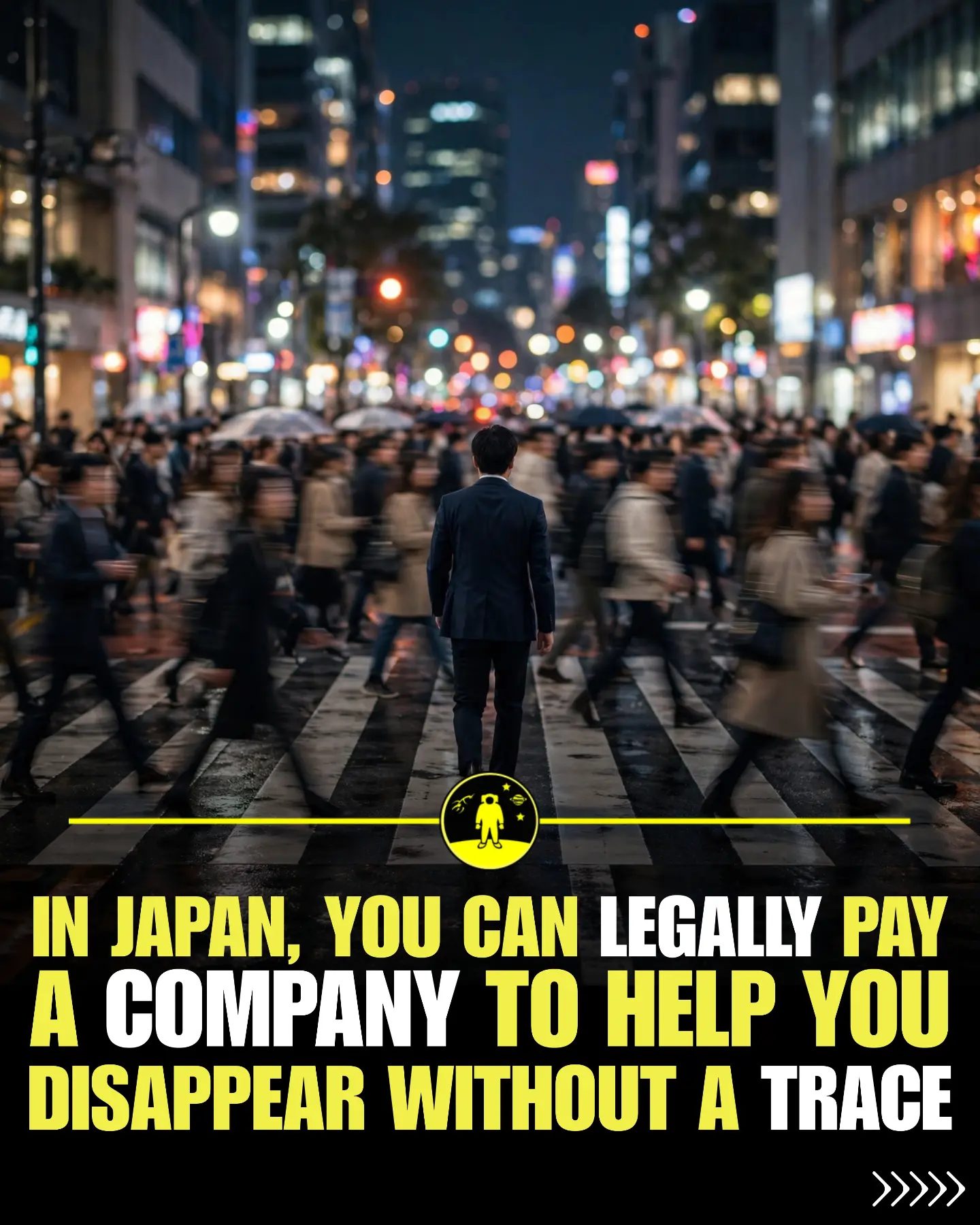
Disappearing in Japan
Japan is home to a fascinating and little-known social phenomenon called johatsu, which translates to "evaporation." Johatsu refers to individuals who voluntarily leave their previous lives and start anew elsewhere. This isn't a plot from a movie; it's a real and enduring aspect of Japanese society.
There are several reasons why someone might choose johatsu. Overwhelming debt, abusive relationships, family conflicts, excessive workplace pressure, divorce, and the stigma associated with personal failure are some of the common motivators. These pressures can make life so unbearable that disappearing seems like the best solution. Johatsu is most commonly associated with salarymen who have been stressed to the point of being unable to work.
Why This Matters
Johatsu reflects deeper issues within Japanese society, including the pressures of work, family expectations, and financial hardship. Understanding this phenomenon provides insight into the cultural and social dynamics at play in Japan.
The Process of Disappearing
Specialized Services
Some specialized companies, often referred to as night moving services or relocation services, assist individuals in disappearing. These services help clients relocate discreetly by transporting their belongings overnight and maintaining their privacy. While many people might believe that these services are merely used for romantic, dramatic, or criminal purposes, they often assist people who have reached a breaking point in their lives. Typically, these relocation companies are hired by people who are experiencing significant financial, emotional, or psychological challenges. Some companies even provide assistance in finding new jobs and social circles.
Privacy and Legality
Japan’s strong privacy laws make it extremely difficult to locate someone who has voluntarily disappeared, unless law enforcement becomes involved for legal reasons. If no crime has been committed, choosing to disappear is generally protected under Japanese law. This makes johatsu a remarkably effective way to start over, although it's important to note that it is not a legal means to escape debts, criminal investigations, or court orders. Even after the disappearance, the person is still responsible for their legal obligations.
Costs and Considerations
The costs associated with johatsu services can vary widely depending on the distance of the move, the amount of belongings, and the level of privacy requested. Some services are quite affordable, while others can be quite expensive. The cost of johatsu is often justified by the need for privacy and the desire to start over completely.
Practical Tips for Understanding Johatsu
Johatsu is not as dramatic as it might seem. It is not a last resort for those who have committed crimes. There are no official statistics confirming that over 100,000 people disappear every year. It is a tool for people who are experiencing extreme hardship and have decided to create a new life. If you know someone who is considering johatsu, it might be a good idea to encourage them to seek professional help for their problems, rather than disappearing.
Important Takeaways
- Johatsu is a real and complex social phenomenon in Japan, driven by various personal and societal pressures.
- Specialized companies can assist individuals in disappearing discreetly, but this service is not a legal way to escape debts or legal obligations.
- The process involves strong privacy protections, making it difficult for families to track down those who have chosen to disappear.
- Johatsu reflects deeper issues within Japanese society, including workplace pressure, financial hardship, and cultural norms.
Conclusion
Johatsu offers a unique perspective on the pressures and challenges faced by individuals in Japan. It's a reminder that even in a modern, technologically advanced society, people still seek ways to escape overwhelming circumstances and start anew. Understanding johatsu provides a window into the complexities of Japanese culture and the lengths to which people will go to find relief from personal and societal pressures.
Watch the Reel
Questions readers ask
What does the term 'johatsu' mean in Japanese culture?
Johatsu is a Japanese term that translates to 'evaporation.' It refers to the practice of individuals who willingly leave their former lives behind, often to escape debt, workplace stress, or family issues, and start anew elsewhere.
What are the most common reasons for johatsu in Japan?
The most common reasons for johatsu include overwhelming debt, excessive workplace pressure, family conflicts, and the stigma associated with personal failure. These factors can make life so difficult that disappearing seems like the best option.
How does the japanese legal system accommodate johatsu?
Japan's privacy laws make it challenging to locate individuals who have undergone johatsu, effectively accommodating this practice. These laws protect the privacy of those who wish to disappear, making it legally difficult for creditors or family members to find them.
What role do relocation services play in johatsu?
Relocation services in Japan facilitate the johatsu process by helping individuals disappear. These services provide new identities, living arrangements, and sometimes even job placements, ensuring a smooth transition to a new life.
What is the significance of johatsu in Japanese society?
Johatsu is a significant aspect of Japanese society that highlights the immense pressure individuals face from debt, workplace stress, and social stigma. It offers a way out for those who feel they have no other option, making it a compelling and enduring phenomenon.
Is johatsu only practiced by certain professions in Japan?
While johatsu can be practiced by anyone, it is most commonly associated with salarymen, or white-collar workers, who face extreme workplace pressure and stress. The high expectations and demanding nature of their jobs can make johatsu an appealing escape route.
How does johatsu impact the families and friends of those who disappear?
Johatsu can have a profound impact on the families and friends of those who disappear, often leaving them with unanswered questions and emotional turmoil. The sudden disappearance can be traumatic, and the lack of contact can make it difficult for loved ones to move on.
Related deep dives
Similar reads based on topic and creator.




Recent articles
Fresh deep dives from the latest Reels we unpacked.




Comments
Be the first to comment.