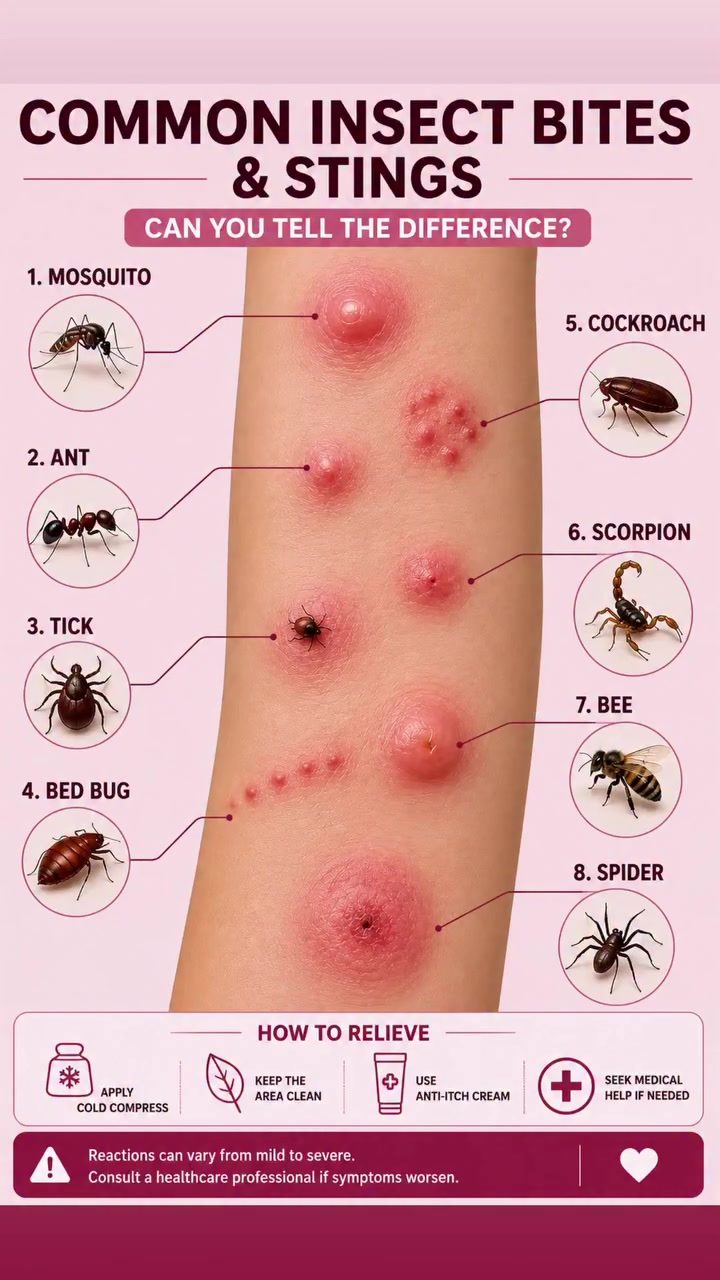
Insect Bites & Stings: Knowing the Difference and First Aid
Red bumps, welts, or itchy skin after spending time outdoors can often be attributed to insect bites and stings. Identifying the culprit isn’t always easy, as different insects can cause various skin reactions, sometimes leading to confusion. This guide will help differentiate between common insect bites and stings while providing essential first-aid instructions.
Why This Matters
Understanding the differences between common insect bites and stings is crucial for several reasons. First, knowing the type of insect can guide proper treatment. Second, recognizing severe reactions can prompt timely medical intervention. Lastly, being prepared with first-aid knowledge can prevent minor issues from worsening.
Common Insect Bites and Stings
Mosquito Bites
Most recognizable by their intense itching, mosquito bites often appear as small, red, and raised bumps. They can be particularly bothersome due to the body’s allergic reaction to the mosquito’s saliva.
Ant Bites
Ant bites can vary depending on the species. Fire ant bites, for example, are known for their painful stings that can result in raised, itchy welts. These bites often occur in clusters.
Tick Bites
Tick bites are often painless and can go unnoticed for extended periods. They appear as small, dark spots and can be accompanied by a red rash, known as erythema migrans. If the tick is carrying diseases like Lyme disease, prompt removal and monitoring are essential.
Bed Bug Bites
Bed bug bites are small, red, and itchy welts that appear in clusters or lines. They often occur on exposed skin areas during sleep, making them common on the face, neck, and arms.
Cockroach Bites
Cockroach bites are rare but can occur, especially in areas with infestations. They appear as small, red, and itchy bumps, often in groups.
Scorpion Stings
Scorpion stings are usually accompanied by immediate pain and swelling. The reaction can range from mild to severe, depending on the species and the individual’s sensitivity.
Bee Stings
Bee stings cause immediate pain and redness, often followed by swelling. A bee sting can leave a stinger in the skin, which should be removed promptly to prevent further venom release.
Spider Bites
Spider bites can vary widely in appearance and severity. Many spider bites go unnoticed, but some, like those from black widows or brown recluses, can cause significant issues, including severe pain, cramping, and necrosis.
Symptoms of Insect Bites and Stings
Recognizing common symptoms is essential for proper identification and treatment. Typical symptoms include:
- Redness and swelling: Common in most insect bites and stings.
- Pain or tenderness: Varies in intensity based on the insect.
- Itching or burning: Often severe with mosquito and ant bites.
- Small blisters or raised bumps: Especially with bed bug and spider bites.
- Systemic reactions: In severe cases, symptoms can include difficulty breathing, swelling of the face or throat, severe pain, fever, and spreading redness.
First Aid for Insect Bites and Stings
Immediate Steps
- Clean the Area: Wash the affected area with soap and water to prevent infection.
- Apply a Cold Compress: Use a cold compress or ice pack for 10–15 minutes to reduce swelling and numb the area.
- Anti-Itch Cream: Apply an over-the-counter anti-itch cream to relieve discomfort. Avoid scratching the area to prevent further irritation and infection.
- Seek Medical Help: If symptoms worsen or if you experience severe reactions, consult a healthcare professional immediately.
Severe Reactions
Seek immediate medical care if you develop:
- Difficulty breathing
- Swelling of the face or throat
- Severe pain
- Fever
- Spreading redness
- Signs of a severe allergic reaction
Practical Tips
Prevention
Preventing insect bites and stings is always the best approach. Consider the following tips:
- Use Insect Repellent: Apply insect repellent containing DEET, picaridin, or oil of lemon eucalyptus.
- Wear Protective Clothing: Cover exposed skin with long sleeves, long pants, and closed-toe shoes.
- Avoid Peak Hours: Insects are more active at dawn and dusk, so try to avoid being outdoors during these times.
- Remove Stagnant Water: Eliminate standing water around your home to reduce mosquito breeding grounds.
- Inspect Bedrooms: Regularly check for signs of bed bugs, especially when traveling.
Allergies and Sensitivities
Some individuals are more sensitive to insect bites and stings, experiencing severe reactions. If you know you have allergies, carry an epinephrine auto-injector and inform friends and family about your condition.
Monitoring
Keep an eye on the affected area for signs of infection, such as increasing redness, warmth, or pus. If symptoms persist or worsen, seek medical attention.
Important Takeaways
- Identification: Knowing the differences between insect bites and stings is crucial for proper treatment.
- First Aid: Always clean the area, apply a cold compress, and use anti-itch cream. Seek medical help for severe reactions.
- Prevention: Use repellents, wear protective clothing, and eliminate breeding grounds to minimize the risk of bites and stings.
- Severe Reactions: Recognize the signs of a severe allergic reaction and seek immediate medical care.
Conclusion
Insect bites and stings can range from mildly annoying to life-threatening. By familiarizing yourself with the different types of bites, their symptoms, and proper first-aid techniques, you can better manage these situations. Always be prepared with preventive measures and know when to seek medical help to ensure your safety and well-being.
Watch the Reel
Questions readers ask
How can I tell the difference between an insect bite and an insect sting?
Insect bites typically occur when an insect punctures the skin to feed on blood or tissue. They often leave a small, red, itchy bump. In contrast, insect stings usually involve the injection of venom or toxins through a stinger, which can cause immediate pain, swelling, and redness. Stings often have a visible stinger or puncture mark.
What are the symptoms of a mosquito bite and how should I treat it?
Mosquito bites often result in a small, red, itchy bump that can appear within minutes of the bite. To treat a mosquito bite, clean the affected area with soap and water, apply a cold compress to reduce swelling, and use over-the-counter hydrocortisone cream or antihistamines to relieve itching. Avoid scratching the bite to prevent infection.
How do I identify and treat an ant bite?
Ant bites typically cause a raised, red, itchy welt with a small puncture mark in the center. Some ants, like fire ants, can cause a more severe reaction with intense pain and a burning sensation. To treat an ant bite, clean the area with soap and water, apply a cold compress, and use topical creams or oral antihistamines to alleviate itching. For severe reactions, seek immediate medical attention.
What should I do if I find a tick attached to my skin?
If you find a tick attached to your skin, use fine-tipped tweezers to grasp the tick as close to the skin's surface as possible. Pull upward with steady, even pressure. Avoid twisting or jerking the tick, as this can cause the mouthparts to break off and remain in the skin. After removing the tick, clean the bite area and your hands with rubbing alcohol or soap and water.
What are the signs of a severe reaction to an insect bite or sting, and when should I seek medical help?
Severe reactions to insect bites or stings can include difficulty breathing, rapid pulse, hives, dizziness, or swelling of the face, lips, or throat. If you experience these symptoms, seek immediate medical attention, as they could indicate a life-threatening allergic reaction. Always carry an epinephrine auto-injector if you have a known allergy to insect stings.
How can I prevent insect bites and stings while outdoors?
To prevent insect bites and stings, wear long sleeves, long pants, and closed-toe shoes when outdoors, especially in areas with high insect activity. Use insect repellents containing DEET, picaridin, or oil of lemon eucalyptus, and avoid wearing perfumes or colognes that can attract insects. Stay away from areas with standing water, where mosquitoes breed, and be cautious around picnic areas and outdoor events where food is present, as these can attract ants and other insects.
What are some home remedies for relieving the symptoms of insect bites and stings?
Home remedies for relieving the symptoms of insect bites and stings include applying a cold compress, a paste made from baking soda and water, or a mixture of water and apple cider vinegar to the affected area. Some people find relief from applying a small amount of toothpaste, calamine lotion or a paste made from activated charcoal and water. OTC hydrocortisone cream and antihistamines can also help reduce itching and inflammation.
Recent articles
Fresh deep dives from the latest Reels we unpacked.




Comments
Be the first to comment.