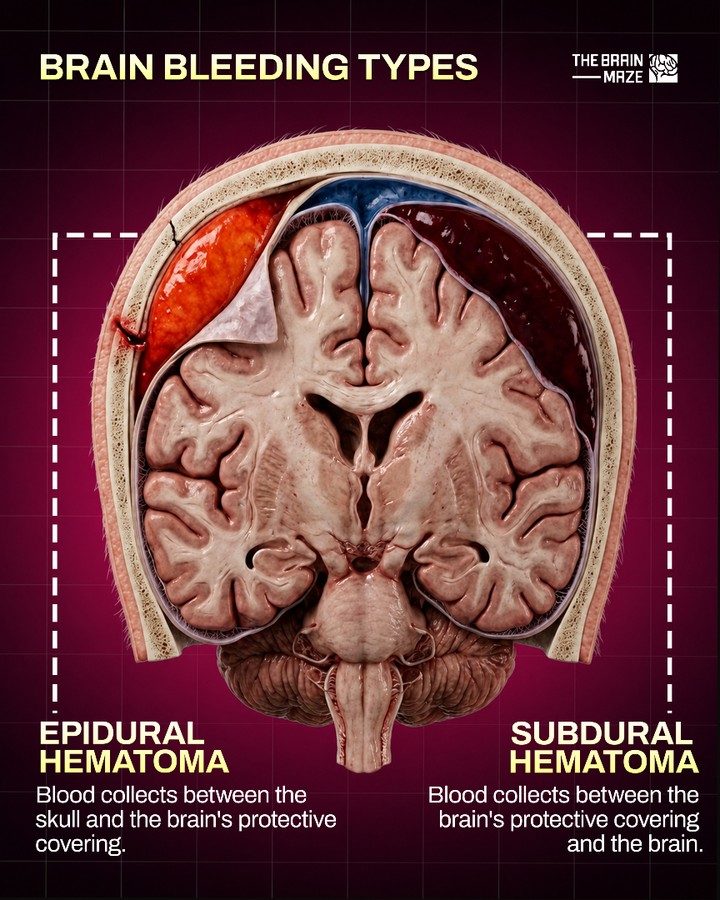
Brain Bleeding Types
Brain bleeding, also known as intracranial hemorrhage, can occur in various spaces around the brain, depending on which blood vessels are damaged. Two common types are epidural and subdural hematomas. Understanding these conditions is crucial for recognizing symptoms and seeking appropriate medical care.
Why This Matters
Brain bleeding can be a medical emergency, especially when it increases pressure on the brain. Knowing the differences between epidural and subdural hematomas can help individuals and caretakers recognize symptoms and seek timely medical attention, which can be lifesaving. Both conditions require prompt evaluation and treatment to prevent further damage and potential fatalities.
Types of Brain Bleeding
Epidural Hematoma
An epidural hematoma occurs when blood collects between the skull and the brain's protective covering, known as the dura mater. This type of bleeding is often caused by a traumatic head injury, such as a skull fracture or a blow to the head. The blood typically comes from arteries in the meninges, the membranes that surround the brain.
Symptoms
Epidural hematomas can present with a variety of symptoms, including:
- Headache
- Nausea and vomiting
- Dizziness
- Confusion
- Vision changes
- Weakness or numbness in the limbs
- Loss of consciousness
These symptoms can appear immediately after the injury or may develop over several hours.
Causes
Epidural hematomas are usually caused by head trauma, such as:
- Falls
- Motor vehicle accidents
- Sports injuries
- Assaults
The force of the impact can cause the skull to fracture, leading to bleeding from the underlying arteries.
Subdural Hematoma
A subdural hematoma occurs when blood collects between the brain's protective covering (the dura mater) and the brain itself. This type of bleeding is often caused by the tearing of bridging veins that connect the brain to the dura mater. Unlike epidural hematomas, subdural hematomas can develop gradually over time.
Acute vs. Chronic
Subdural hematomas can be categorized as acute or chronic:
- Acute subdural hematomas develop quickly, often within the first few days after a head injury. Symptoms may include a sudden loss of consciousness, severe headache, and neurological deficits.
- Chronic subdural hematomas develop more slowly, over several weeks or even months. Symptoms may include mild headache, confusion, and gradual changes in personality or behavior.
Causes
Subdural hematomas are also typically caused by head trauma, but they can occur in older adults or individuals with certain medical conditions, such as:
- Alcohol use disorder
- Blood-thinning medications
- Previous brain surgery
- Conditions that affect blood vessels, such as hypertension
How They Compare
While both epidural and subdural hematomas involve bleeding around the brain, they differ in several ways:
- Location: Epidural hematomas occur between the skull and the dura mater, while subdural hematomas occur between the dura mater and the brain.
- Onset: Epidural hematomas usually develop quickly after a head injury, while subdural hematomas can develop gradually over time.
- Symptoms: The symptoms of epidural and subdural hematomas can be similar, but subdural hematomas may present with more subtle and gradual symptoms, especially in the chronic form.
Practical Tips
Recognizing Symptoms
If you or someone else experiences a head injury, be aware of the symptoms of brain bleeding:
- Sudden, severe headache
- Nausea and vomiting
- Dizziness or loss of balance
- Confusion or changes in mental status
- Vision changes
- Weakness or numbness in the limbs
- Loss of consciousness
Seeking Medical Attention
If you suspect a brain bleed, seek immediate medical attention. Treatment for brain bleeding may include:
- Monitoring: Close observation in a hospital setting to monitor for changes in symptoms.
- Surgery: In some cases, surgery may be necessary to remove the blood clot and relieve pressure on the brain.
- Medications: Medications to control symptoms, such as pain relievers, anti-nausea drugs, or blood pressure medications.
Preventing Brain Injury
While not all brain injuries can be prevented, taking certain precautions can reduce the risk:
- Wear a helmet when riding a bicycle, motorcycle, or engaging in other high-risk activities.
- Use seat belts and ensure children are in appropriate car seats.
- Avoid falls by keeping your home safe, especially for older adults.
- Maintain good overall health, including managing conditions like hypertension and avoiding excessive alcohol use.
Important Takeaways
- Epidural hematomas occur between the skull and the dura mater and typically develop quickly after a head injury.
- Subdural hematomas occur between the dura mater and the brain and can develop gradually over time.
- Both conditions require prompt medical evaluation and treatment to prevent further damage to the brain.
- Recognizing the symptoms of brain bleeding and seeking immediate medical attention can be lifesaving.
- Preventing brain injuries through safety measures and maintaining good overall health can reduce the risk of brain bleeding.
Conclusion
Understanding the different types of brain bleeding is essential for recognizing symptoms and seeking appropriate medical care. Both epidural and subdural hematomas can be serious medical conditions that require prompt evaluation and treatment. By recognizing the signs and symptoms of brain bleeding and taking steps to prevent brain injuries, individuals can reduce the risk of these potentially life-threatening conditions.
Watch the Reel
Questions readers ask
What are the most common symptoms of a epidural brain hematoma?
The most common symptoms of an epidural hematoma include a lucid interval, followed by a loss of consciousness, headache, vomiting, and seizures. This lucid interval is a brief period where the patient may seem fine before symptoms rapidly worsen.
How does an epidural hematoma typically occur?
An epidural hematoma typically occurs due to a traumatic head injury, such as a fall or a car accident, that causes a skull fracture and damages an artery, leading to bleeding between the skull and the dura mater, the outermost layer covering the brain.
What are the primary causes of a subdural hematoma?
A subdural hematoma is primarily caused by a traumatic brain injury, such as a blow to the head or a fall, which damages veins that bridge the space between the brain's surface and its outer covering (dura mater). It can also occur due to shaking or whiplash, leading to bleeding in the subdural space.
What are the initial signs of subdural brain hemorrhage?
Initial signs of a subdural hemorrhage may include headache, confusion, drowsiness, and difficulty with coordination. In severe cases, patients may experience seizures, speech difficulties, or even a loss of consciousness.
What are the key differences between epidural and subdural hematomas?
The primary difference between epidural and subdural hematomas lies in their location and cause. Epidural hematomas occur between the skull and the dura mater, typically due to arterial bleeding from a skull fracture, and often present with a lucid interval. Subdural hematomas occur between the dura mater and the brain's surface, usually from venous bleeding, and may develop gradually or suddenly.
What are the treatment options for an epidural hematoma?
Treatment for an epidural hematoma typically involves surgical intervention to remove the blood clot and relieve pressure on the brain, often through a procedure called a craniotomy. Immediate medical attention and precise diagnosis are critical for successful treatment.
Related deep dives
Similar reads based on topic and creator.


Recent articles
Fresh deep dives from the latest Reels we unpacked.




Comments
Be the first to comment.