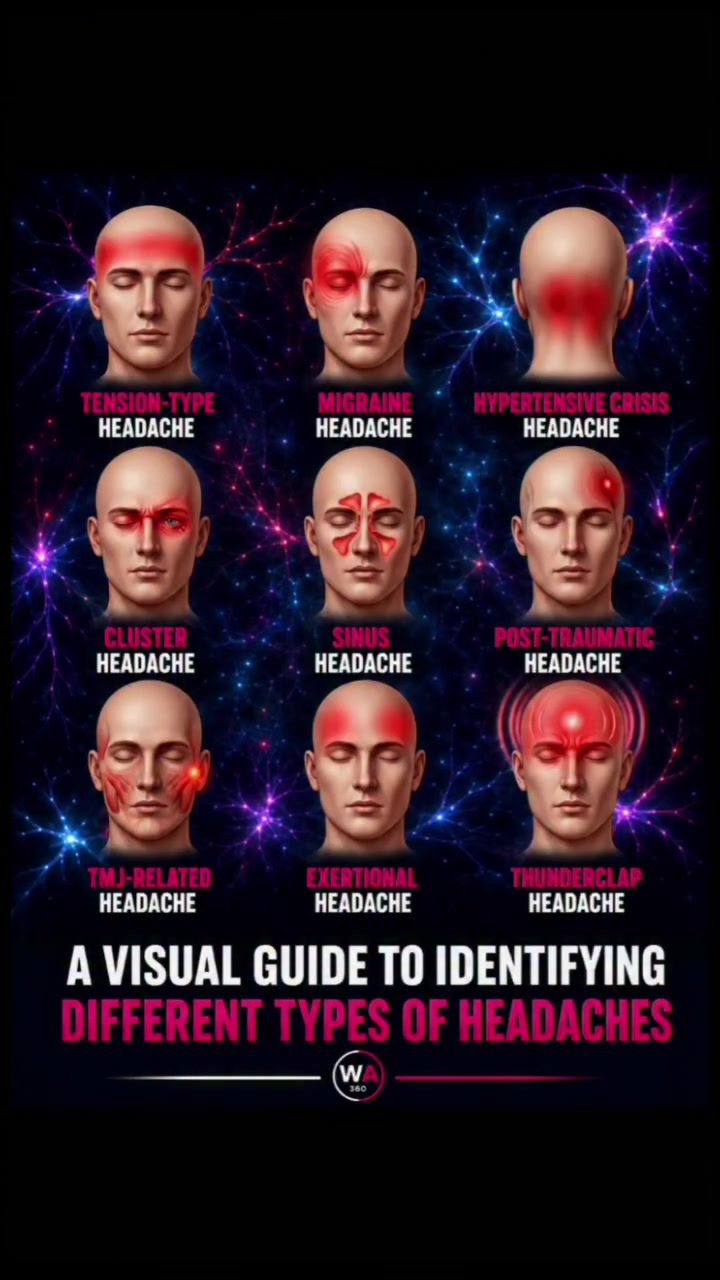
Headache Types: Understanding the Warning Signs
Headaches are a common ailment that affects people of all ages. They can range from mildly annoying to debilitating, and recognizing the different types can help you identify the underlying cause and seek appropriate treatment. The location and pattern of pain can offer crucial clues about what your body is trying to tell you. From tension headaches caused by stress to migraines, sinus headaches, cluster headaches, and even the rare but dangerous thunderclap headache, understanding these symptoms can make a significant difference in protecting your health.
Why This Matters
Headaches are more than just a nuisance; they can be a sign of underlying health issues. Knowing the different types of headaches and their associated symptoms can help you take swift action when necessary. For instance, while many headaches are harmless and temporary, severe, sudden, or recurring headaches should never be ignored, especially if accompanied by vision changes, weakness, confusion, or difficulty speaking. These symptoms could indicate a more serious condition that requires immediate medical attention.
Main Discussion
Tension-Type Headaches
Tension-type headaches are the most common type, often characterized by a dull, aching pain that feels like a tight band around the head. This type of headache is usually caused by stress, anxiety, or muscle strain in the neck and scalp. The pain is typically bilateral, meaning it affects both sides of the head, and can range from mild to moderate. Identifying the triggers for tension headaches can help in managing them effectively.
Migraines
Migraines are intense headaches that can be accompanied by symptoms such as nausea, vomiting, and sensitivity to light and sound. They often affect one side of the head and can be triggered by various factors such as hormonal changes, certain foods, stress, or even changes in sleep patterns.
Symptoms of Migraines
Recognizing the symptoms of a migraine is crucial. These symptoms can include:
- Throbbing or pulsating pain
- Sensitivity to light, sound, and sometimes smells
- Nausea and vomiting
- Aura, which can involve visual disturbances, tingling in the extremities, or difficulty speaking
Cluster Headaches
Cluster headaches are less common but extremely painful. They typically occur in cyclical patterns, with severe pain around one eye or on one side of the head. The pain can be so intense that it wakes you from sleep. Cluster headaches are often accompanied by symptoms such as a runny nose, tearing, or redness of the eye on the affected side.
Sinus Headaches
Sinus headaches are usually caused by inflammation in the sinuses, often due to an infection. The pain is typically felt in the forehead, cheeks, and around the eyes and nose. Sinus headaches can be accompanied by symptoms such as nasal congestion, facial pressure, and a persistent headache that worsens with sudden movement.
Thunderclap Headaches
Thunderclap headaches are a rare but serious type of headache that come on suddenly and severely, reaching peak intensity within one minute. These headaches can be a sign of a serious underlying condition such as a subarachnoid hemorrhage, intracranial hemorrhage, or other life-threatening conditions. If you experience a thunderclap headache, seek immediate medical attention.
Additional Headache Types
There are several other types of headaches that you might encounter:
- Hypertensive Crisis: Caused by a sudden, severe increase in blood pressure, this type of headache can be life-threatening.
- Post-Traumatic Headaches: These can occur after a head injury and may present with varying symptoms, including dizziness and light sensitivity.
- TMJ-Related Headaches: These headaches are associated with temporomandibular joint (TMJ) disorders and can cause pain in the jaw, face, and head.
- Exertional Headaches: These headaches occur during or after physical exertion and can be quite painful.
Practical Tips
When to Seek Medical Help
While many headaches can be managed at home with over-the-counter pain relievers and rest, there are certain situations where medical attention is necessary. Seek immediate medical help if you experience:
- A sudden, severe headache that comes on quickly and reaches peak intensity within minutes (thunderclap headache)
- Headache accompanied by fever, stiff neck, confusion, seizures, double vision, or difficulty speaking
- Headache that worsens over time or doesn't improve with rest and hydration
- Headache that is accompanied by a stiff neck, headache gets worse when you move, nausea or vomiting
Managing Common Headaches at Home
For more common types of headaches, such as tension and sinus headaches, there are several strategies you can use to find relief:
- Rest and Hydration: Sometimes, simply resting in a quiet, dark room and staying hydrated can help alleviate headache symptoms.
- Over-the-Counter Medications: Pain relievers like ibuprofen, acetaminophen, or aspirin can be effective in managing mild to moderate headaches.
- Heating or Cooling Pads: Applying a heating pad or ice pack to the affected area can help reduce pain and inflammation.
- Stress Management: Techniques such as deep breathing, meditation, and yoga can help manage tension headaches caused by stress and anxiety.
Important Takeaways
Recognizing the different types of headaches and their associated symptoms can help you seek the right treatment at the right time. While many headaches are harmless and temporary, it's crucial to pay attention to severe, sudden, or recurring headaches, especially if accompanied by other symptoms like vision changes, weakness, confusion, or difficulty speaking.
Conclusion
Headaches are a common health issue that can range from mildly annoying to life-threatening. Understanding the different types of headaches and their symptoms can empower you to take better care of your health. Whether it's a tension headache from stress, a migraine, or the rare but dangerous thunderclap headache, being informed can make a significant difference in protecting your health. Always listen to your body and consult a healthcare professional if your symptoms are persistent or unusual.
Watch the Reel
Questions readers ask
What are the most common types of headaches and how do they differ?
The most common types of headaches include tension, migraine, and sinus headaches. Tension headaches are often described as a constant, dull ache on both sides of the head, often stemming from stress or muscle strain. Migraines, on the other hand, are typically throbbing and can be accompanied by nausea, sensitivity to light, and sometimes visual disturbances. Sinus headaches are usually characterized by pain and pressure around the eyes, cheeks, and forehead, often due to inflammation in the sinuses.
How can I identify the symptoms of a migraine?
Migraines often present with throbbing pain on one side of the head, nausea, and sensitivity to light and sound. They can be accompanied by visual disturbances like seeing spots or flashes of light. Symptoms typically worsen with physical activity, and episodes can last for hours or even days. Some people may also experience an 'aura' before the headache, which can include visual, sensory, or motor disturbances.
What causes tension headaches and how can I relieve them?
Tension headaches are typically caused by stress, muscle strain, or anxiety. They often result in a feeling of tightness or pressure around the forehead or the back of the head and neck. Relief methods include over-the-counter pain relievers, stress management techniques, such as deep breathing or yoga, and maintaining good posture to reduce muscle tension.
What are the symptoms of a cluster headache and who is most likely to experience them?
Cluster headaches are characterized by severe, piercing pain around one eye, often accompanied by symptoms like a runny or congested nose, watery eye, and restlessness. They occur in cyclical patterns, with episodes of frequent attacks followed by periods of remission. Men are more likely to experience cluster headaches, and they often begin in early adulthood.
What are the symptoms of a thunderclap headache and when should I seek immediate medical attention?
Thunderclap headaches come on suddenly and severely, reaching peak intensity within 60 seconds. They can be caused by serious conditions like a brain hemorrhage, stroke, or aneurysm. If you experience a sudden, severe headache, especially if it is accompanied by symptoms like a stiff neck, fever, or loss of consciousness, seek immediate medical attention. This type of headache should not be ignored, as it can indicate a life-threatening condition.
Can headaches cause or be related to body pain, and if so, how?
Yes, headaches can sometimes be related to body pain. For instance, tension headaches often originate from muscle strain in the neck, shoulders, or scalp, which can cause a radiating pain around the head. Similarly, migraines can be accompanied by body aches, especially in the neck, shoulders, and limbs. Sinus headaches may also cause facial pain and pressure, affecting areas like the cheeks and around the eyes.
Related deep dives
Similar reads based on topic and creator.


Recent articles
Fresh deep dives from the latest Reels we unpacked.




Comments
Be the first to comment.