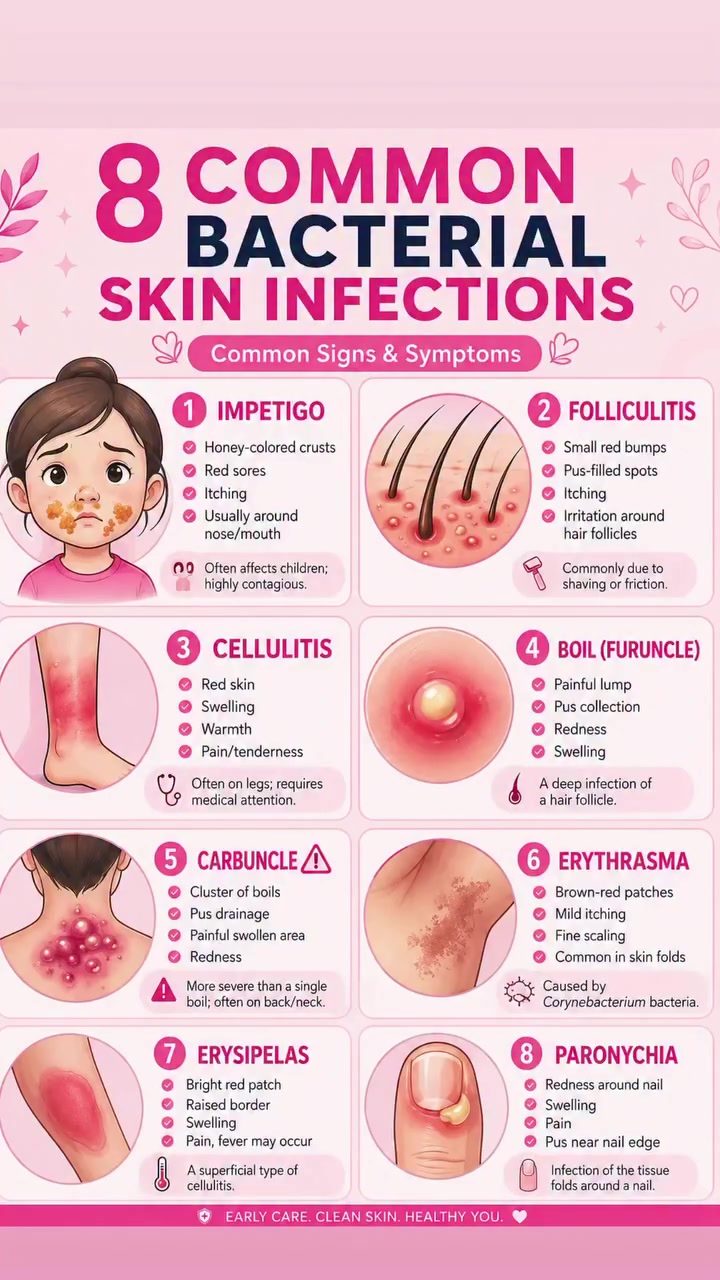
Common Bacterial Skin Infections
Bacterial skin infections are a common yet often overlooked aspect of maintaining healthy skin. Recognizing the early signs of these infections is crucial for prompt treatment and preventing potential complications. Let's delve into the eight most common bacterial skin infections, their symptoms, and some essential tips on prevention.
Why This Matters
Bacterial skin infections can vary from mild to severe. Early detection and appropriate treatment are vital to prevent the infection from worsening or spreading. Understandably, knowing the signs and symptoms can help you seek medical attention promptly and keep your skin healthy.
Understanding Common Bacterial Skin Infections:
Let's explore each of these infections in detail, focusing on their symptoms and characteristics.
Impetigo
Impetigo is one of the most common bacterial skin infections, particularly among children. It is characterized by:
- Honey-colored crusts
- Red sores, often appearing around the nose or mouth
Folliculitis
Folliculitis affects the hair follicles and presents as:
- Small red bumps
- Pus-filled spots
- Itching and irritation, commonly seen around hair follicles.
Cellulitis
Cellulitis can be quite serious and typically affects deeper layers of the skin. Symptoms include:
- Red skin
- Swelling
- Warmth
- Pain or tenderness
Boil (Furuncle)
A boil, or furuncle, is a painful lump that develops under the skin. Key characteristics include:
- A painful lump with pus collection
- Redness around the affected area
Carbuncle
A carbuncle is essentially a cluster of boils that can be quite large. Indications of a carbuncle include:
- A cluster of boils
- Pus drainage
Erythrasma
Erythrasma often appears as brown-red patches, and it is commonly found in skin folds and can cause mild itching.
Erysipelas
Erysipelas is another serious infection that typically affects the upper layers of the skin, causing:
- Redness around the affected area, often around the nails
Paronychia
Paronychia is an infection of the tissue folds around a nail. Symptoms may include:
- Swelling, redness, and pain around the nails
- Pus drainage
Main Discussion
Recognizing the Early Signs
Early recognition of these infections can significantly reduce complications. Pay close attention to:
- Increasing redness or swelling
- Severe pain or warmth
- Pus or drainage
- Fever or chills
- Rapidly spreading rash
If you notice any of these signs, it is crucial to seek medical attention promptly.
Causes and Risk Factors
Most bacterial skin infections are caused by bacteria such as Staphylococcus aureus and Streptococcus pyogenes. Risk factors for these infections include:
- Poor hygiene
- Weakened immune system
- Skin injuries or cuts
- Close contact with infected individuals
When to Seek Medical Attention
While some milder infections can be managed at home, it is essential to know when to seek professional help. Consult a healthcare provider if:
- The infection is worsening despite home treatment
- You have a high fever or severe pain
- The infection is spreading rapidly
Practical Tips
Maintaining good skin hygiene and taking preventative measures can help reduce the risk of bacterial skin infections.
Skin Hygiene
- Keep your skin clean and dry, especially in areas prone to sweat.
- Use mild soaps and avoid harsh chemicals that can irritate the skin.
- Wear clean, breathable clothing to minimize friction and moisture buildup.
Wound Care
- Clean any cuts or wounds thoroughly and apply an antiseptic ointment.
- Cover the wound with a clean bandage to prevent bacteria from entering.
- Change the bandage regularly to maintain cleanliness.
Avoiding Cross-Contamination
- Avoid sharing personal items such as towels, razors, or makeup.
- Wash your hands frequently, especially after touching infected areas or coming into contact with potential sources of bacteria.
Boosting Your Immune System
Maintaining a healthy lifestyle can significantly boost your immune system, making it more resistant to infections. General tips include:
- Eating a balanced diet rich in fruits, vegetables, and lean proteins
- Getting regular exercise
- Staying hydrated
- Getting enough sleep
Important Takeaways
Bacterial skin infections are common but can often be prevented with good hygiene and prompt treatment. Paying close attention to the signs and symptoms can help you take the necessary steps to avoid complications. Recognizing the difference between mild and severe symptoms and knowing when to seek medical attention can also help prevent serious issues. Remember: prevention is always better than cure.
Conclusion
Understanding and recognizing the signs of common bacterial skin infections is the first step in maintaining healthy skin. By practicing good hygiene, taking care of wounds, and seeking medical attention when necessary, you can prevent the spread and complications of these infections. Always prioritize early care, clean skin, and a healthy lifestyle to keep your skin in the best condition.
Watch the Reel
Questions readers ask
What are the initial signs of a bacterial skin infection?
Early symptoms of bacterial skin infections can include redness, swelling, and pain in the affected area. You might also notice small red bumps, red sores, or honey-colored crusts forming on the skin. Prompt recognition of these signs can help in seeking timely medical intervention.
What is impetigo and how can it be treated?
Impetigo is a highly contagious bacterial skin infection that often appears as red sores or blisters which may develop into honey-colored crusts. To treat impetigo, a healthcare professional may prescribe a topical or oral antibiotic. It's essential to keep the affected area clean and avoid scratching to prevent the spread of the infection.
What are the symptoms of folliculitis and how can it be identified?
Folliculitis is characterized by small red bumps or white-headed pimples around hair follicles, often accompanied by itching or tenderness. It can be identified by these symptoms and the presence of pus-filled blisters. To help prevent folliculitis, avoid sharing personal items like towels or razors and ensure proper hygiene.
What are the signs of cellulitis and what should I do if I suspect it?
Cellulitis presents as red, swollen, and tender skin that is warm to the touch. It may also be accompanied by fever or chills. If you suspect cellulitis, seek medical attention promptly. Treatment typically involves oral or intravenous antibiotics to combat the infection.
How can I prevent the spread of a bacterial skin infection?
To prevent the spread of a bacterial skin infection, practice good hygiene by regularly washing and cleaning the affected area with mild soap and warm water. Avoid touching or scratching the infected area, and refrain from sharing personal items such as towels or clothing with others.
What should I do if I notice pus in a skin infection?
If you notice pus in a skin infection, it's important to seek medical attention. Pus indicates that the body is fighting an infection, and a healthcare professional can determine the appropriate treatment, which may include draining the pus and prescribing antibiotics. Do not attempt to drain the pus yourself, as this can lead to further complications.
What are the symptoms of a bacterial skin infection around the eyes?
A bacterial skin infection around the eyes can present as redness, swelling, and discharge from the eye area. It may also cause itching, burning, or pain. If you experience these symptoms, it's crucial to consult a healthcare professional immediately, as infections near the eyes can quickly become serious and potentially lead to vision problems if left untreated.
Recent articles
Fresh deep dives from the latest Reels we unpacked.




Comments
Be the first to comment.