Sustainable Trade: Which Economies Are Leading the Way?
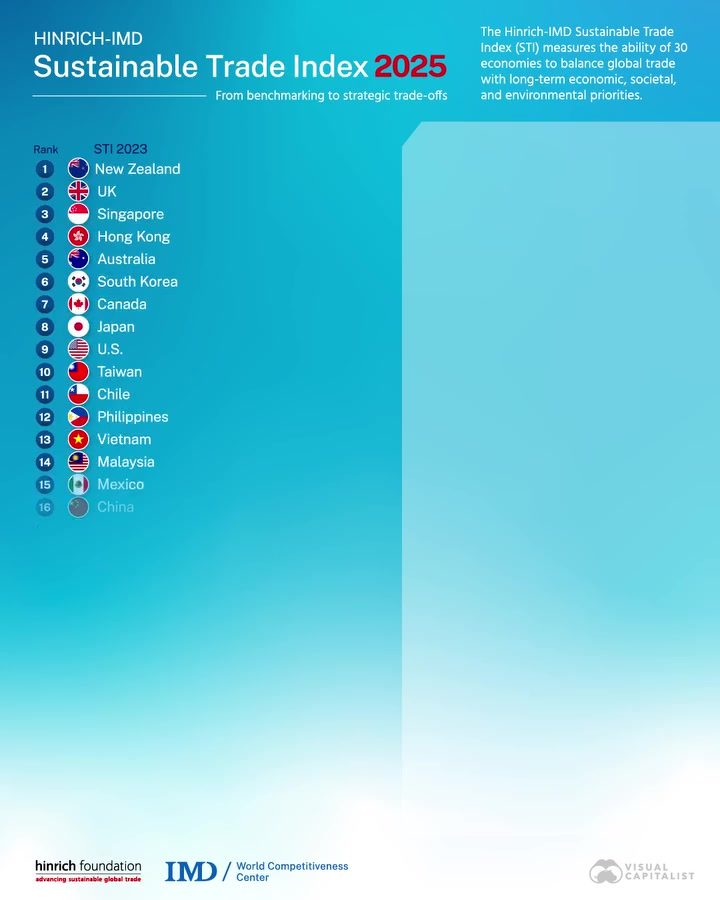
Global trade has always been a driving force for economic growth, but in recent years, there has been a growing emphasis on sustainability. The Hinrich-IMD Sustainable Trade Index (STI) stands as a benchmark for evaluating how economies balance global trade with long-term economic, societal, and environmental priorities. This index provides a comprehensive overview of 30 economies, tracking their progress over the past three years.
Context: Why This Matters
Balancing trade, economic growth, and sustainability presents a complex challenge. The STI measures how well economies navigate this landscape. Key factors include trade policies that promote economic growth, societal well-being, and environmental sustainability. By evaluating these aspects, the STI helps identify countries that are proactively addressing global trade challenges while prioritizing long-term sustainability.
Rankings and Performance
New Zealand Tops the Index
In 2025, New Zealand leads the STI with a perfect score of 100.0, maintaining its position as a top performer. The country’s balanced approach to trade, economic policies, and environmental initiatives sets a benchmark for sustainable trade practices. Behind New Zealand, Australia, Singapore, and Hong Kong follow closely. These economies have consistently shown a strong commitment to sustainable trade, balancing economic growth with environmental and societal benefits.
Regional Insights
The rankings reveal intriguing regional trends. In Asia, Singapore and Hong Kong are standout performers, with scores of 90.0 and 87.2, respectively. These economies have made significant strides in integrating sustainability into their trade policies. South Korea and Japan, with scores of 83.5 and 77.9, also show commendable progress. The presence of these Asian economies in the top ranks underscores the region's growing commitment to sustainable practices.
Economic and Societal Considerations
The STI considers various dimensions of sustainability. Economic stability is a pivotal factor, as it ensures long-term growth and resilience. At the same time, societal well-being is crucial for maintaining social harmony and inclusivity. Countries that prioritize both economic stability and societal development are better positioned to achieve sustainable trade.
Environmental Impact
Environmental sustainability is another critical component of the STI. Economies that implement stringent environmental policies and adopt sustainable practices in trade and production processes rank higher. For instance, nations with robust renewable energy programs, stringent environmental regulations, and efficient resource management tend to perform better in the index.
Practical Tips for Achieving Sustainable Trade
Integrated Policies
For countries aiming to enhance their sustainable trade practices, an integrated policy framework is essential. This includes aligning trade policies with environmental and social regulations to create a holistic approach. Policymakers should focus on initiatives that promote renewable energy, reduce carbon footprints, and ensure fair labor practices.
Technological Innovation
Leveraging technological innovations can significantly boost sustainable trade. For example, adopting digital platforms for supply chain management, utilizing renewable energy solutions, and implementing smart logistics can improve efficiency and reduce environmental impact. Advanced technologies also facilitate better monitoring and compliance with sustainability standards.
Public-Private Partnerships
Collaboration between the public and private sectors is crucial. Public-private partnerships can drive innovation, investment, and implementation of sustainable trade practices. Governments can provide incentives for businesses to adopt green technologies, while private enterprises can innovate and scale sustainable solutions.
International Collaboration
Sustainable trade is a global endeavor. International cooperation and the sharing of best practices can accelerate progress. Countries should collaborate on setting global standards for sustainable trade, exchanging knowledge, and jointly addressing challenges such as climate change and resource depletion.
Community Involvement
Involving local communities in sustainable trade initiatives is vital. Community engagement ensures that trade policies are inclusive and benefit all stakeholders. It fosters a sense of ownership and commitment to sustainability, making it a collective effort rather than a top-down approach.
Investment in Sustainability
Investing in sustainable infrastructure and technologies is key. Governments and businesses should allocate resources to develop and implement sustainable trade practices. This includes investing in renewable energy, green infrastructure, and eco-friendly production processes. Sustainability-focused investments not only drive economic growth but also contribute to long-term environmental and social benefits.
Important Takeaways
The Hinrich-IMD Sustainable Trade Index highlights several key points. Firstly, that sustainable trade requires a balanced approach integrating economic, societal, and environmental considerations. Secondly, countries like New Zealand, Australia, and Singapore have set examples with their strong performance in the STI. Thirdly, continuous improvement is necessary, and regions like Asia are making significant progress in this area. Lastly, achieving sustainable trade involves collaboration, innovation, and a commitment to long-term sustainability.
Conclusion
The Sustainable Trade Index provides valuable insights into how economies can balance trade and sustainability. Countries like New Zealand, Singapore, and Hong Kong demonstrate that it is possible to achieve economic growth while prioritizing environmental and societal well-being. For economies aiming to enhance their sustainable trade practices, the way forward involves integrating policies, leveraging technology, fostering collaboration, and investing in sustainability. By doing so, they can contribute to a more sustainable and resilient global trade landscape.
Watch the Reel
Questions readers ask
What is the Hinrich-IMD Sustainable Trade Index and which countries does it evaluate?
The Hinrich-IMD Sustainable Trade Index (STI) is a benchmark that assesses how well 30 economies balance global trade with long-term economic, societal, and environmental priorities. It provides a comprehensive overview of these economies and their progress in sustainable trade over the past three years.
What are the key factors considered by the Hinrich-IMD Sustainable Trade Index?
The STI evaluates economies based on trade policies that promote economic growth, societal well-being, and environmental sustainability. These factors are crucial in determining how well a country balances trade with sustainability.
Which countries are leading in sustainable trade according to the 2023 rankings?
The 2023 rankings, while not explicitly listed in the provided excerpt, typically feature economies like New Zealand, which is known for its strong performance in sustainable trade. The full list of top sustainable economies for 2023 can be found in the Hinrich-IMD Sustainable Trade Index report.
How does the Hinrich-IMD Sustainable Trade Index contribute to the understanding of global trade sustainability?
The STI offers a detailed analysis of how economies are integrating sustainability into their trade policies and practices. It helps stakeholders understand which countries are successfully balancing economic growth, societal well-being, and environmental sustainability in their trade activities.
What are the main challenges in achieving sustainable trade, as highlighted by the Hinrich-IMD Sustainable Trade Index?
Achieving sustainable trade involves navigating complex challenges, such as creating trade policies that support long-term economic growth, societal well-being, and environmental sustainability. The STI helps identify areas where economies excel and where they need improvement in these aspects.
How does sustainable trade contribute to a green economy ranking?
Sustainable trade is a critical component of a green economy ranking. It ensures that trade activities support environmental goals, such as reducing carbon emissions and promoting renewable energy. Economies that excel in sustainable trade are often leaders in building a green economy.
Related deep dives
Similar reads based on topic and creator.

Recent articles
Fresh deep dives from the latest Reels we unpacked.




Comments
Be the first to comment.