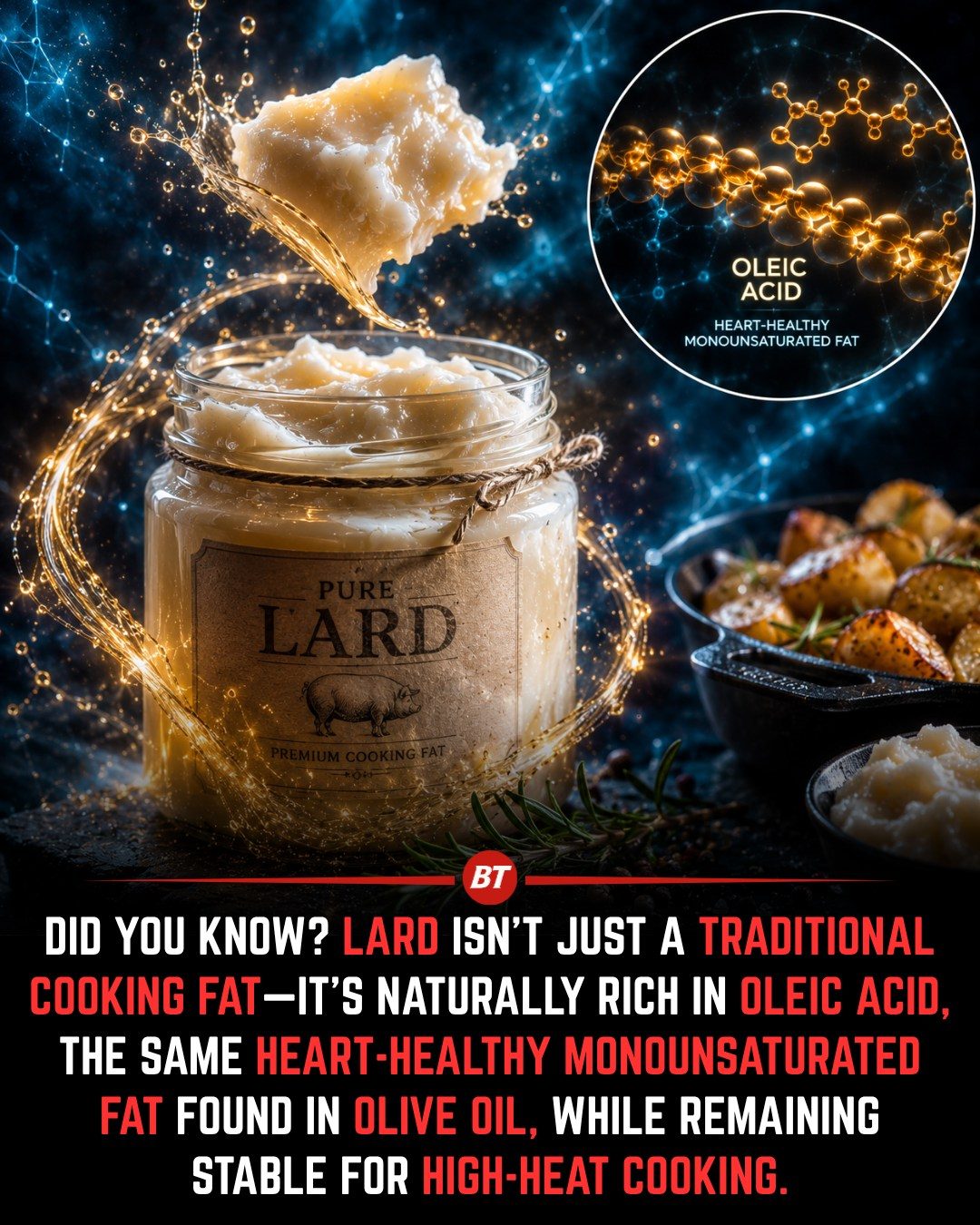
Lard
Lard, a traditional cooking fat, has been quietly regaining popularity in many kitchens. Its comeback is largely due to its rich content of oleic acid, a monounsaturated fat also found in olive oil. This fat is well-known for its heart-healthy properties. Depending on the breed of pig and its diet, nearly half of the fat in lard can be oleic acid. This monounsaturated fat has been widely studied for its role in supporting healthy cholesterol levels when it replaces saturated fat in the diet. It is also a key component of dietary patterns like the Mediterranean diet.
Why this matters
Lard's stability during high-heat cooking makes it a practical choice for certain cooking methods. Its balance of monounsaturated and saturated fats allows it to remain stable during high-heat cooking methods such as roasting, pan-frying, and sautéing. Stable fats are generally less prone to oxidation when exposed to heat, helping preserve both flavor and cooking performance.
For decades, lard was largely replaced during the low-fat movement, but nutrition science has evolved. Researchers now recognize that heart health depends on the overall quality of the diet, not just one food or cooking fat. Factors such as fiber intake, physical activity, blood pressure, blood sugar, smoking, sleep, and overall eating patterns all play major roles in cardiovascular health.
Cooking with Lard
Lard's stability during high-heat cooking makes it a practical choice for certain cooking methods. Its balance of monounsaturated and saturated fats allows it to remain stable during high-heat cooking methods. Besides its stability, lard also imparts a unique flavor to dishes, making it a versatile choice for both everyday cooking and special occasions.
Versatility in the Kitchen
Lard's versatility extends beyond high-heat cooking. Its creamy texture and rich flavor make it an excellent choice for baking, where it can add moisture and tenderness to baked goods. It can also be used for frying and sautéing at medium to high temperatures. Lard's high smoke point makes it a suitable option for high-heat cooking methods. Its rich flavor and creamy texture can also enhance the flavor of dishes.
Benefits of Oleic Acid
Oleic acid, the monounsaturated fat found in lard, has been widely studied for its health benefits. It is known to support healthy cholesterol levels when it replaces saturated fat in the diet. Oleic acid is also a key component of dietary patterns like the Mediterranean diet, which is associated with various health benefits, including reduced risk of heart disease, improved blood pressure, and better blood sugar control.
Comparison with Olive Oil
While lard's stability during high-heat cooking and its rich flavor make it a practical choice for certain cooking methods, it's important to note that it's not necessarily healthier than olive oil. Extra virgin olive oil is rich in antioxidant polyphenols and is an excellent everyday fat. It is best reserved for dressings or lower-heat cooking to enjoy its unique benefits. Olive oil is known for its heart-healthy properties and is a staple in the Mediterranean diet.
Practical Tips
Choosing minimally processed fats and using each where it performs best can be part of a balanced approach to cooking. This means choosing the right fat for the right cooking method. While lard can be a good choice for high-heat cooking methods, olive oil is better for lower-heat cooking methods. Other fats, such as coconut oil and butter, have their own unique properties and can be used in a variety of ways.
- Use lard for high-heat cooking methods such as roasting, pan-frying, and sautéing.
- Use extra virgin olive oil for dressings and lower-heat cooking methods.
- Choose minimally processed fats and use each where it performs best.
Important Takeaways
Lard is a versatile and stable cooking fat that can be a practical choice for certain cooking methods. Its rich content of oleic acid, a monounsaturated fat with known health benefits, makes it a healthy choice for high-heat cooking. However, it's important to note that lard is not necessarily healthier than olive oil. Extra virgin olive oil is rich in antioxidant polyphenols and is an excellent everyday fat. Choosing minimally processed fats and using each where it performs best can be part of a balanced approach to cooking.
Conclusion
Choosing the right cooking fat can be a challenge, but with a little knowledge, it can be an enjoyable and rewarding experience. Lard is a versatile and stable cooking fat that can be a practical choice for certain cooking methods. Its rich content of oleic acid, a monounsaturated fat with known health benefits, makes it a healthy choice for high-heat cooking.
Watch the Reel
Questions readers ask
What makes lard a heart-healthy fat?
Lard's heart-health benefits come primarily from its oleic acid, a monounsaturated fat that can support healthy cholesterol levels. This fat is similar to that found in olive oil and makes up nearly half of the fat in lard, depending on the pig's breed and diet. The amount of oleic acid in lard makes it a beneficial addition to a diet that promotes heart health.
How does lard compare to olive oil in terms of oleic acid content?
Lard and olive oil have similar levels of oleic acid, a monounsaturated fat. Both have been shown to contribute to a healthy diet. The main difference is that, unlike lard, olive oil is known for being rich in polyphenols, which are antioxidants that are also beneficial for overall health.
Why is lard a good choice for high-heat cooking methods?
Lard's combination of monounsaturated and saturated fats makes it stable during high-heat cooking methods, such as pan-frying and roasting. This stability is because lard has a higher smoke point, which is the temperature at which it begins to break down and smoke, than many other cooking fats. This makes it a practical and versatile choice for various cooking needs.
Can lard be used in baking, and if so, what benefits does it offer?
Yes, lard is an excellent choice for baking, especially for pie crusts. It produces a flaky texture and enhances the overall flavor. Its creamy and smooth texture help to create a tender, yet crispy texture that is perfect for flaky pastries. Also, lard can be frozen and stored for long periods, making it a convenient option for baking.
How does lard compare to other cooking fats, such as vegetable oils and butter?
Lard is more stable during high-heat cooking than many vegetable oils, which can break down or become damaged at high temperatures. Unlike butter, lard is pure fat, and it doesn't contain milk proteins that can burn and become bitter at high temperatures. Additionally, lard is less processed than many vegetable oils and is an animal-based fat, which makes it a good choice for some people who prefer to avoid processed, plant-based fats.
What role does the pig's diet play in the composition of lard?
The pig's diet can significantly impact the composition of lard. Pigs that are fed a diet rich in grains, such as corn and soy, tend to have lard with a higher oleic acid content. Additionally, pigs that are raised outdoors and have access to a more varied diet, such as acorns, tend to have lard with a unique and flavorful taste. This makes lard from pastured or heritage-breed pigs a popular choice among chefs and food enthusiasts.
Recent articles
Fresh deep dives from the latest Reels we unpacked.




Comments
Be the first to comment.