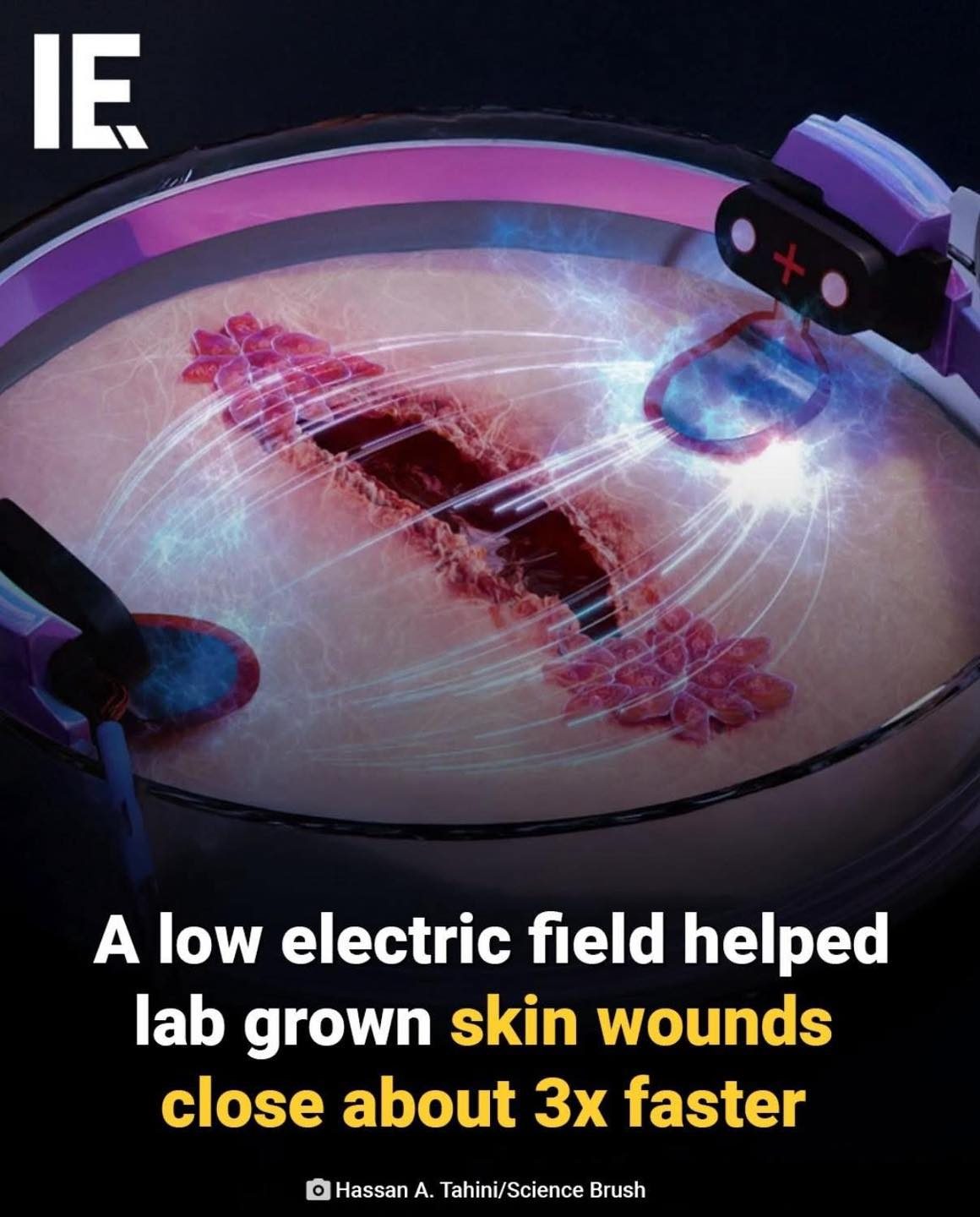
Lab-Grown Skin Healing
Lab-grown skin models are revolutionizing the field of wound healing. Researchers at Chalmers University of Technology have discovered that applying a low electric field can significantly accelerate the closure of wounds in lab-grown skin. This discovery has important implications for bioelectronics and wound care, offering new avenues for medical research and potential applications in the future.
Context / Why this matters
Traditional wound healing is a complex biological process that involves several stages, including inflammation, proliferation, and remodeling. This process can be slow and challenging, especially for chronic wounds or severe injuries. The use of bioelectronics, which combines biology and electronics, provides a new approach to enhancing wound healing. By understanding how cells respond to electrical cues, researchers can develop targeted treatments that guide cell movement and coordination during the repair process. This could potentially reduce healing times and improve outcomes for patients.
Main discussion
The Role of Electric Fields in Wound Healing
Electric fields have long been known to influence biological processes. In the case of wound healing, cells respond to electrical cues that guide their movement and coordination. Researchers at Chalmers University of Technology have harnessed this capability by applying a low electric field to lab-grown skin models. The results were remarkable: wounds closed approximately three times faster compared to natural healing in the same setup. This discovery opens up new possibilities for bioelectronics in wound care.
The Experiment and Its Findings
The research involved a lab setup with a circular device containing lab-grown skin. Robotic arms were positioned around the skin to apply a low electric field. The experiment showed that the electric field not only accelerated the healing process but also did not harm the cells. This is a crucial finding, as it demonstrates the safety and effectiveness of using bioelectronics in wound care. The electric field helped guide the cells to move and coordinate more efficiently, leading to faster wound closure.
The Science Behind Bioelectronics
Bioelectronics is an interdisciplinary field that combines biology and electronics to develop innovative solutions for medical challenges. In the context of wound healing, bioelectronics uses electrical signals to influence cellular behavior. Cells in the body naturally respond to electrical cues, and by understanding these responses, researchers can create targeted treatments. This approach has the potential to revolutionize wound care by speeding up the healing process and improving patient outcomes. The use of electric fields in wound healing is just one example of how bioelectronics can be applied to address complex biological processes.
Potential Applications and Future Directions
While the research is still in its early stages, the findings offer a promising direction for future applications. The use of low electric fields in wound healing could be adapted for various medical conditions, including chronic wounds, severe injuries, and even surgical incisions. By integrating bioelectronics into wound care, healthcare professionals can develop more effective and efficient treatment options. The potential for bioelectronics in medical research is vast, and ongoing studies will continue to explore its applications in different areas of healthcare.
Practical Tips
-
Stay Informed: Keep up-to-date with the latest research and developments in bioelectronics. Understanding the advancements in this field can provide valuable insights into new treatment options for wound care.
-
Explore Collaborative Research: Encourage collaboration between biomedical engineers, researchers, and healthcare professionals to further explore the potential of bioelectronics in wound healing.
-
Invest in Bioelectronic Technologies: Healthcare institutions and research organizations can invest in bioelectronic technologies to support the development of innovative treatments for wound care. This can include funding research projects, acquiring the necessary equipment, and providing training for healthcare professionals.
-
Apply Bioelectronics in Clinical Settings: As the technology advances, consider integrating bioelectronic treatments into clinical settings to enhance wound care. This can involve using electric fields to accelerate healing and improve patient outcomes.
-
Educate Healthcare Providers: Provide ongoing education and training for healthcare providers on the benefits and applications of bioelectronics in wound care. This can ensure that they are well-equipped to utilize these technologies effectively.
Important takeaways
- Electric Fields Accelerate Wound Healing: Applying a low electric field to lab-grown skin models can significantly speed up the wound healing process.
- Safe and Effective: The use of electric fields in wound healing did not harm the cells, making it a safe and effective treatment option.
- Potential for Bioelectronics: Bioelectronics offers new avenues for medical research and potential applications in wound care, with the potential to revolutionize the field.
- Future Directions: Ongoing research and development in bioelectronics can lead to more effective and efficient treatment options for various medical conditions.
Conclusion
The use of bioelectronics in wound care, particularly the application of low electric fields, represents a significant breakthrough in medical research. This innovative approach has the potential to revolutionize the way we treat wounds, offering faster healing times and improved patient outcomes. As research continues, the applications of bioelectronics in wound care will likely expand, providing new solutions for chronic wounds, severe injuries, and surgical incisions. By staying informed and investing in this technology, healthcare professionals can harness the power of bioelectronics to enhance wound care and improve patient lives.
Watch the Reel
Questions readers ask
How does an electric field aid in the healing of lab-grown skin?
A low electric field stimulates the cells in lab-grown skin, enhancing their movement and proliferation. This increased activity helps to close wounds more quickly, demonstrating a promising approach to accelerated wound healing.
What are the benefits of using bioelectronics in wound care?
Bioelectronics combines biological systems with electronic components, offering non-invasive and targeted treatments. In wound care, it can accelerate healing, reduce the risk of infection, and potentially lessen the need for invasive procedures.
Can electric field therapy be used on all types of wounds?
While electric field therapy shows promise for many types of wounds, its effectiveness can vary. Chronic wounds, severe injuries, or wounds in areas with poor blood circulation may benefit the most, but further research is needed to determine its universal applicability.
What stages of wound healing can be enhanced by electric fields?
Electric fields can influence multiple stages of wound healing, including the proliferation phase where new tissue forms, and the remodeling phase where the new tissue gains strength and flexibility. This can lead to faster and more effective wound closure.
Are there any risks associated with using electric fields for wound healing?
Low electric field therapy is generally considered safe, as the fields used are similar to those naturally present in the body. However, more research is needed to identify any potential long-term effects or interactions with other medical treatments.
How might electric field therapy be applied in practical settings?
Electric field therapy could be administered through wearable devices or integrated into wound dressings. These applications would allow for continuous, targeted treatment, making it a convenient and effective option for patients.
What role do lab-grown skin models play in this research?
Lab-grown skin models provide a controlled and ethical environment for testing new therapies. By accelerating wound closure in these models, researchers can better understand the mechanisms behind electric field therapy and its potential benefits for human patients.
Recent articles
Fresh deep dives from the latest Reels we unpacked.




Comments
Be the first to comment.