Lab-Grown Blood: A Revolutionary Breakthrough in Medical Science
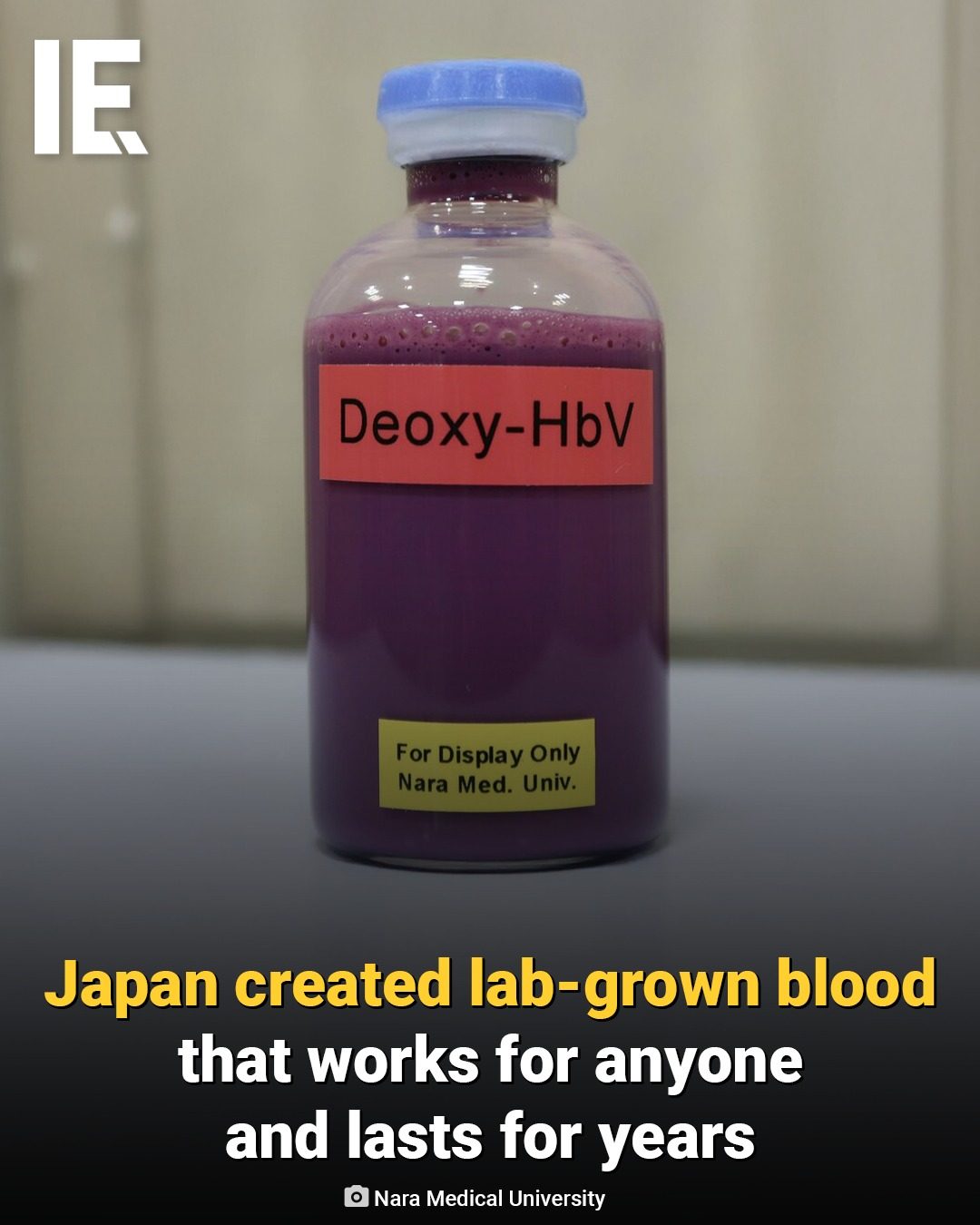
The creation of synthetic, lab-grown blood represents a pivotal advancement in medical science, particularly in the field of emergency care and transfusion medicine. This innovation, developed by Japanese scientists at Nara Medical University, promises to address long-standing challenges in blood transfusion, such as matching blood types and maintaining a stable supply. The artificial blood, known as Deoxy-HbV, is notable for its universal compatibility and prolonged shelf life.
Why This Matters
The development of lab-grown blood holds significant implications for improving emergency medical care. Traditional blood transfusions require meticulous matching of blood types to prevent adverse reactions, and maintaining a steady supply of various blood types can be logistically challenging. Synthetic blood, however, can be universally used without the need for matching, making it an invaluable resource in emergency situations where time is of the essence.
Furthermore, the shelf stability of Deoxy-HbV extends up to two years, alleviating the need for immediate refrigeration. This characteristic is crucial for medical facilities in remote areas or disaster-stricken regions where maintaining a cold supply chain might not be feasible.
The Science Behind Lab-Grown Blood
Universal Compatibility
The breakthrough in creating universal blood lies in the molecular structure of Deoxy-HbV. Unlike natural blood, which varies by blood type, this synthetic version lacks the antigenic determinants that cause incompatibility issues. This means Deoxy-HbV can be used for transfusions regardless of the recipient's blood type, simplifying the process and reducing the risk of errors.
Shelf Stability
One of the most compelling features of Deoxy-HbV is its extended shelf life. The blood is designed to remain viable for up to two years without refrigeration. This stability is a game-changer for emergency care, where immediate availability of blood is crucial. Hospitals and emergency services can stockpile Deoxy-HbV, ensuring a readily available supply even in unforeseen circumstances.
Clinical Trials and Future Prospects
Deoxy-HbV has shown promise in early trials, successfully saving animals from severe blood loss without the need for matching or refrigeration. These results are a testament to the potential of synthetic blood in human applications. Clinical testing in humans is set to begin soon, marking a significant step toward integrating this innovation into mainstream medical practice.
The Development Process
The journey to creating lab-grown blood involved extensive research and development. Scientists at Nara Medical University focused on replicating the essential components of natural blood while eliminating the factors that cause incompatibility. This meticulous process ensured that the synthetic blood retains its functionality while being universally compatible.
Practical Tips for Healthcare Providers
Storage and Handling
While Deoxy-HbV does not require refrigeration, proper storage techniques are essential to maintain its viability. Healthcare providers should follow the guidelines provided by Nara Medical University to ensure the blood remains usable for its full shelf life. This includes keeping the vials in a cool, dry place away from direct sunlight.
Implementation in Emergency Care
Emergency care providers can benefit from integrating Deoxy-HbV into their protocols. Given its universal compatibility, emergency medical teams can administer it without the need for blood type testing, saving valuable time in critical situations. Hospitals should consider stockpiling Deoxy-HbV to ensure a readily available supply for emergency cases.
Training and Protocol Updates
Training staff on the use and benefits of synthetic blood is crucial. Providers should be educated on the differences between natural and synthetic blood, as well as the specific protocols for administering Deoxy-HbV. Regular updates to emergency care guidelines will help ensure that providers are well-prepared to utilize this new resource effectively.
Important Takeaways
- Universal Compatibility: Deoxy-HbV can be used for transfusions regardless of the recipient's blood type, simplifying the transfusion process and reducing the risk of errors.
- Extended Shelf Life: With a shelf life of up to two years, this synthetic blood can be stockpiled without refrigeration, making it an invaluable resource for emergency care.
- Clinical Potential: Preliminary trials have shown promising results, and human clinical testing is set to begin soon, paving the way for widespread use in medical practice.
Conclusion
Lab-grown blood represents a groundbreaking advancement in medical science, offering a solution to long-standing challenges in blood transfusion. Its universal compatibility and extended shelf life make it a vital resource for emergency care, potentially saving countless lives. As clinical testing progresses, the integration of synthetic blood into mainstream medical practice could revolutionize how we approach blood transfusions, ensuring a more efficient and reliable system for future emergencies.
Watch the Reel
Questions readers ask
What makes lab-grown blood a significant advancement in medical science?
Lab-grown blood represents a significant advancement due to its universal compatibility and long shelf life, addressing longstanding challenges in transfusion medicine, such as blood type matching and supply stability. It promises to enhance emergency care and disaster response by ensuring a reliable and universally usable blood supply.
How does lab-grown blood address the challenges in blood transfusions?
Lab-grown blood, or Deoxy-HbV, overcomes challenges in blood transfusions by being universally compatible with all blood types. This eliminates the need for meticulous blood type matching, reducing the risk of adverse reactions and simplifying emergency blood transfusions.
Why is the long shelf life of lab-grown blood important?
The extended shelf life of lab-grown blood is crucial for maintaining a steady supply, especially in remote areas or during disasters. Traditional blood has a limited storage life, making it difficult to keep a constant supply in areas with limited access to blood banks or during crisis situations.
How can lab-grown blood improve emergency care and disaster response?
Lab-grown blood can significantly improve emergency care and disaster response by providing a readily available, universally compatible blood supply. This ensures that medical professionals can administer lifesaving transfusions without the constraints of blood type matching or limited supply, especially in critical situations where time is of the essence.
What are the implications of the Japanese breakthrough in medical science?
The Japanese breakthrough in developing lab-grown blood has wide-ranging implications for global healthcare. It offers a solution to the longstanding issue of maintaining a steady blood supply in remote areas and during disasters, ultimately leading to more effective emergency care and potentially saving countless lives.
Can lab-grown blood be stored for long periods, and why is this beneficial?
Yes, lab-grown blood can be stored for extended periods. This long-lasting storage capability is beneficial for ensuring a consistent supply, especially in regions with limited access to blood banks or during emergencies. It enables medical facilities to have a readily available blood reserve, reducing dependency on continuous donations and improving response times during crises.
Recent articles
Fresh deep dives from the latest Reels we unpacked.




Comments
Be the first to comment.