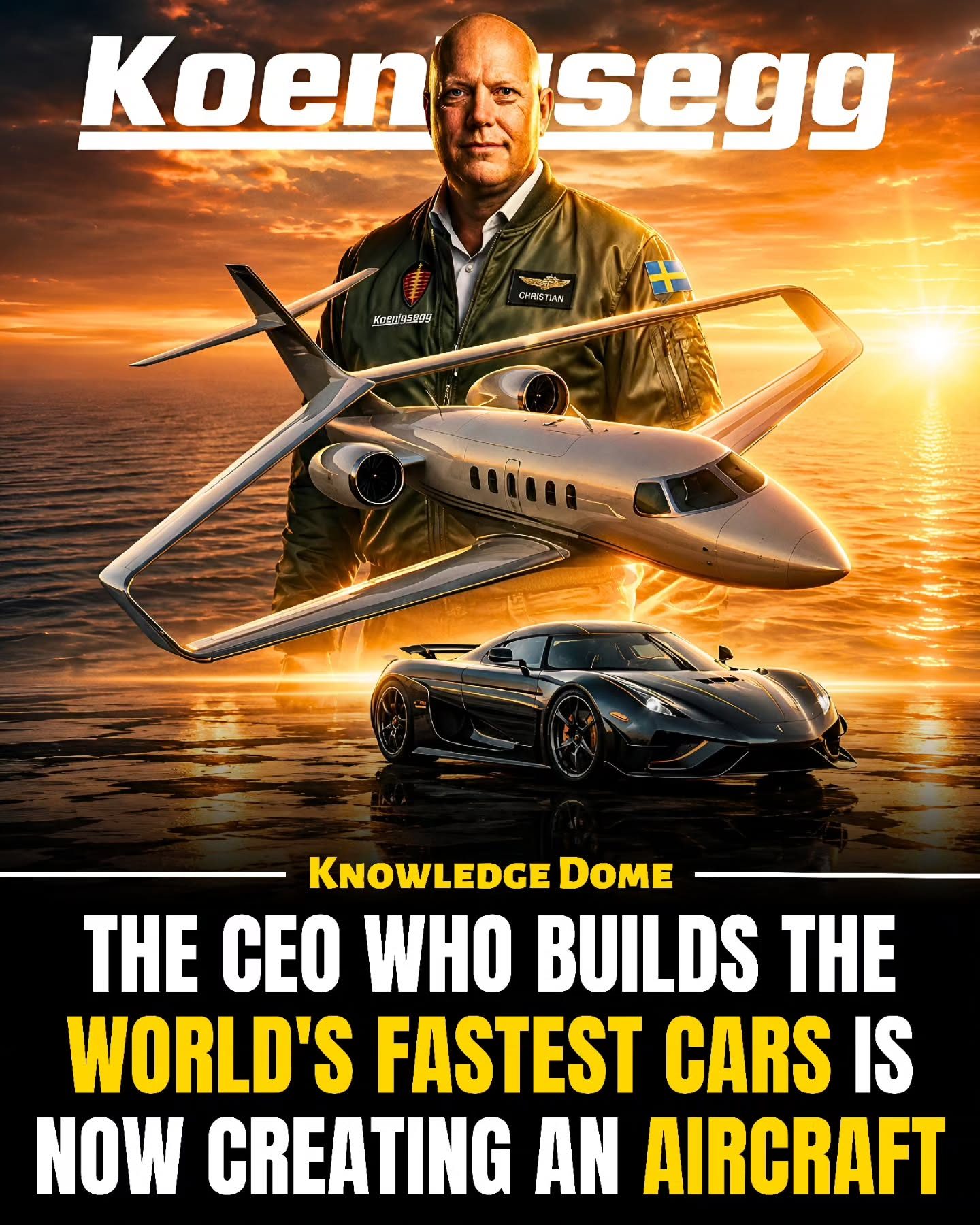
Koenisegg's Foray into Aircraft Design
Christian von Koenigsegg, the head of the renowned Swedish supercar manufacturer Koenisegg, is expanding his innovative horizons beyond just building some of the world's fastest cars. He is now applying the same principles of aerodynamic efficiency and energy conservation to the design of an aircraft concept. This initiative includes a distinctive ring-shaped wing design, where the tips of the wings join to form a continuous loop. This unique aerodynamic shape aims to minimize drag and potentially eliminate some of the hinged control surfaces, leading to a more streamlined, efficient, and simpler aircraft.
Why This Matters
The transition from high-performance automobiles to aircraft design represents a significant leap, but it's one grounded in the same engineering principles that have made Koenisegg a standout in the automotive world. By leveraging their expertise in aerodynamics, energy efficiency, and innovative design, Koenisegg aims to create an aircraft that could redefine the future of air travel.
The Unique Design of the Aircraft
The Ring-Shaped Wing
The most striking feature of Koenisegg's aircraft concept is its ring-shaped wing. This design deviates from traditional wing configurations, where the wing tips are separate. Instead, the tips join together to form a continuous loop. This design is not just a visually striking feature; it serves a practical purpose by enhancing aerodynamic efficiency.
The primary advantage of this design is reduced drag. In conventional aircraft, the wing tips create turbulence and vortices that increase drag. By joining the tips, the aircraft can move through the air more smoothly, which translates to better fuel efficiency and potentially higher speeds. This is a principle familiar to anyone who has observed the performance of Koenisegg's supercars, where every element is meticulously designed to minimize air resistance.
Simplification and Efficiency
Another key benefit of this design is the potential to eliminate some of the hinged control parts, such as ailerons and flaps. These components are crucial for maneuvering traditional aircraft, but they add complexity and potential points of failure. The ring-shaped wing design could integrate these control surfaces into the wing structure itself, creating a more streamlined and efficient system. This simplification not only reduces maintenance requirements but also enhances the overall durability and reliability of the aircraft.
Aerodynamic Benefits
The aerodynamic benefits of the ring-shaped wing are multifaceted. The continuous loop effectively reduces the wavelength of vortices produced at the wing tips, which are a significant source of drag in conventional aircraft. This reduced turbulence allows the aircraft to glide more smoothly, potentially extending the range and fuel efficiency.
Practical Tips for Understanding Aircraft Design
Understanding the principles behind Koenisegg's new aircraft design can offer some practical insights into the broader field of aerodynamics. Here are a few tips to consider:
Learn the Basics of Aerodynamics
Before diving into complex wing designs, it's essential to have a solid understanding of basic aerodynamics. This includes concepts such as lift, drag, and thrust, as well as the principles of airflow over different surfaces. Understanding these fundamentals can provide a strong foundation for appreciating more advanced designs.
Study Existing Innovations
Koenisegg's approach is not entirely new; other innovators in the aviation industry have experimented with unique wing designs. Studying these existing innovations, such as the Blended Wing Body (BWB) concept, can provide valuable insights into the potential benefits and challenges of non-traditional aircraft designs. These case studies can offer a wealth of knowledge about what works and what doesn't in the real world.
Consider Real-World Applications
While the ring-shaped wing design is innovative, it's essential to consider its practical applications. How will this design perform in different flight conditions? What are the potential trade-offs in terms of stability, maneuverability, and control? Answering these questions can help in understanding the true potential of the design.
Important Takeaways
The transition of Koenisegg’s expertise from supercars to aircraft design is a testament to the versatility of aerodynamics and energy-efficient engineering. Key takeaways from this initiative include:
- The ring-shaped wing design's primary benefits are reduced drag and a more streamlined, efficient aircraft structure.
- This design could eliminate some hinged control parts, simplifying the overall system and potentially improving reliability.
- The principles of energy conservation and efficient design, honed in the automotive industry, can be applied to other fields, including aviation.
Conclusion
Koenisegg's foray into aircraft design represents an exciting evolution of aerodynamics and engineering principles. By applying the same innovative thinking used in supercars to a new aircraft concept, Koenisegg is poised to make significant contributions to the future of flight. The ring-shaped wing design, with its potential to reduce drag and simplify aircraft structures, offers a glimpse into a future where efficiency and innovation go hand in hand. Whether this concept will take flight remains to be seen, but the potential it holds is undeniable.
Watch the Reel
Questions readers ask
What inspired Christian von Koenigsegg to transition from designing supercars to aircraft?
Christian von Koenigsegg's expertise in aerodynamics and energy efficiency, honed through designing high-performance supercars, inspired him to apply these principles to aircraft design. The potential to innovate and improve efficiency in air travel, much like he did in the automotive industry, is a significant driving factor.
How does the ring-shaped wing design in Koenigsegg's aircraft concept work?
The ring-shaped wing design in Koenigsegg's aircraft concept features wings that join at the tips, forming a continuous loop. This unique shape is designed to minimize drag by reducing turbulence and potentially eliminating the need for hinged control surfaces, which can create additional drag.
What are the potential benefits of Koenigsegg's aircraft design on air travel?
Koenigsegg's aircraft design aims to enhance fuel efficiency and reduce drag, which could lead to more cost-effective and environmentally friendly air travel. The simplified design may also reduce maintenance needs, contributing to more reliable and efficient flight operations.
Are there any challenges in applying supercar technology to aircraft design?
While the principles of aerodynamics and energy efficiency are transferable, the specific challenges of aircraft design, such as safety regulations, structural integrity, and the need for different materials, present new hurdles. Christian von Koenigsegg's experience in supercar technology is a valuable foundation, but the transition requires adaptation to the unique demands of aviation.
How does Koenigsegg's aircraft concept compare to traditional aircraft designs?
Koenigsegg's aircraft concept differs from traditional designs in its innovative ring-shaped wing, which aims to minimize drag and enhance efficiency. This design contrasts with conventional wing structures and control surfaces, offering a unique approach to improving fuel efficiency and aerodynamics.
What can we expect from future innovations by Christian von Koenigsegg in the aerospace industry?
Given Christian von Koenigsegg's history of innovation, it is likely that he will continue to push the boundaries of aerospace design. Future developments may include further advancements in aerodynamic efficiency, new materials, and possibly even more unconventional design approaches aimed at revolutionizing air travel.
How might Koenisegg's innovations in aircraft design impact the broader aviation industry?
Koenisegg's innovations could set new standards for fuel efficiency and aerodynamic design in the aviation industry. By demonstrating the potential of novel designs, such as the ring-shaped wing, Koenigsegg's work could inspire other manufacturers to explore and adopt similar advancements, contributing to a more efficient and sustainable future for air travel.
Related deep dives
Similar reads based on topic and creator.


Recent articles
Fresh deep dives from the latest Reels we unpacked.




Comments
Be the first to comment.