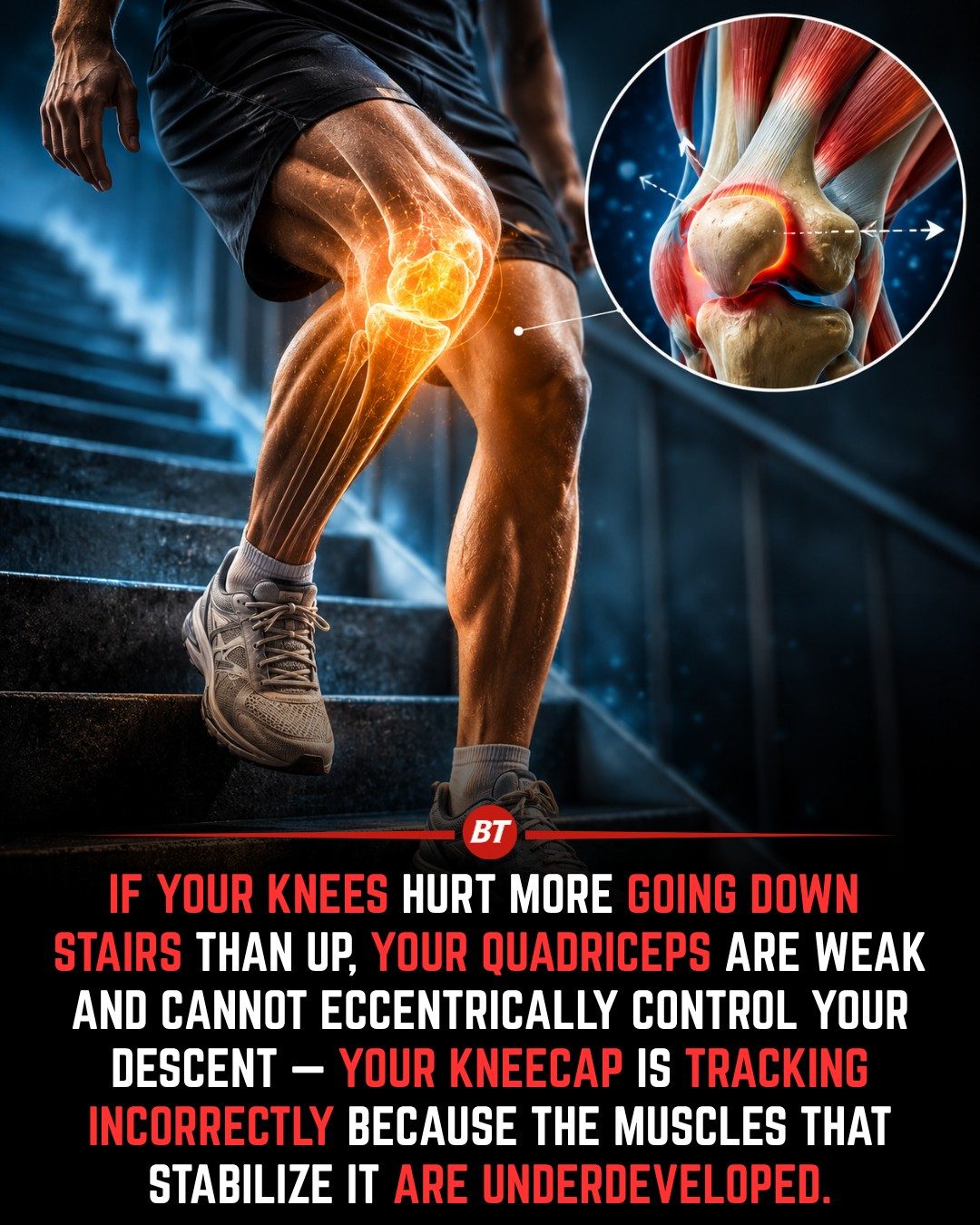
Knee Pain and Quadriceps Strength
Knee pain is a common issue, and many people find that it worsens when descending stairs. This discomfort is often linked to the strength and control of the quadriceps muscles, which play a crucial role in stabilizing the knee during movements.
Context / Why This Matters
Understanding the mechanics of knee movement is essential for addressing and preventing knee pain. The quadriceps, a group of four muscles at the front of the thigh, are particularly important. These muscles work eccentrically during the descent, contracting while lengthening to control the movement. This means they help to lower the body against gravity, absorbing the impact rather than letting the knee absorb it directly.
Main Discussion
The Role of Quadriceps in Knee Stability
The quadriceps are more than just muscle mass; they are critical stabilizers. When these muscles are weak, the knee can absorb more force than it should, leading to strain on the patellofemoral joint. This joint, where the kneecap glides over the thigh bone, is a common site of pain.
Research from the Journal of Orthopaedic & Sports Physical Therapy underscores this point. Many individuals with patellofemoral pain exhibit reduced quadriceps strength and altered movement patterns. This means that the issue isn't just muscle weakness but also how the muscles coordinate during movements.
The Importance of Eccentric Control
Eccentric control refers to the ability of muscles to contract while lengthening. This is vital for movements like descending stairs, where the quadriceps work to slow down the descent. Without proper eccentric control, the knee can experience excessive stress, leading to pain and potential injury.
Contributing Factors to Knee Pain
While weak quadriceps are a significant factor, they are not the only cause of knee pain. Other muscles, such as the glutes and hip muscles, also play a role. Weakness in these areas can cause the knee to move inward during activities like walking, squatting, or descending stairs. This inward movement places additional strain on the tissues around the kneecap, exacerbating the issue.
Moreover, conditions such as arthritis, ligament injuries, tendon disorders, and cartilage damage can produce similar symptoms. Therefore, it's essential to consult a healthcare professional for a proper evaluation, especially if the pain is severe, follows an injury, or is accompanied by significant swelling or instability.
Practical Tips
If you experience knee pain, especially when descending stairs, consider the following exercises to strengthen your quadriceps and glutes:
- Wall Sits: Stand with your back against a wall, then slide down into a sitting position as if you're sitting in a chair. Hold this position for 20-30 seconds, then slowly return to a standing position.
- Step-Downs: Stand on a step or raised platform, then slowly lower one foot to the ground, tapping it lightly before returning to the starting position. Repeat with the other foot.
- Split Squats: Stand with one foot forward and the other back, then slowly lower your body into a lunge position. Keep your front knee behind your toes and your back knee hovering just above the ground. Return to the starting position.
- Slow Chair Squats: Stand in front of a chair, then slowly lower yourself into a sitting position, keeping your knees and toes aligned. Return to a standing position, focusing on controlled movement.
Important Takeaways
- Eccentric Control: Quadriceps strength is crucial for proper eccentric control, which helps to stabilize the knee during movements like descending stairs.
- Holistic Strength: Weakness in other muscles, such as the glutes and hips, can also contribute to knee pain by altering movement patterns.
- Evaluate Pain: Consider other potential causes of knee pain, such as arthritis or ligament injuries, and consult a professional for a thorough evaluation.
- Strengthen Muscles: Incorporate exercises that focus on controlled movements, such as wall sits, step-downs, split squats, and slow chair squats, to improve muscle strength and stability.
Conclusion
Knee pain, particularly when descending stairs, often points to weaknesses in the quadriceps and other stabilizing muscles. By understanding the mechanics of movement and focusing on exercises that build strength and control, many people can find relief from this common issue. If the pain persists or is accompanied by other symptoms, seeking a professional evaluation is crucial for a comprehensive treatment plan.
Watch the Reel
Questions readers ask
Why do my knees hurt when I go down the stairs?
Knee pain during stair descent is typically due to the high demand placed on the quadriceps muscles. These muscles must work hard to control your knee's movement and absorb impact, so weakness or poor control can lead to discomfort or pain.
How do the quadriceps help stabilize the knee?
The quadriceps play a vital role in knee joint stability by working eccentrically during movements like descending stairs. This means they contract while lengthening, helping to control the knee's movement and absorb shock, rather than allowing the knee to absorb the impact directly.
What is patellofemoral pain syndrome and how is it related to quadriceps strength?
Patellofemoral pain syndrome is a condition characterized by pain around the patella (kneecap). Weak or poorly controlled quadriceps muscles can contribute to this syndrome, as they may not effectively stabilize the knee, leading to excessive stress and pain during activities like descending stairs.
What exercises can help alleviate knee pain when going down stairs?
To strengthen the quadriceps and potentially reduce knee pain during stair descent, focus on exercises like squats, lunges, and step-downs. These movements mimic stair climbing and help improve lower body strength and control. Remember to start with a comfortable range of motion and gradually increase intensity.
How can I modify my stair climbing technique to reduce knee pain?
To minimize knee pain when going down stairs, try to descend slowly and deliberately. Keep your knees slightly bent and your weight centered over your feet. Avoid leaning forward or backward, and use the handrail for support if needed. This can help reduce the demand on your quadriceps and ease knee discomfort.
Can weak quadriceps cause knee pain during other activities?
Yes, weak quadriceps can contribute to knee pain during various activities that involve bending or stabilizing the knee, such as walking, running, or squatting. Strengthening the quadriceps can help improve overall knee function and reduce discomfort during these movements.
Should I avoid using stairs if I have knee pain?
It's not necessary to avoid stairs entirely, but consider reducing the frequency or intensity of stair climbing, especially if you experience significant knee pain. Gradually incorporating exercises to strengthen your quadriceps can help improve your ability to manage stairs more comfortably.
Recent articles
Fresh deep dives from the latest Reels we unpacked.




Comments
Be the first to comment.