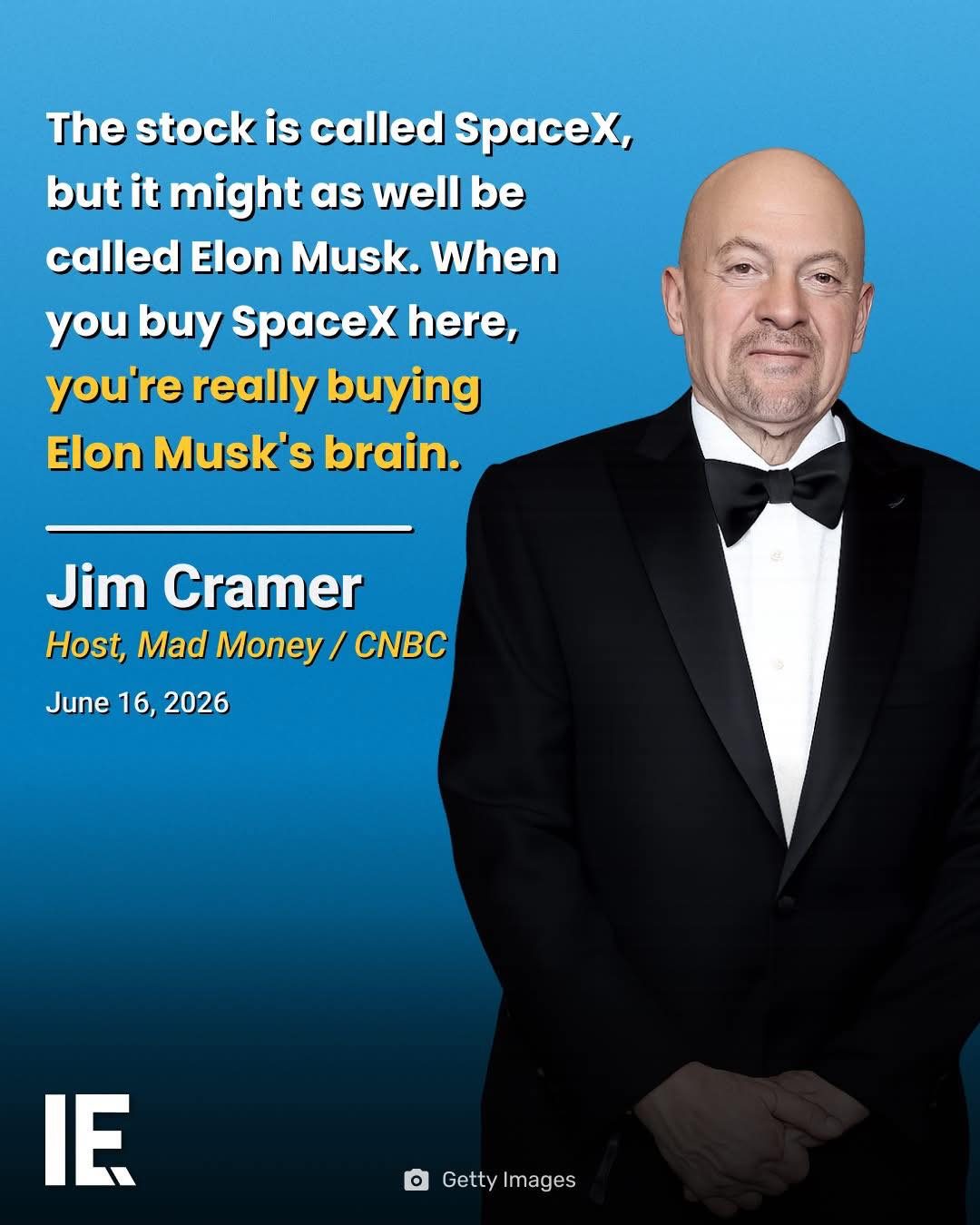
Financial Insights on SpaceX as Viewed by CNBC's Jim Cramer
SpaceX, the aerospace manufacturer and space transportation company, has garnered significant attention in the financial world, especially with its recent valuation and strategic acquisitions. CNBC's Jim Cramer offered valuable insights into the company's financial performance and market perception, delving into why investors are willing to overlook current financial metrics in favor of future potential.
Context
The discussion revolves around the $2.5 trillion valuation of SpaceX, which might initially seem unfeasible given the company's current financial status. Despite operating at a loss, investors remain enthusiastic, primarily driven by the vision and intellect of its CEO, Elon Musk.
Main Discussion
The Musk Factor
Elon Musk’s influence on SpaceX's valuation is undeniable. Cramer compared this phenomenon to how previous generations viewed Berkshire Hathaway under Warren Buffett. Investors are essentially buying into Musk's innovative capacity and leadership rather than just the current financials. This unique investment thesis underscores the company's future growth potential, making it a highly coveted asset among market participants. Musk has projected SpaceX's revenue to reach $1 trillion annually by 2030, reflecting the immense trust and hope vested in his vision.
SpaceX’s Expanding Portfolio
SpaceX’s diverse portfolio also plays a pivotal role in its valuation. From Starlink, an innovative satellite internet service, to reusable rockets that revolutionize space travel, and ambitious data center projects, the variety in its offerings appeals to a wide range of investors. The recently announced $60 billion acquisition of AI coding startup Cursor further solidifies SpaceX's position as a forward-thinking enterprise. This acquisition signifies SpaceX’s growing interest in AI and coding, illustrating its strategy to diversify and future-proof its investments.
Market Sentiment and Future Potential
Cramer highlighted that the relentless push in SpaceX's valuation, despite its current financial situation, is indicative of the market sentiment. Investors are betting on SpaceX’s potential for future growth, driven by Musk’s vision and the company’s expanding portfolio. This optimism translates into a higher valuation, where the current financial performance becomes secondary to the anticipated future returns.
Comparison to Berkshire Hathaway
The comparison to Berkshire Hathaway under Warren Buffett is apt. Similar to how Buffett’s vision and leadership were the primary drivers of Berkshire Hathaway’s value, SpaceX’s valuation is heavily influenced by Musk’s strategic acumen. This parallel suggests that investors are looking beyond immediate earnings and focusing on long-term growth, a strategy that has historically proven successful.
Practical Tips
For those considering investing in SpaceX, it is essential to weigh the current financial losses against the projected future growth. Here are some practical steps to navigate this investment landscape:
- Stay Informed: Keeping abreast of SpaceX’s latest projects, acquisitions, and financial updates is crucial. This ensures that investors are making decisions based on the most current information.
- Understand the Vision: Investors should delve into Elon Musk’s vision for SpaceX and its impact on the future of space travel, AI, and internet connectivity. This understanding can provide better insight into the potential returns.
- Diversify Holdings: As with any high-risk, high-reward investment, it is prudent to diversify holdings. This strategy mitigates potential losses while still allowing investors to capitalize on SpaceX’s growth potential.
- Analyze Market Sentiment: Paying attention to market sentiment and trends can help investors understand the broader perception of SpaceX. This can offer clues on whether the current valuation is justified or if there are signs of overvaluation.
Important Takeaways
- SpaceX’s $2.5 trillion valuation is primarily driven by investor confidence in Elon Musk’s leadership and vision.
- The company’s diverse portfolio, including projects like Starlink, reusable rockets, and AI coding startups, contributes to its market appeal.
- Investors are focusing on long-term growth potential rather than current financials, similar to the investment thesis for Berkshire Hathaway.
- Staying informed, understanding the vision, diversifying holdings, and analyzing market sentiment are essential strategies for potential investors.
Conclusion
SpaceX’s valuation is a clear testament to the power of visionary leadership and strategic diversification. Despite current financial losses, the company’s future potential and Elon Musk’s vision have captured the market's imagination. For those looking to invest in this dynamic sector, understanding the nuances of SpaceX’s growth strategy and staying informed about its projects and acquisitions can provide a solid foundation for making informed investment decisions.
Watch the Reel
Questions readers ask
Why is SpaceX valued at $2.5 trillion when it is currently operating at a loss?
SpaceX's valuation is largely driven by investor confidence in its future potential and the innovative leadership of its CEO, Elon Musk. Despite current financial losses, investors are attracted to SpaceX's ambitious goals and projected $1 trillion in revenue by 2030. They are willing to overlook current financial metrics in favor of the company's vision and strategic acquisitions.
What role does Elon Musk play in SpaceX’s valuation?
Elon Musk's role as the CEO of SpaceX is pivotal in its valuation. His vision, leadership, and ambitious goals for the company have attracted investors. Musk's previous successes with companies like Tesla, and his innovative approach to space travel and transportation, have bolstered investor confidence in SpaceX's future potential.
Should I consider investing in SpaceX stock?
Investing in SpaceX stock is a decision that depends on your risk tolerance and investment goals. The company's current financial losses and lack of public listing make it an unconventional investment. Nonetheless, if you are optimistic about its future potential and the leadership of Elon Musk, you might consider looking into alternative investment opportunities in aerospace and technology industries.
What are SpaceX's ambitious goals that attract investors?
SpaceX has several ambitious goals that attract investors, including a projected $1 trillion in revenue by 2030. The company is also pursuing innovative projects such as Mars colonization, space tourism, and satellite internet through Starlink. These goals reflect Elon Musk's vision for the future of space travel and transportation, driving investor enthusiasm.
How does Jim Cramer view SpaceX's financial performance?
Jim Cramer, a well-known financial analyst, views SpaceX's financial performance through the lens of its future potential. While acknowledging the company's current financial losses, he emphasizes the importance of Elon Musk's leadership and vision. Cramer believes that investors are looking beyond immediate financial metrics to the long-term vision and strategic goals of SpaceX.
What factors contribute to investor attraction towards SpaceX?
Investors are attracted to SpaceX due to several factors, including its innovative leadership under Elon Musk, ambitious goals, and future potential. The company's strategic acquisitions, such as those in satellite technology, further enhance its attractiveness. Investors are drawn to the company's vision for the future of space travel and transportation, as well as its projected $1 trillion in revenue by 2030.
How does SpaceX plan to achieve a $1 trillion revenue by 2030?
SpaceX aims to achieve a $1 trillion revenue by 2030 through a combination of innovative projects and strategic ventures. The company is focusing on expanding its satellite internet services through Starlink, launching space tourism, and making strides in space transportation and exploration. With a pipeline of ambitious projects and a strong leadership team, SpaceX is positioned to capitalize on the growing space economy.
Related deep dives
Similar reads based on topic and creator.


Recent articles
Fresh deep dives from the latest Reels we unpacked.




Comments
Be the first to comment.