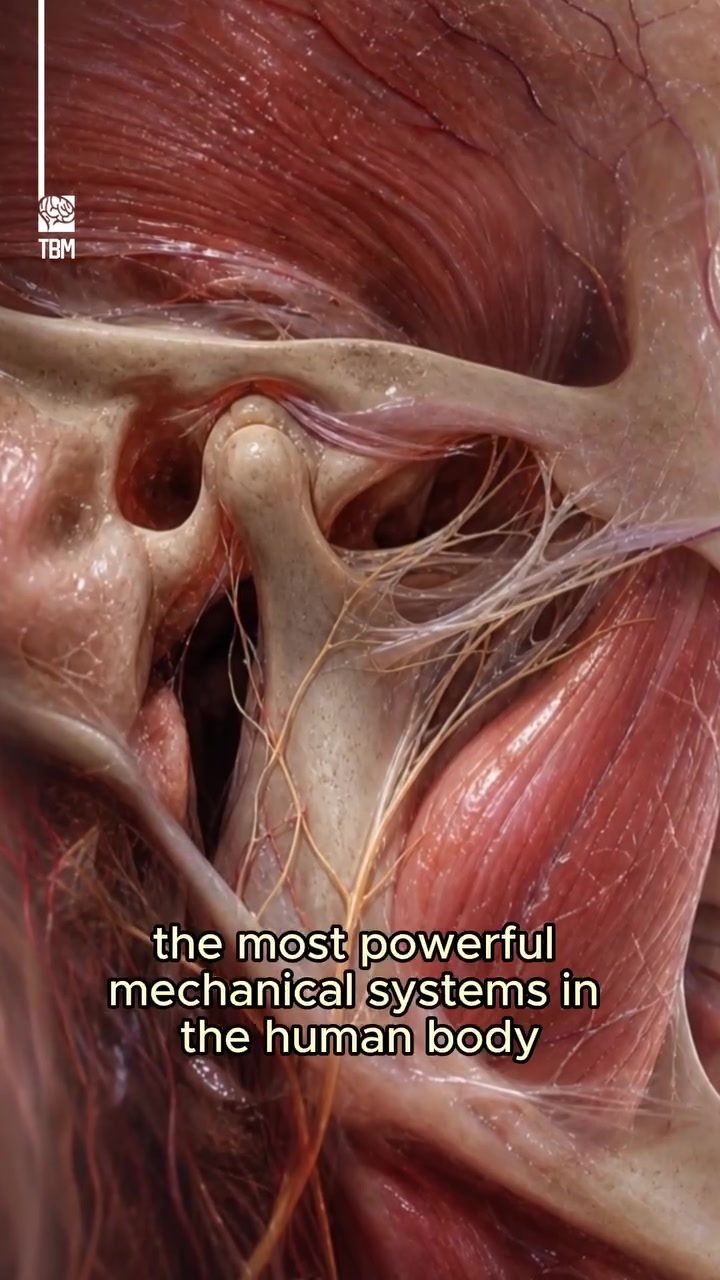
The Power and Precision of the Human Jaw
The human jaw is a marvel of biological engineering, a powerful mechanical system that plays a crucial role in daily activities. Driven by the masseter muscle, the jaw generates extraordinary force, enabling a range of functions from chewing to speaking.
Context: The Evolutionary Significance
The jaw's mechanical prowess is a testament to millions of years of evolutionary refinement. This intricate system involves not just raw power but also delicate coordination, allowing for a wide range of precise movements. Understanding the jaw's mechanics provides insights into the body's extraordinary abilities and the complex interplay of its components.
The Masseter Muscle: The Powerhouse
Strength and Efficiency
The masseter muscle, one of the strongest in the body relative to its size, is the primary force behind the jaw's power. It works in tandem with other jaw muscles to generate bite forces reaching hundreds of pounds per square inch. This force is sufficient to crush even the toughest foods, demonstrating the jaw's extraordinary capability.
Coordinated Movement
While strength is a defining feature, the masseter muscle is just one part of a broader system. The jaw performs thousands of precise movements daily, each requiring flawless coordination between muscles, bones, joints, and nerves. This coordination is essential for tasks as varied as chewing, speaking, swallowing, and expressing emotions.
The Temporomandibular Joint: The Pivot Point
Complexity and Function
At the heart of the jaw's mechanical system is the temporomandibular joint (TMJ), one of the most complex joints in the body. The TMJ is a hinge and sliding joint that connects the mandible (lower jaw) to the temporal bone of the skull. This joint is crucial for the jaw's ability to perform both powerful and precise movements.
Precision and Power
The TMJ's design allows for a range of motions, including hinge action for opening and closing the mouth, and rotational and translational movements for side-to-side and forward-backward motions. This versatility enables the jaw to handle complex tasks with both power and precision, whether it's tearing into a piece of meat or forming words in a conversation.
The Role of the Masseter in Daily Life
Chewing and Digestion
The jaw's primary function is chewing, a process that begins the digestive process. The powerful masseter muscle, along with other muscles, helps to break down food into smaller, more manageable pieces. This mechanical breakdown is vital for efficient digestion, as it increases the surface area of the food, allowing digestive enzymes to work more effectively.
Speaking and Communication
In addition to its role in digestion, the jaw plays a critical part in speech. The precise movements of the jaw, tongue, and lips work together to form the sounds that allow us to communicate. The jaw's ability to move in complex patterns is essential for the articulation of words, making it a vital component of human communication.
Expressing Emotions
The jaw's movements are also integral to expressing emotions. Facial expressions, including those involving the jaw, convey a wide range of feelings, from joy and surprise to anger and sadness. The coordination of the jaw with other facial muscles helps to create these expressions, which are crucial for social interaction and communication.
Practical Tips for Maintaining Jaw Health
Proper Diet
Maintaining a balanced diet can help keep the jaw muscles strong and healthy. Chewing on a variety of foods, including those that require more effort to break down, can help exercise the jaw muscles.
Jaw Exercises
Regular jaw exercises can help maintain its strength and flexibility. Simple exercises, such as opening and closing the mouth wide, moving the jaw from side to side, and chewing gum, can help keep the jaw in good condition.
Posture and Stress Management
Good posture and stress management are also important for jaw health. Poor posture can put undue stress on the jaw, leading to issues such as temporomandibular joint disorder (TMJD). Stress can cause clenching and grinding of the teeth, which can also lead to jaw problems.
Important Takeaways
The human jaw is a remarkable example of biological engineering, combining powerful force with precise coordination. The masseter muscle and the temporomandibular joint work together to enable a wide range of movements, from chewing and speaking to expressing emotions. Maintaining the health of the jaw through proper diet, exercise, and stress management is essential for overall well-being.
Conclusion
The jaw's mechanical systems are a testament to the body's incredible capabilities. Understanding the power and precision of the jaw can provide valuable insights into the complexities of human anatomy and the importance of maintaining its health. By appreciating the jaw's mechanical prowess, we can better understand the extraordinary biological machine that is the human body.
Watch the Reel
Questions readers ask
What is the primary muscle responsible for the powerful bite force of the human jaw?
The masseter muscle is the primary muscle responsible for the powerful bite force of the human jaw. It is one of the strongest muscles in the body, enabling the jaw to generate significant force for various functions.
How does the human jaw achieve precise movements despite its powerful bite force?
The human jaw achieves precise movements through a complex interplay of muscles, ligaments, and joints. This intricate system allows for delicate coordination, enabling a wide range of precise movements essential for activities like speaking and eating.
What role does the masseter muscle play in the mechanics of the human jaw?
The masseter muscle plays a crucial role in the mechanics of the human jaw by providing the necessary power for biting and chewing. Its strength and efficiency allow for the generation of extraordinary bite forces, making it a key component in the jaw's mechanical design.
How is bite force measured and why is it important?
Bite force is typically measured using specialized devices that assess the pressure exerted by the teeth. This measurement is important for understanding the jaw's capabilities, diagnosing potential issues, and developing effective treatments for jaw-related conditions.
What insights can be gained from studying the mechanics of the human jaw?
Studying the mechanics of the human jaw provides valuable insights into the body's extraordinary abilities and the complex interplay of its components. It offers a deeper understanding of the jaw's role in daily functions and the potential impacts of any disruptions in its mechanics.
What are the unique features of human jaw anatomy that contribute to its powerful bite force?
The unique features of human jaw anatomy include the strong masseter muscle, the alignment of the teeth, and the structure of the temporomandibular joint (TMJ). These elements work together to generate and distribute powerful bite forces efficiently, making the human jaw a highly effective mechanical system.
Recent articles
Fresh deep dives from the latest Reels we unpacked.




Comments
Be the first to comment.