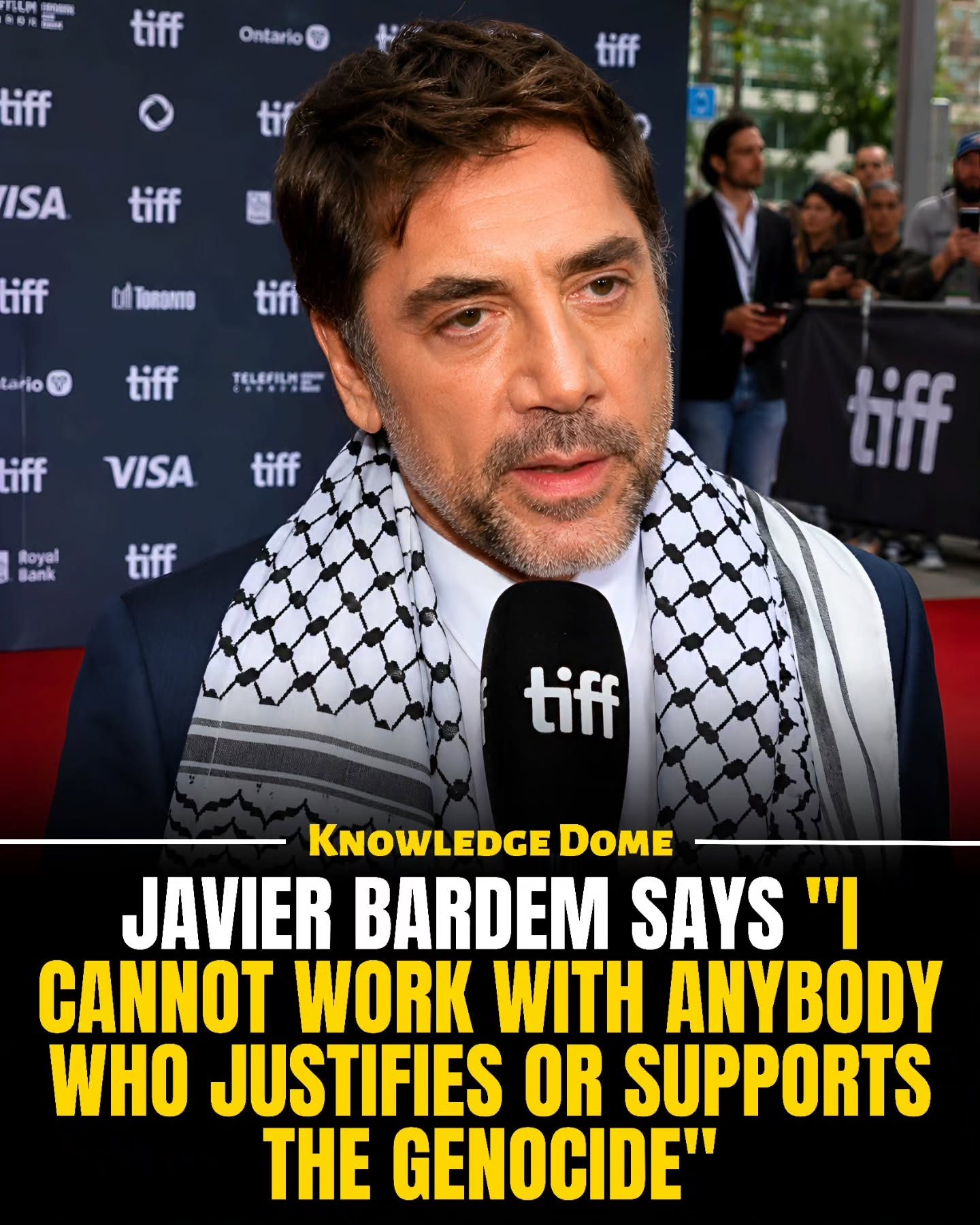
Actor Javier Bardem’s Statement on Violence in Gaza
Actor Javier Bardem has firmly spoken against the violence in Gaza, characterizing it as genocide. He stated unequivocally that he cannot collaborate with anyone who supports, justifies, or remains silent about it. Bardem's remarks have ignited significant debate within the film industry and beyond, focusing on the role of public figures in addressing global suffering.
His statement is particularly timely as it coincides with the awards season, during which Bardem made a public stand by wearing a traditional keffiyeh scarf on the red carpet, notably at the Toronto International Film Festival (TIFF). The keffiyeh is a symbol of support for Palestine, and Bardem’s choice to wear it was a deliberate gesture to speak out against the violence in Gaza and to support the Film Workers for Palestine initiative.
Why This Matters
Bardem's stance has sparked discussions on the responsibilities of actors, film companies, and other public figures when it comes to addressing global issues. The debate centers on the complexities of morality, responsibility, and political activism. Some individuals and organizations in the film industry have applauded Bardem for his courage in speaking out, while others have argued that actors should remain neutral and stay out of politics.
The Public Statement
On the red carpet, Bardem’s attire and statements were a powerful mix of symbolism and activism. His words were clear: "I cannot work with anybody who justifies or supports the genocide." This statement was a direct call to action for individuals and institutions to take a stand against injustice.
However, Bardem was careful to distinguish between criticizing institutions and attacking individuals. His protest is directed at companies and organizations that he believes are part of the problem, not at individual people. This nuanced approach has added layers to the discussion, prompting many to reflect on their own positions and the broader implications of their work.
The Keffiyeh and Symbolism
The keffiyeh scarf Bardem chose to wear has deep cultural and political significance. Traditionally worn by Palestinians, it has become a symbol of resistance and solidarity. By wearing it on the red carpet, Bardem made a bold statement that transcended the glamour of the event, drawing attention to the ongoing conflict and human rights issues in Gaza.
The Response from the Film Industry
Reactions to Bardem’s statement have been varied. Some filmmakers and actors have praised him for his courage and for using his platform to speak out against injustice. They see his actions as a form of political courage, aligning with the idea that artists have a responsibility to engage with the world around them.
On the other hand, others have criticized Bardem, suggesting that actors and filmmakers should focus on their craft and stay out of politics. This perspective argues that political statements can be divisive and may alienate certain audiences, potentially harming the industry.
The Broader Conversation
Bardem’s statement has become a significant part of the global conversation around cinema and human rights. It has brought to the forefront questions about the role of public figures in addressing global issues and the responsibilities that come with influence and visibility.
Some argue that public figures, especially those in the entertainment industry, have a unique opportunity to bring attention to important issues. They can use their platforms to raise awareness and encourage action, making a difference beyond their artistic contributions.
Practical Tips for Activism
For those inspired by Bardem’s stance, here are some practical tips for engaging in activism:
-
Research and Understand: Before speaking out, ensure you have a deep understanding of the issue. Knowledge is power, and informed activism is more effective.
-
Choose Your Platform: Use your platform wisely. Whether it’s social media, public appearances, or personal conversations, choose the method that best conveys your message.
-
Be Clear and Consistent: Ensure your message is clear and consistent. Activism requires commitment, so be prepared to stand by your beliefs over time.
-
Engage Constructively: Engage with others constructively. Listen to different perspectives and be open to dialogue. This can help bridge divides and create a more nuanced understanding of complex issues.
-
Support Organizations: Support organizations working on the ground. This could involve donating, volunteering, or amplifying their message.
Important Takeaways
Bardem’s statement serves as a reminder that public figures have a significant role to play in addressing global issues. His actions highlight the importance of taking a stand, even when it may be controversial. The debate sparked by his statement underscores the complexity of balancing artistic integrity with social responsibility.
Conclusion
Javier Bardem’s statement on the violence in Gaza has not only brought attention to a pressing global issue but has also sparked a broader conversation about the role of public figures in addressing such issues. Whether one agrees with his stance or not, it is clear that his words and actions have had a significant impact, encouraging many to reflect on their own positions and responsibilities. The film industry and beyond are now more deeply engaged in discussions about morality, responsibility, and the power of public statements, making Bardem’s contribution a pivotal moment.
Watch the Reel
Questions readers ask
Why did Javier Bardem wear a keffiyeh scarf at the Toronto International Film Festival (TIFF)?
Javier Bardem wore a keffiyeh scarf, a symbol of support for Palestine, to make a deliberate statement against the violence in Gaza. This was a public gesture to express his stance during an event such as TIFF, where the media and fans pay attention to him.
What specific words did Javier Bardem use to describe the violence in Gaza?
Javier Bardem described the violence in Gaza as genocide. He also stated that he would not collaborate with anyone who supports, justifies, or remains silent about it.
What role do public figures like Javier Bardem play in addressing global suffering, especially during award seasons?
Public figures like Javier Bardem often have a significant platform to raise awareness about global issues. During award seasons, their actions and statements can spark widespread debate and draw attention to causes they believe in, like the conflict in Gaza.
How has the film industry responded to Javier Bardem's statement about the violence in Gaza?
Javier Bardem's statement has ignited significant debate within the film industry. While some have supported his stance, others have criticized his decision to publicly address such a polarizing issue during an awards season.
What is the significance of Javier Bardem’s stance on the violence in Gaza during the awards season?
The timing of Javier Bardem’s statement during the awards season brings his message to a wider audience, as it coincides with a period of heightened media attention. His speech becomes a focal point for discussions about the role of public figures in global conflicts.
Has Javier Bardem faced any backlash for his statement on the Gaza violence?
Yes, Javier Bardem has faced backlash for his statement. Some critics argue that public figures should focus on their craft rather than engage in political or humanitarian issues. Others have applauded his bold stance, leading to a broader debate within the film industry and beyond.
What other actions, besides his statement, has Javier Bardem taken to support his stance on the Gaza conflict?
In addition to his statement, Javier Bardem has used symbolic gestures, such as wearing a keffiyeh scarf on the red carpet. These actions reinforce his public position on the conflict and amplify his message during events where he gains media attention, such as TIFF or award ceremonies.
Recent articles
Fresh deep dives from the latest Reels we unpacked.




Comments
Be the first to comment.