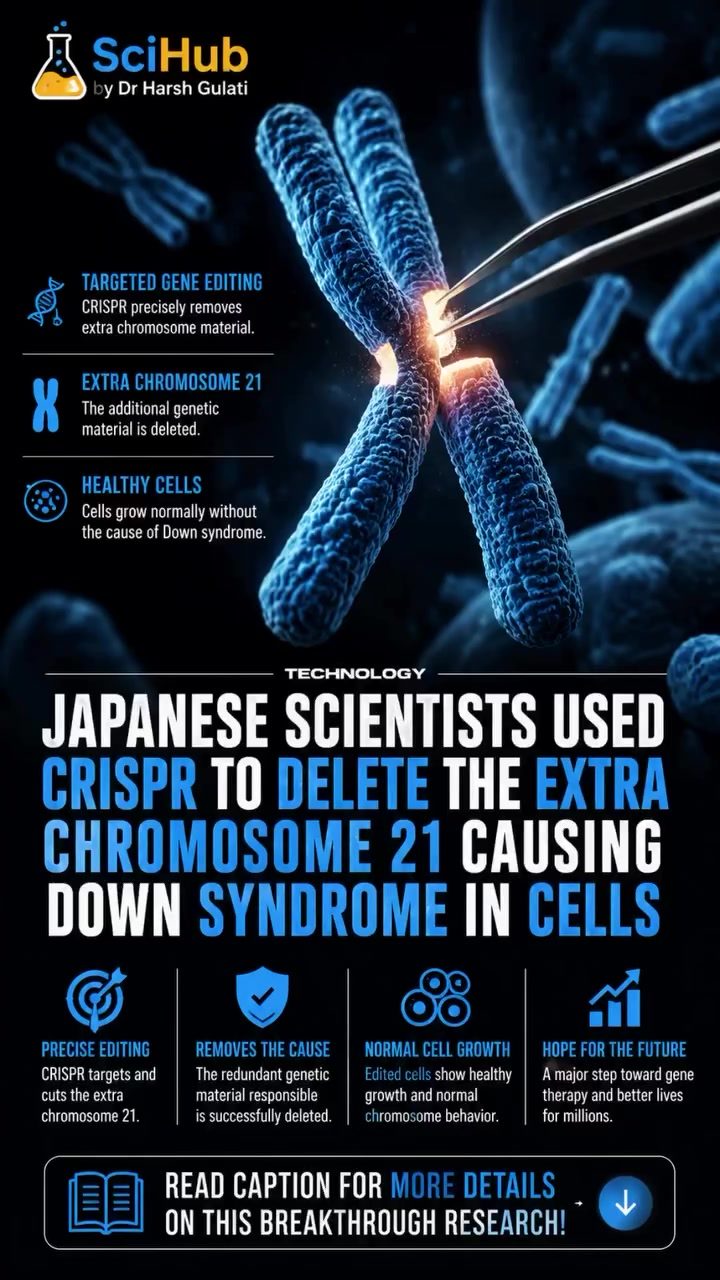
CRISPR Gene Editing for Down Syndrome
Down syndrome, a genetic condition resulting from an extra copy of chromosome 21, affects millions worldwide. Recent advancements in CRISPR gene-editing technology have brought new hope for treating this condition. Japanese scientists have made a significant breakthrough by successfully removing the extra chromosome 21 from laboratory-grown human cells using CRISPR.
Why This Matters
This scientific milestone is a crucial step toward developing gene therapies for chromosomal disorders. Although the research is in its early stages and has not yet been tested on humans, it offers a promising avenue for future treatments.
The Breakthrough
Understanding CRISPR Technology
CRISPR, or Clustered Regularly Interspaced Short Palindromic Repeats, is a powerful gene-editing tool. It allows scientists to make precise changes to DNA sequences. In this case, researchers utilized CRISPR to target and eliminate the extra chromosome 21 in laboratory-grown cells.
CRISPR technology works by using a molecular "scissors" to cut DNA at specific locations. By programming the CRISPR system to recognize the extra chromosome 21, scientists were able to delete the additional genetic material responsible for Down syndrome.
The Process
Japanese scientists conducted this groundbreaking study in laboratory-grown human cells. The process involved:
- Identifying the Target: The CRISPR system was programmed to identify and target the extra chromosome 21.
- Precision Editing: The CRISPR scissors precisely cut out the additional genetic material.
- Cellular Repair: The cell's natural repair mechanisms then fixed the DNA, resulting in a corrected genetic sequence.
The Impact on Cells
The edited cells showed remarkable changes. Many of them regained more typical patterns of gene activity, indicating that the CRISPR intervention was successful.
Healthy Cell Growth
One of the most exciting findings was that the edited cells grew normally. This suggests that removing the extra chromosome 21 allowed the cells to behave more like healthy cells, without the genetic imbalance that causes Down syndrome.
Normal Chromosome Behavior
The edited cells also exhibited normal chromosome behavior. This is a critical indicator of successful gene editing, as it shows that the genetic modifications did not disrupt the cell's overall function.
Steps Toward Gene Therapy
Current Limitations
While this breakthrough is promising, it's important to note that the research was conducted in laboratory cells, not in humans. This means that more research is needed before any clinical treatments can become possible.
Future Possibilities
The success of this study highlights the potential for gene editing in treating chromosomal disorders. If further research confirms these findings and extends them to human trials, CRISPR could revolutionize the treatment of Down syndrome and other genetic conditions.
Ethical Considerations
As with any groundbreaking medical technology, ethical considerations are paramount. The use of CRISPR in treating genetic disorders raises questions about the potential for misuse and the long-term effects of gene editing.
Practical Tips for Understanding CRISPR
Stay Informed
Staying updated on the latest developments in CRISPR and gene-editing technology is essential. This field is rapidly evolving, and new discoveries are made regularly.
Engage in Discussions
Participating in discussions about the ethical and scientific implications of gene editing can provide a balanced perspective. Engaging with experts and fellow enthusiasts can deepen your understanding of the subject.
Support Further Research
Supporting organizations that fund research in gene editing and genetic disorders can help accelerate progress in the field. This support can come in the form of donations, volunteering, or simply sharing information with others.
Importance of Research
Research is the backbone of advancements in gene editing. Continuous research is necessary to refine CRISPR technology, ensure its safety, and develop effective treatments for genetic disorders.
Important Takeaways
- CRISPR technology has been successfully used to remove the extra chromosome 21 in laboratory-grown human cells.
- This breakthrough could pave the way for future gene therapies for Down syndrome.
- The edited cells showed normal growth and gene activity, indicating the success of the CRISPR intervention.
- More research is needed before clinical treatments can be developed.
- Ethical considerations and ongoing discussions are crucial as the field of gene editing advances.
Conclusion
The use of CRISPR to remove the extra chromosome 21 linked to Down syndrome represents a significant advancement in genetic research. While this technology is not yet ready for clinical use, it offers a promising path toward treating chromosomal disorders. As scientists continue to explore the possibilities of CRISPR, the future of precision medicine looks increasingly hopeful.
Watch the Reel
Questions readers ask
How does CRISPR technology work in the context of treating Down syndrome?
CRISPR technology acts like a pair of molecular scissors, allowing scientists to target and remove specific genetic material. In the case of Down syndrome, researchers use CRISPR to target and eliminate the extra copy of chromosome 21, which is responsible for the condition's symptoms.
What makes the Japanese scientists' breakthrough significant?
The Japanese scientists' ability to remove the extra chromosome 21 from human cells marks a significant step forward. This accomplishment demonstrates the potential of CRISPR technology for developing targeted therapies for Down syndrome and other chromosomal disorders.
Can CRISPR be used to treat other genetic conditions?
Yes, CRISPR has the potential to treat a wide range of genetic conditions. It can be programmed to target and modify specific genes or chromosomes, making it a versatile tool for addressing various genetic disorders. However, more research is needed to fully understand and harness its potential.
Why hasn't CRISPR therapy for Down syndrome been tested on humans yet?
While the initial results from laboratory studies are promising, testing CRISPR therapy on humans involves numerous safety and ethical considerations. Researchers must ensure that the procedure is safe and effective before proceeding to human trials, which can take several years of rigorous testing and approvals.
What are the potential benefits of using CRISPR to treat Down syndrome?
Using CRISPR to treat Down syndrome could lead to significant improvements in the quality of life for individuals with the condition. By removing the extra chromosome 21, it may be possible to reduce or eliminate symptoms associated with Down syndrome, such as cognitive impairments and physical abnormalities. However, it is vital to note that this is still in the research phase and will take time to develop into a clinically viable treatment.
How long might it take for CRISPR therapy to be available for Down syndrome patients?
The timeline for developing a CRISPR therapy for Down syndrome is uncertain, as it depends on the success of ongoing research, regulatory approvals, and clinical trials. Given the complexities involved, it could take several years, or even decades, before a safe and effective treatment becomes widely available.
Recent articles
Fresh deep dives from the latest Reels we unpacked.




Comments
Be the first to comment.