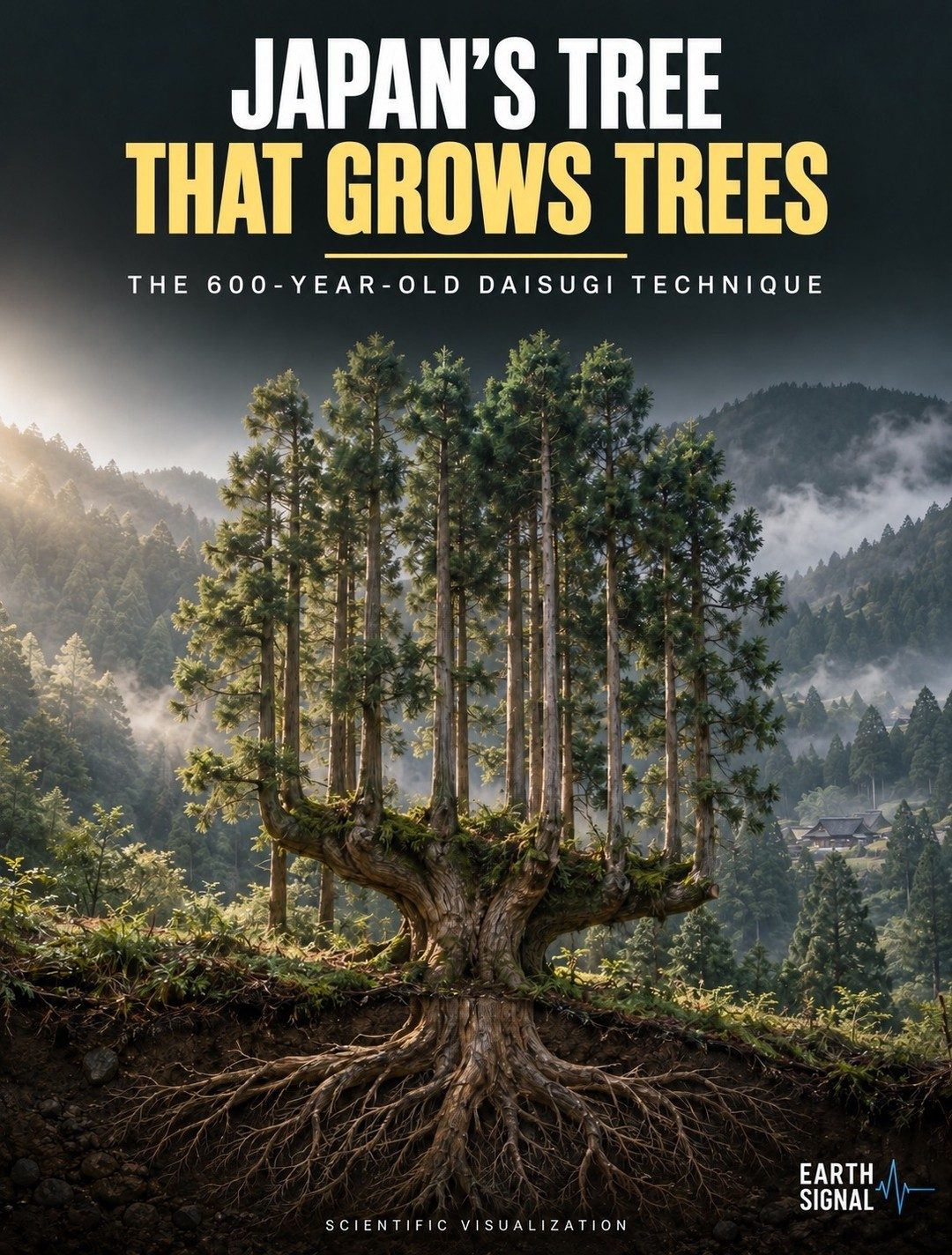
The Art of Daisugi
In the lush forests of Kyoto, an ancient and ingenious technique breathes life into the art of sustainable forestry. The Daisugi method, translating to “platform cedar,” has been practiced for over 600 years and offers a unique solution for harvesting timber without destroying the entire tree. A single cedar tree is carefully pruned to produce multiple shoots, which develop into smaller, straight-growing trees. This seemingly simple description hides a profound understanding of a tree’s regenerative capacity, enabling foresters to harvest timber sustainably. The Daisugi technique is more than just a method; it's a testament to Japan's rich history of sustainable forestry. This ancient technique was specifically developed for the Kitayama cedar, a species known for its high-quality timber. The shoots produced by the Daisugi method are prized for their straight, knot-free growth, making them ideal for Japanese architecture and traditional tea houses. The technique of Daisugi reveals a systematic approach to cultivation. Forests are carefully managed, and the trees receive specific pruning to encourage growth from the trunk. The younger, smaller trees that sprout from the base of the mother tree grow in a regulated manner, guided and pruned to maintain their straight, knot-free growth. On-screen text explains: “JAPAN'S TREE THAT GROWS TREES | THE 600-YEAR-OLD DAISUGI TECHNIQUE.” These simple phrases encapsulate a process that has nurtured generations of forests, generating a reliable resource of high-quality wood without the need for wholesale deforestation.
The Science Behind Daisugi
The Daisugi technique allows foresters to harvest timber while preserving the mother tree — which can live 600 years or more. This longevity is a testament to the resilient nature of the Kitayama cedar and the precision of the technique. The process is rooted in the understanding of the tree's regenerative capabilities to produce multiple, valuable shoots. These shoots are carefully nurtured to grow straight and true, devoid of knots. This quality made them highly sought after for traditional Japanese architecture and tea houses. By working with nature, the Daisugi technique ensures that the forest remains a productive resource while preserving the ecological balance. Earth Signal, the group behind this visualization, emphasizes the scientific approach that underpins the Daisugi technique. This involves a deep understanding of the tree’s biology and growth patterns. Foresters employ precise pruning and cultivation methods to influence the tree’s growth, guiding it to produce valuable timber shoots. This approach combines ancient wisdom with practical methodologies, showcasing a sustainable forestry practice that has stood the test of time. The Earth Signal team highlights “Science behind logical thinking–doing it right for a sustainable future.” This aligns perfectly with Daisugi’s resource-intensive methods of tree cultivation.
The Cultural Impact of Daisugi
The Daisugi technique not only represents a sustainable forestry practice but also mirrors a profound cultural philosophy of respect for nature and its resources. In Japan, the concept of 'mottainai’ encapsulates the idea of wasting nothing. Daisugi embodies this principle by ensuring that a single tree is used optimally, providing timber for generations to come. There's an inherent respect for the tree's life cycle and the understanding that its value is maximized when sustained over a 600-year lifespan. The technique contributes to the preservation of traditional Japanese architecture. The straight, knot-free wood is integral to the aesthetics and structural integrity of many historical buildings. The sustainability aspect of Daisugi makes it a crucial element in maintaining this architectural heritage for future generations. The technique’s longevity also highlights a cultural appreciation for patience and long-term vision. The Daisugi technique is not something that offers immediate rewards. It requires meticulous care and foresight, recognizing that the value of a tree can only be fully realized through responsible management over centuries. This deep-rooted cultural respect for the environment and its resources is one of the core strengths of Japanese forestry practices.
Watch the Reel
Related deep dives
Similar reads based on topic and creator.

Recent articles
Fresh deep dives from the latest Reels we unpacked.




Comments
Be the first to comment.