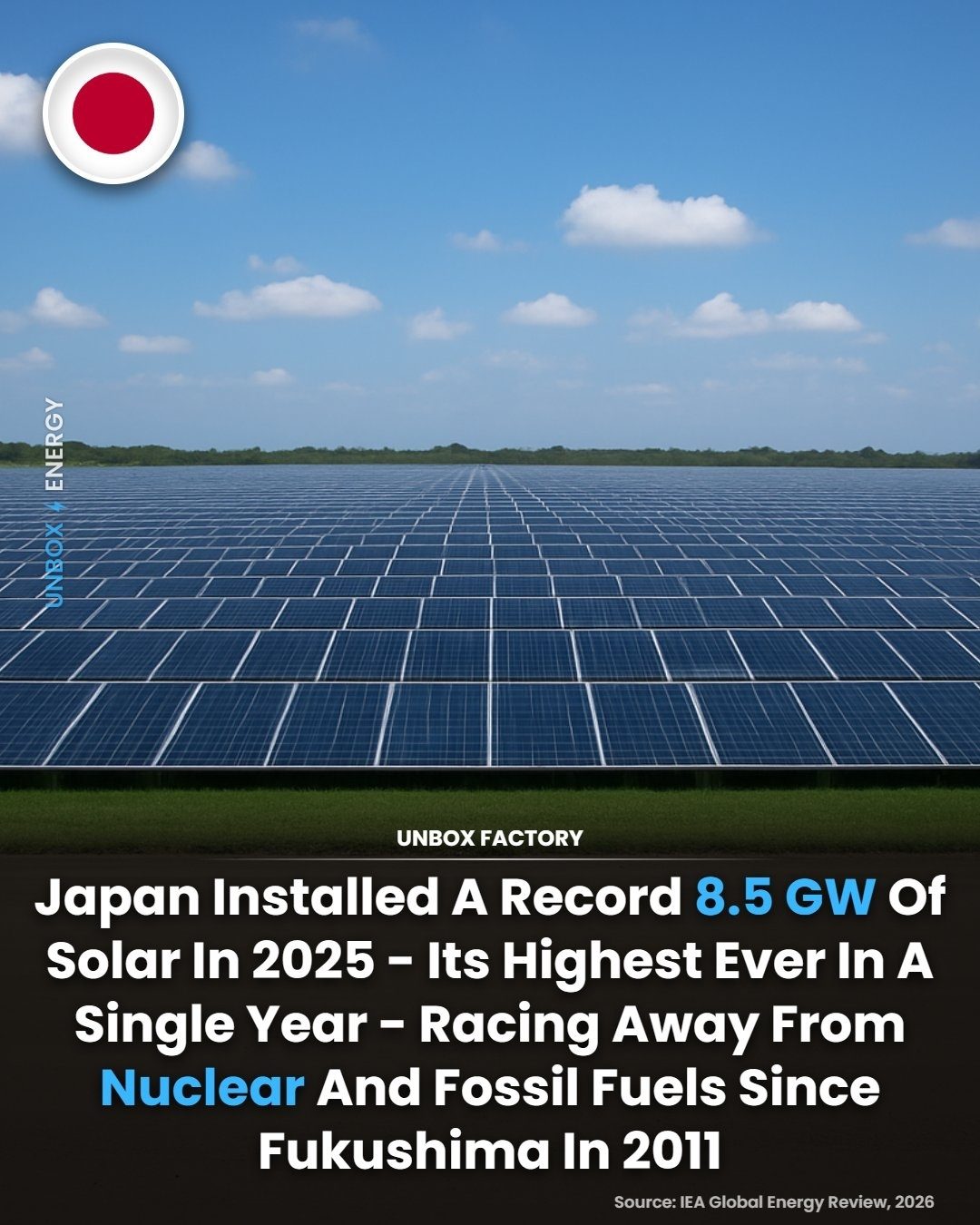
Japan's Record-Breaking Solar Energy Expansion
Japan's push for renewable energy has reached a significant milestone. In 2025, Japan installed a record 8.5 gigawatts (GW) of new solar capacity, marking its largest annual expansion in solar power generation ever. This surge in solar capacity is part of a broader strategy to reduce dependence on imported fossil fuels and enhance long-term energy security.
Why This Matters
Japan's shift towards solar energy is more than just a numerical achievement. It represents a strategic move away from nuclear power, particularly in the wake of the Fukushima nuclear disaster in 2011. The Fukushima incident highlighted the vulnerabilities of nuclear energy and spurred a national push for cleaner, more sustainable alternatives.
In addition to solar power, Japan has invested heavily in offshore wind energy, battery storage, and grid modernization. These initiatives are essential for achieving net-zero greenhouse gas emissions by 2050. They also aim to diversify the energy mix, ensuring a more resilient and environmentally friendly energy infrastructure.
The Shift from Nuclear to Solar
The Fukushima disaster in 2011 was a turning point for Japan's energy policy. The catastrophe led to widespread public outcry and concerns about the safety of nuclear power. In response, Japan began to prioritize renewable energy sources, especially solar power. This shift is evident in the rapid growth of solar installations across the country.
Japan now stands out as one of the world's largest solar energy producers, with a cumulative installed capacity exceeding 100 GW. This achievement underscores the country's commitment to renewable energy and its role in global energy transition efforts.
The Impact of the Fukushima Disaster
The Fukushima incident revealed the environmental and safety risks associated with nuclear energy. It prompted a national and international dialogue on the need for cleaner and safer energy solutions. The disaster accelerated Japan's investments in solar technology, leading to significant advancements in solar panel efficiency and installation techniques.
Japan's Investments in Renewable Energy
Since the Fukushima disaster, Japan has invested heavily in various renewable energy sectors. These investments cover:
- Solar Power: Japan has become a leader in solar technology, with record-breaking installations each year.
- Offshore Wind: Offshore wind projects are being developed to harness the power of the sea, providing a steady and reliable energy source.
- Battery Storage: Advanced battery storage solutions are crucial for stabilizing the grid and ensuring a consistent power supply from renewable sources.
- Grid Modernization: Upgrading the grid infrastructure ensures efficient energy distribution and integration of renewable sources into the national energy mix.
Practical Tips for Solar Energy Adoption
For those looking to adopt solar energy, whether for personal or commercial use, here are some practical tips:
Assess Your Needs
Before investing in solar, evaluate your energy needs. Consider factors such as energy consumption, available roof space, and sunlight exposure. This assessment will help determine the appropriate solar panel size and system configuration.
Invest in Quality
Choose high-quality solar panels and inverters. Investing in reliable equipment from reputable manufacturers ensures better performance and longevity. Look for certifications and warranties that guarantee the quality and efficiency of the solar system.
Optimize Installation
Proper installation is crucial for maximizing solar energy production. Ensure that the panels are installed at the optimal angle and orientation to capture the most sunlight. Professional installation services can provide expert advice and ensure adherence to safety guidelines.
Explore Storage Solutions
Incorporate battery storage solutions to store excess solar energy for use during low sunlight periods. Battery storage systems enhance the reliability and efficiency of solar energy, especially in areas with variable weather conditions.
Important Takeaways
Japan's record-breaking solar energy installation in 2025 is a testament to the country's dedication to renewable energy and its efforts to reduce dependence on imported fossil fuels. This milestone highlights several key points:
- Japan is a global leader in solar energy production, with substantial investments in renewable energy.
- The shift towards solar power is driven by the need for energy security and environmental sustainability.
- Diversifying the energy mix with solar, wind, and storage solutions ensures a more resilient energy infrastructure.
- Japan's commitment to achieving net-zero emissions by 2050 is supported by significant advancements in renewable energy technology.
Conclusion
Japan's successful transition to solar energy stands as a model for countries aiming to achieve energy independence and environmental sustainability. By prioritizing renewable energy, Japan has not only addressed the challenges posed by the Fukushima disaster but also paved the way for a greener future. The country's commitment to renewable energy serves as a beacon for global efforts to combat climate change and secure a sustainable energy future.
Watch the Reel
Questions readers ask
How does Japan's 2025 solar capacity compare to previous years?
Japan's 2025 solar capacity of 8.5 GW is the largest annual expansion of solar power generation in the country to date. This figure significantly surpasses previous years, highlighting Japan's accelerated efforts in renewable energy adoption.
What motivated Japan to focus on solar energy?
The Fukushima nuclear disaster in 2011 was a significant turning point. The incident underscored the vulnerabilities of nuclear power, leading to a national commitment to shift towards cleaner and more sustainable energy sources, with solar energy being a key focus.
How does solar energy contribute to Japan's energy security?
By increasing solar capacity, Japan aims to reduce its reliance on imported fossil fuels, which can be subject to supply disruptions and price volatility. This transition enhances Japan's energy independence and strengthens its energy resilience.
What are the benefits of Japan's solar energy expansion for global energy trends?
Japan's record-breaking solar expansion showcases a leading example of a major economy diversifying its energy mix, which can inspire similar transitions in other countries. This shift contributes to global solar energy trends and the collective effort to mitigate climate change.
What is the significance of the 8.5 GW milestone in context of Japan's renewable energy targets?
The 8.5 GW milestone is a major step towards Japan's broader renewable energy targets, demonstrating the country's commitment to a sustainable energy future. This achievement reflects a strategic push to integrate more solar power into the national grid, reducing the nation's carbon footprint and improving energy independence.
How does the IEA's solar report relate to Japan's solar energy progress?
The IEA's solar report provides a global context for Japan's achievements. By comparing Japan's progress with global solar energy trends, the report highlights Japan's leadership in renewable energy adoption and its contributions to international efforts in reducing fossil fuel dependency.
Recent articles
Fresh deep dives from the latest Reels we unpacked.




Comments
Be the first to comment.