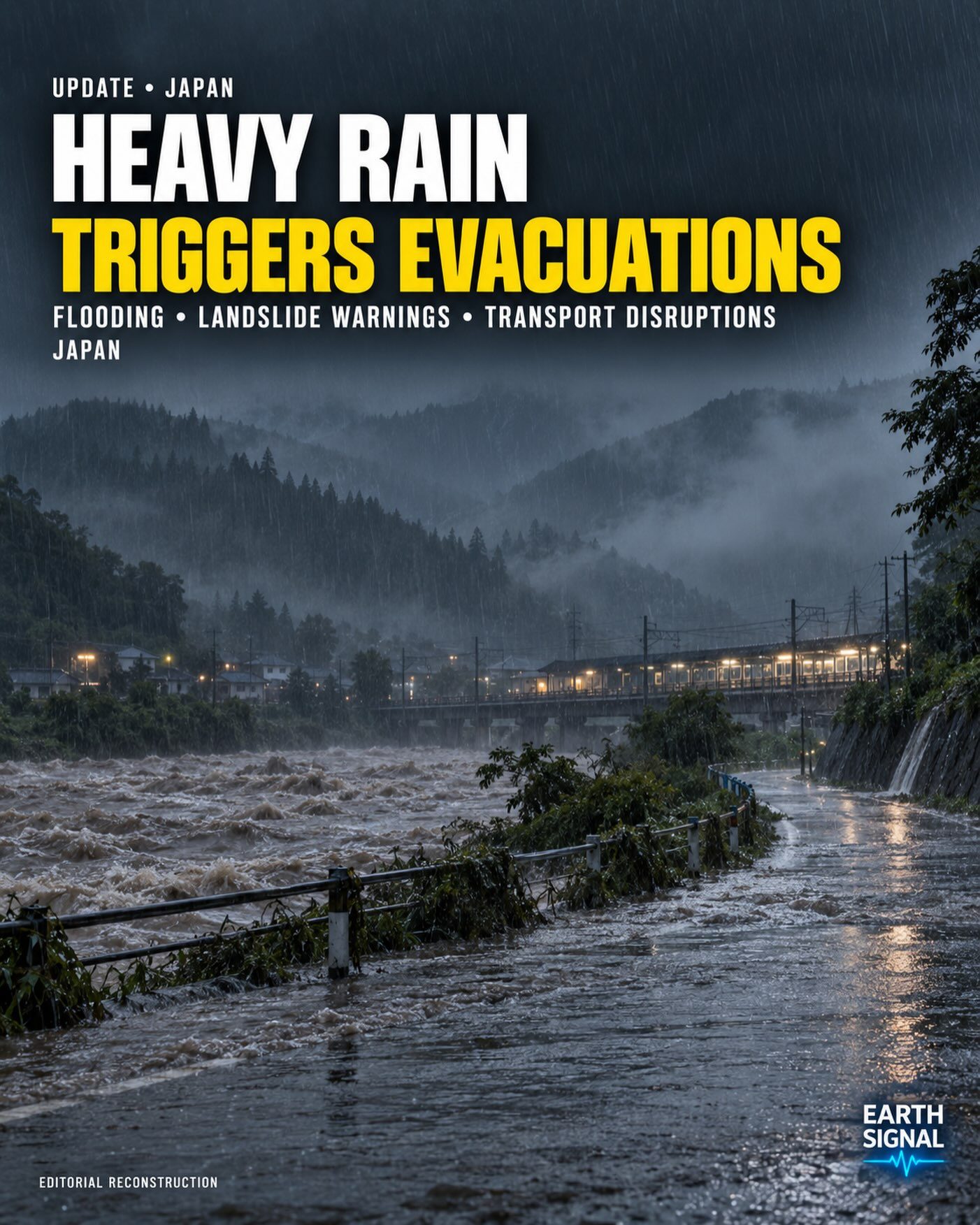
Extreme weather tests Japan's resilience
Japan has earned a reputation as a country well-prepared for natural disasters. In a profound display of just how resilient a population can be, residents are responding to extreme weather events with training instilled over years of earthquake, tsunami, and typhoon drills. Heavy rains have triggered flooding and landslide warnings, a sight familiar to some, yet unprecedented to others. Infrastructure—from roads to train tracks—lay submerged, and the landscape was transformed by the relentless downpour. The flooding itself is not an anomaly. Japan's geographical features and climate patterns make it particularly susceptible to heavy rainfall, leading to frequent and severe flooding. Rain, after all, plays a critical role in shaping Japanese culture, history, and landscape. Japan lie in the Pacific Ring of Fire, a region of high seismic activity and frequent earthquakes. They have inherent volcanic activity, making up some of the most significant volcanic mountains in the world. Rain, in much of the world, would be a nuisance—or a water source—but in Japan, it is another factor in the equation. For some residents, knowing the safety protocols is a part of life. The flooding and landslides pose significant risks to transportation networks. Roads have been washed away, and train tracks are flooded. This is a reminder for city planners and engineers tasked with infrastructure projects. A significant challenge developing regions face is maintaining infrastructure while being up to par with global development standards and strict benchmarks. They must prioritize and think critically about how they incorporate accessibility, safety, and environmental consideration thereof. This heavy rain event may serve as a wake-up call for cities and towns elsewhere.
Community solidarity: Facing mass evacuation
Evacuation warnings have been issued across multiple regions, forcing thousands to flee their homes. Community solidarity has emerged. Neighbours and families are evacuating local hospitals and nursing homes, showing the extent of human cooperation. Evacuations are happening in regions notorious for heavy rainfall and landslides. Many residents have spent decades preparing for such an emergency. They have systemized systems to rely on neighboring communities, government-provided information, and even strangers. The evacuation process involves continuous and real-time communication from government bodies about the risks posed to residents. This includes creating buffer zones, establishing safety protocols, and continuous navigation of safe routes. While doing so, the focus is always on ensuring that no community member is left behind. Communities in landslide-prone regions work alongside scientists and engineers to mitigate risks and ensure the safety of residents. Residents work alongside local authorities to manage evacuations.
Mother Nature: Testing the limits of infrastructure
The aftermath of the heavy rainfall showcases the devastating impact on Japan's infrastructure. Fluvial deposits have overwhelmed riverbanks, with debris accumulating along the shoreline. The aftermath serves as a stark reminder of the destructive potential of water. One image that particularly resonates is the sight of a train track partially submerged. Transport disruptions are a critical concern. Commuters are forced to rely on alternative modes of transportation, causing economic and social disruptions. This event may prove to be a test of resilience for the Japanese people, as they've time and again proved their mettle in adverse situations. Japan’s infrastructure is an investment that protects its overworked landscapes. It is there to ensure that Japan will continue to grow despite the landscape’s limitations and the unpredictability of nature.
Vulnerabilities in urban planning
Japan's landscapes are shaped by typhoons, tsunamis, and earthquakes. And while the country is often lauded for its disaster preparedness, heavy rainfall events have exposed vulnerabilities in urban planning. Traditional engineering and urban planning may lead to more sustainable and resilient infrastructure in the era of heavy rainfall. And cities with proper planning and engineered construction can withstand the unpredictable behaviour of the weather. The heavy rain event does not just test Japan's infrastructure. It tests the resilience and preparedness of Japanese communities. Municipalities have invested in drainage systems and flood barriers. They have been tasked with balancing the needs of urban development with the realities of extreme weather. They need to enforce regulations to minimise risks, but also deploy robust public communication to alert residents. Cities have invested significantly in infrastructure, including roads, trains, and bridges. The resilience of the infrastructure depends on the investment made by the economic authorities, government bodies, and private bodies. However, one mustn't forget the human component, the community's resources, management, and the government's support.
Watch the Reel
Related deep dives
Similar reads based on topic and creator.


Recent articles
Fresh deep dives from the latest Reels we unpacked.


Comments
Be the first to comment.