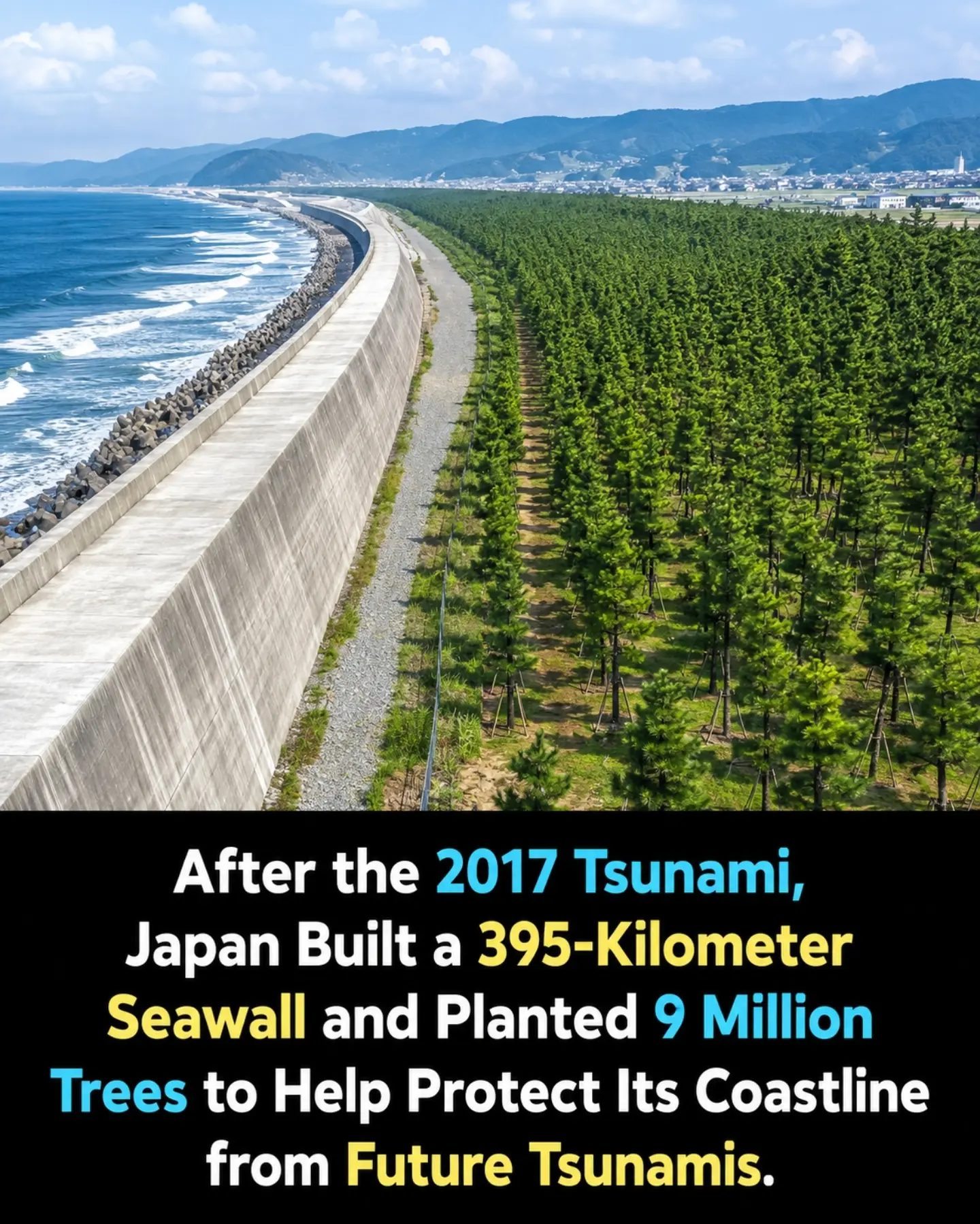
Coastal Protection in Japan
Japan's coastline faces significant threats from tsunamis, a harsh reminder of which came in 2017. In the aftermath of this devastating event, the country embarked on an ambitious project to safeguard its shores. Engineers constructed a 395-kilometer seawall, and environmentalists planted 9 million trees. Together, these measures aim to protect the coastline from future tsunamis.
Why This Matters
Japan's geography makes it particularly vulnerable to tsunamis. The country's long coastline and proximity to active seismic zones mean that tsunami threats are ever-present. The 2011 Tōhoku earthquake and tsunami, for example, caused widespread devastation and highlighted the need for robust coastal defense systems. Japan's post-2017 initiatives exemplify a proactive approach to disaster mitigation, focusing on long-term resilience and environmental sustainability.
Main Discussion
The 395-Kilometer Seawall
The 395-kilometer seawall is a monumental feat of engineering. This extensive barrier is designed to absorb the energy of incoming waves, reducing the impact on coastal communities. The wall's length and height vary depending on the specific needs of different coastal areas. In some regions, the seawall reaches impressive heights, providing a formidable barrier against tsunamis.
The seawall is constructed using a combination of concrete, steel, and other durable materials to withstand the immense forces exerted by tsunamis. Engineers have also incorporated advanced design elements, such as wave-absorbing structures, to further enhance the wall's effectiveness.
The 9 Million Trees
Planting 9 million trees along the coastline is a critical component of Japan's coastal protection strategy. These trees serve multiple purposes, including stabilizing soil, reducing erosion, and absorbing the energy of incoming waves. The dense forest canopy acts as a natural barrier, slowing down the momentum of tsunamis and minimizing their impact on coastal communities.
The tree-planting initiative goes beyond immediate tsunami protection. It also contributes to broader environmental goals, such as carbon sequestration and habitat restoration. By integrating environmental sustainability into its coastal defense strategy, Japan demonstrates a holistic approach to disaster mitigation and ecological conservation.
Practical Tips
While Japan's approach to coastal protection is comprehensive, individuals and communities in coastal areas can take practical steps to enhance their resilience to tsunamis:
Know the Warning Systems
Understanding and responding to tsunami warning systems is crucial. Familiarize yourself with local evacuation routes and safe zones. Participate in community drills and emergency preparedness programs to ensure you know how to react when a tsunami warning is issued.
Build Flood-Resistant Structures
Designing and constructing buildings to withstand flooding can significantly reduce damage and loss of life. Consider elevating structures, using flood-resistant materials, and incorporating flood barriers and gates.
Plant Native Vegetation
If you live in a coastal area, planting native vegetation can help stabilize the shoreline and reduce the impact of tsunamis. Choose species that are well-suited to your local environment and can thrive in coastal conditions. This not only enhances natural defenses but also supports local ecosystems.
Important Takeaways
Japan's post-2017 tsunami initiatives highlight the importance of proactive measures in disaster preparedness. The combination of a 395-kilometer seawall and 9 million planted trees showcases a multifaceted approach to coastal protection, emphasizing both engineering and environmental sustainability. These efforts serve as a model for other coastal regions facing similar challenges.
Conclusion
Japan's response to the 2017 tsunami underscores the necessity of robust and multifaceted coastal defense strategies. The 395-kilometer seawall and 9 million planted trees are not just physical barriers but symbols of Japan's commitment to resilience and environmental stewardship. By integrating advanced engineering solutions with natural defenses, Japan sets a global standard for tsunami preparedness and coastal protection. These measures not only safeguard communities from future disasters but also contribute to long-term environmental sustainability.
Watch the Reel
Questions readers ask
Why did Japan build a 395km seawall?
Japan constructed a 395km seawall as a primary defense mechanism against tsunamis. This massive structure acts as a physical barrier to reduce the impact of incoming waves, helping to protect coastal communities and infrastructure. The length of the seawall ensures that a significant portion of the vulnerable coastline is shielded.
How do the 9 million trees contribute to tsunami defense?
The 9 million trees planted along the Japanese coast serve as a natural defense system. Their roots help to stabilize soil and reduce erosion, while their canopy can slow down and dissipate the energy of incoming tsunami waves. This environmental approach complements the engineering efforts of the seawall.
What prompted Japan to invest in these tsunami defense strategies?
The devastating 2011 Tōhoku earthquake and tsunami, along with the 2017 tsunami, served as stark reminders of the need for robust coastal defense. These events motivated Japan to invest in comprehensive strategies, including both engineering and environmental measures, to enhance its resilience against future tsunamis.
What are the benefits of combining seawalls and tree planting for tsunami defense?
Combining seawalls and tree planting provides a multi-layered defense against tsunamis. The seawall offers immediate physical protection, while the trees enhance long-term sustainability by preventing erosion and promoting biodiversity. This dual approach ensures both immediate safety and long-term environmental benefits.
How does Japan's geography influence its tsunami defense strategies?
Japan's extensive coastline and proximity to active seismic zones make it particularly susceptible to tsunamis. This geographical vulnerability has driven the development of extensive defense strategies, including the 395km seawall and large-scale tree planting, to safeguard its coastal areas effectively.
What role does sustainability play in Japan's tsunami defense initiatives?
Sustainability is a key factor in Japan's tsunami defense initiatives. The planting of 9 million trees not only aids in tsunami mitigation but also promotes ecological balance and biodiversity. This focus on environmental stewardship ensures that the defenses are effective and sustainable over the long term.
What is the significance of the 2011 Tōhoku earthquake and tsunami in Japan's defense planning?
The 2011 Tōhoku earthquake and tsunami were pivotal events that exposed the vulnerabilities of Japan's coastal areas. These events led to a comprehensive reassessment of defense strategies, resulting in the construction of the 395km seawall and extensive tree planting initiatives. These measures reflect Japan's commitment to mitigating future risks and enhancing resilience.
Related deep dives
Similar reads based on topic and creator.


Recent articles
Fresh deep dives from the latest Reels we unpacked.




Comments
Be the first to comment.