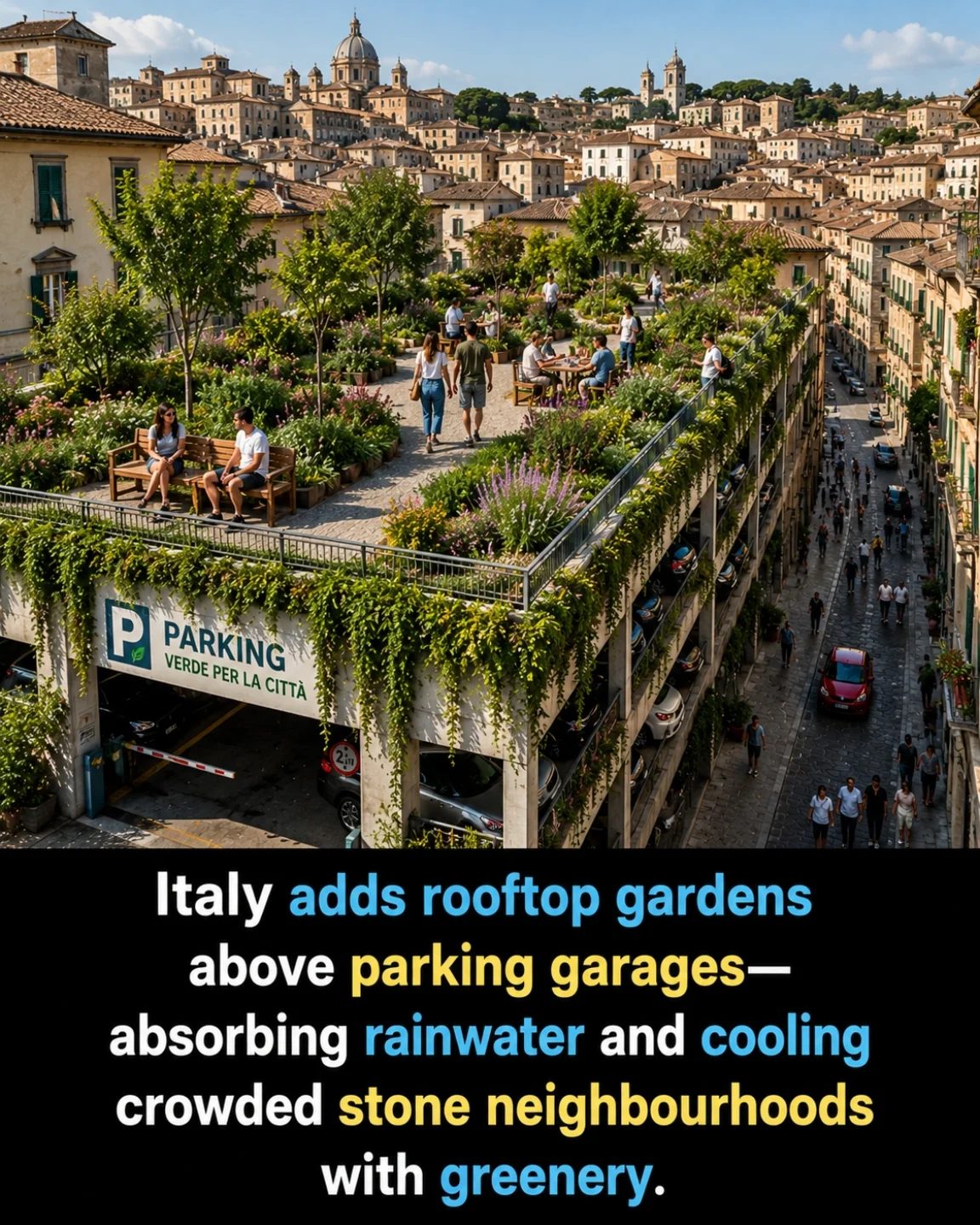
Rooftop gardens have become an innovative solution to urban planning challenges, particularly in densely populated areas. In Italy, these elevated green spaces are being constructed above parking garages, transforming utilitarian structures into lush, environmentally beneficial spaces.
Context / Why This Matters
As urbanization continues to rise, so does the need for sustainable and efficient use of space. Rooftop gardens offer a practical solution by turning underutilized areas into functional and aesthetically pleasing zones. In Italy, these gardens are being integrated into parking garages, which are common in urban centers. This approach helps manage rainwater and reduces the urban heat island effect, making cities more livable.
Main Discussion
Transforming Urban Spaces
Rooftop gardens contribute significantly to urban sustainability. By converting the typically unused space above parking garages into vegetated areas, cities can enhance biodiversity. This transformation not only beautifies the urban landscape but also provides habitats for local flora and fauna.
Environmental Benefits
Rainwater Management
One of the primary benefits of rooftop gardens is their ability to absorb rainwater. Traditional rooftops and parking lots often lead to runoff, which can overwhelm city drainage systems and cause flooding. Gardens, however, can absorb a significant amount of rainwater, reducing the strain on urban infrastructure. This absorption helps to replenish groundwater and mitigate the effects of heavy rainfall, ensuring that water is used more efficiently.
Cooling Effect
In crowded, stone-built neighborhoods, the urban heat island effect can be pronounced. Rooftop gardens mitigate this by providing a natural cooling effect. Plants and vegetation help to lower surface temperatures through a process called evapotranspiration, where water is released into the atmosphere, cooling the surrounding air. This reduces the need for air conditioning and lowers energy consumption, contributing to a more sustainable urban environment.
Urban Design Concept
The integration of rooftop gardens into parking garages is a testament to innovative urban design. This concept not only adds green spaces to urban landscapes but also maximizes the use of existing infrastructure. By repurposing the often overlooked space above parking garages, cities can create a more livable environment without the need for extensive land development.
Practical Tips
Implementation
Implementing rooftop gardens above parking garages requires careful planning and execution. Here are some practical steps to consider:
- Structural Integrity: Ensure that the parking garage can support the weight of the garden, including soil, plants, and water.
- Drainage Systems: Install efficient drainage systems to manage rainwater and prevent waterlogging.
- Plant Selection: Choose plants that are suitable for the local climate and can thrive in the rooftop environment.
- Maintenance: Develop a maintenance plan to ensure the garden remains healthy and functional over time.
Community Engagement
Engaging the local community is crucial for the success of rooftop gardens:
- Public Consultation: Involve residents in the planning process to ensure the garden meets community needs.
- Volunteer Programs: Create volunteer programs to help maintain the garden, fostering a sense of ownership and pride.
- Educational Workshops: Host workshops and events to educate the community about the benefits of rooftop gardens and sustainable urban living.
Important Takeaways
- Sustainable Urban Development: Rooftop gardens contribute to sustainable urban development by maximizing the use of existing infrastructure and reducing environmental impact.
- Environmental Benefits: These gardens help manage rainwater, mitigate the urban heat island effect, and enhance biodiversity.
- Community Involvement: Engaging the local community is essential for the success and maintenance of rooftop gardens.
- Innovative Design: The concept of building rooftop gardens above parking garages exemplifies innovative urban design, transforming utilitarian spaces into functional green areas.
Conclusion
Rooftop gardens are a forward-thinking solution to urban planning challenges. By transforming parking garages into green spaces, cities can enhance sustainability, manage rainwater, and create more livable environments. This innovative approach not only benefits the urban ecosystem but also fosters a sense of community and environmental stewardship. As urbanization continues, rooftop gardens offer a practical and sustainable way to integrate nature into our cities.
Watch the Reel
Questions readers ask
Why are rooftop gardens particularly beneficial in urban areas like Italy?
Rooftop gardens in urban areas like Italy help combat the heat island effect by providing natural cooling through evaporation. They also manage rainwater by absorbing it, which reduces flooding and replenishes groundwater. Additionally, they enhance biodiversity by creating habitats for various species.
How do rooftop gardens on parking garages contribute to sustainable urban design?
By transforming underutilized parking garage roofs into green spaces, these gardens promote efficient use of space and enhance urban environments. They contribute to sustainable urban design by mitigating the urban heat island effect, managing rainwater, and increasing biodiversity.
What are the primary benefits of converting parking garages into rooftop gardens in Italy?
The primary benefits include reducing urban heat, managing rainwater to prevent flooding, and promoting biodiversity. These transformations also create aesthetically pleasing spaces that contribute to the overall livability of cities.
How do rooftop gardens help manage rainwater in urban areas?
Rooftop gardens absorb rainwater, which reduces runoff and helps prevent flooding. This absorption also replenishes groundwater supplies, making them an effective part of urban rainwater management strategies.
What role do rooftop gardens play in mitigating the urban heat island effect?
Rooftop gardens mitigate the urban heat island effect through a process called evapotranspiration, where plants release water vapor into the atmosphere, creating a natural cooling effect. This helps to lower ambient temperatures in urban areas, making cities more comfortable.
What types of plants are typically used in Italian rooftop gardens?
The choice of plants for Italian rooftop gardens often includes native species that are drought-resistant and can thrive in the local climate. These plants are selected for their ability to absorb rainwater, provide cooling through evapotranspiration, and support local wildlife.
How do rooftop gardens on parking garages enhance biodiversity in urban environments?
Rooftop gardens on parking garages enhance biodiversity by creating habitats for various species, including birds, insects, and plants. These green spaces provide food and shelter for wildlife, contributing to a more ecologically balanced urban ecosystem.
Related deep dives
Similar reads based on topic and creator.


Recent articles
Fresh deep dives from the latest Reels we unpacked.




Comments
Be the first to comment.