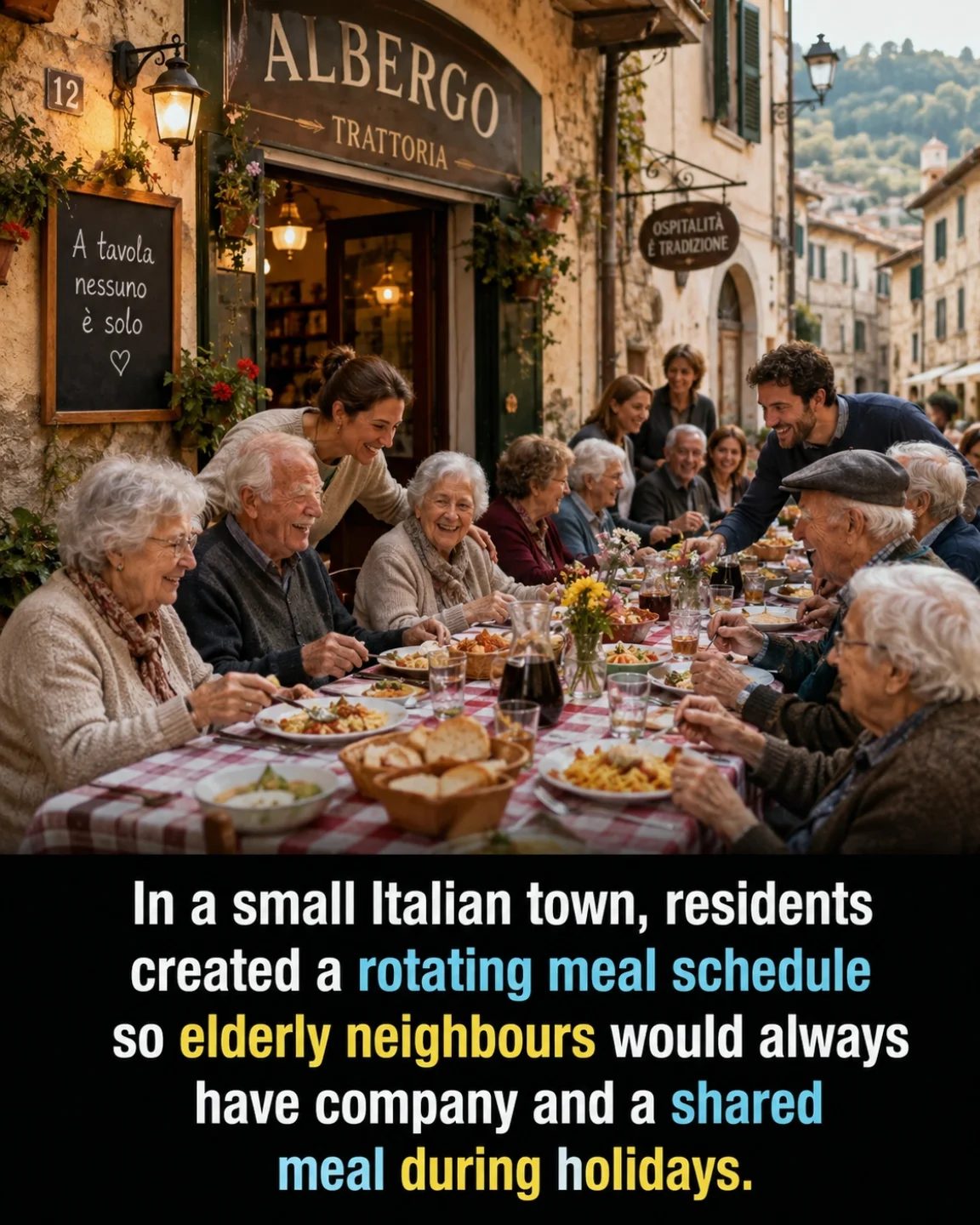
Italian Community Meal for Elderly Neighbors
In a small Italian town, residents have instituted a rotating meal schedule during holidays. This practice ensures that elderly neighbors always have company and a shared meal, fostering a strong sense of community and tradition.
Why Shared Meals Matter
Community meals are an essential part of Italian culture, particularly in smaller towns where the sense of neighborhood is strong. These shared dining experiences are about more than just food. They are opportunities for social interaction, the sharing of stories, and the preservation of tradition. For elderly residents, these meals are especially important, as they often live alone and may be less mobile. The rotating meal schedule ensures that no one is left to celebrate holidays in solitude.
The Importance of Community
In Italian culture, the phrase "A tavola nessuno è solo" translates to "At the table, no one is alone." This sentiment encapsulates the spirit of communal dining. The tradition of shared meals is deeply rooted in the Italian way of life. It is a time to break bread and strengthen bonds, creating a sense of belonging and support among neighbors.
The Role of the Trattoria
The trattoria, a traditional Italian restaurant, serves as a central gathering place for these community meals. It is more than just a place to eat; it is a hub of social activity. The warm atmosphere and stone buildings create an inviting space where people can relax and enjoy each other's company. The trattoria is more than a business; it is a community institution.
Hospitality and Tradition
The idea of "ospitalità è tradizione" translates to "hospitality is tradition." In Italy, hospitality is not just about welcoming guests into your home, but also about taking care of the elderly and vulnerable. The rotating meal schedule is a practical application of this tradition, ensuring that everyone is included and cared for during special times of the year.
Practical Tips for Implementing a Community Meal Schedule
Interested in fostering a similar sense of community in your neighborhood? Consider the following tips:
1. Create a Rotating Schedule
Start by organizing a rotating schedule where different families or neighbors host meals on different holidays. This ensures that the responsibility is shared and that everyone gets a chance to both host and be hosted.
2. Choose a Central Location
Having a central location, like a local trattoria or community center, can make the logistics of these meals easier. It also adds a sense of familiarity and tradition, making the experience more enjoyable for everyone.
3. Engage the Elderly
Reach out to elderly neighbors and encourage them to participate. Offer transportation if needed, and make sure they feel welcomed and included. This is a great opportunity to bridge generational gaps and strengthen community ties.
4. Make it a Festive Occasion
Decorate the space, prepare traditional dishes, and encourage lively conversation. The more festive the environment, the more people will look forward to these gatherings.
5. Involve the Whole Community
Encourage a diverse range of people to participate, from young families to single individuals. This helps to create a rich tapestry of experiences and perspectives, making the meals even more enriching.
Important Takeaways
- Community meals are a cornerstone of Italian culture, fostering social interaction and shared traditions.
- A rotating meal schedule ensures that elderly neighbors are included and cared for, particularly during holidays.
- Hospitality and tradition are at the heart of these community gatherings, making them meaningful and enjoyable experiences for everyone involved.
- Implementing a similar schedule in your community can be a rewarding way to strengthen bonds and create a sense of belonging.
Conclusion
The tradition of shared meals in Italian culture is a beautiful example of how community and hospitality can come together to create lasting bonds. By instituting a rotating meal schedule, residents of a small Italian town have ensured that no one is left to celebrate holidays alone. This practice not only enriches the lives of the elderly but also strengthens the fabric of the community as a whole. Whether you're in Italy or elsewhere, fostering a similar sense of togetherness can bring joy and meaning to your neighborhood.
Watch the Reel
Questions readers ask
What is the purpose of the rotating meal schedule in this Italian town?
The rotating meal schedule is designed to ensure that elderly residents always have company and a shared meal during holidays. It helps to foster a sense of community and tradition, while also providing companionship for seniors who might otherwise be alone.
Why are communal dining experiences important for the elderly in this community?
Community meals provide elderly residents with opportunities for social interaction and storytelling, which can greatly improve their quality of life. These shared meals are essential for maintaining social bonds and fostering a sense of belonging, especially for those who live alone or have limited mobility.
How does the rotating meal schedule help elderly neighbors during the holidays?
This schedule ensures that elderly neighbors always have a place to dine and companions to celebrate. With rotating hosts, no one is left to celebrate holidays in isolation, which can be particularly beneficial in reducing feelings of loneliness and isolation.
What role do community meals play in Italian culture, especially in smaller towns?
In Italian culture, community meals are a vital aspect of maintaining social bonds and preserving tradition. In smaller towns, this is especially true, as the sense of neighborhood is strong. These meals provide an opportunity for residents to come together, share stories, and create a supportive community environment.
How does the town's meal plan support the well-being of elderly residents?
By ensuring that elderly residents have regular social interactions and shared meals, the town's meal plan helps to combat feelings of loneliness and isolation. The sense of belonging and companionship that comes with these shared dining experiences can have a positive impact on the overall well-being of elderly residents.
What kind of family tradition is being preserved with the rotating meal schedule?
The rotating meal schedule preserves the tradition of communal dining and social support within the community. It ensures that the practice of sharing meals and stories during holidays continues, reinforcing the bonds between neighbors and creating a lasting tradition for future generations.
Related deep dives
Similar reads based on topic and creator.




Recent articles
Fresh deep dives from the latest Reels we unpacked.




Comments
Be the first to comment.