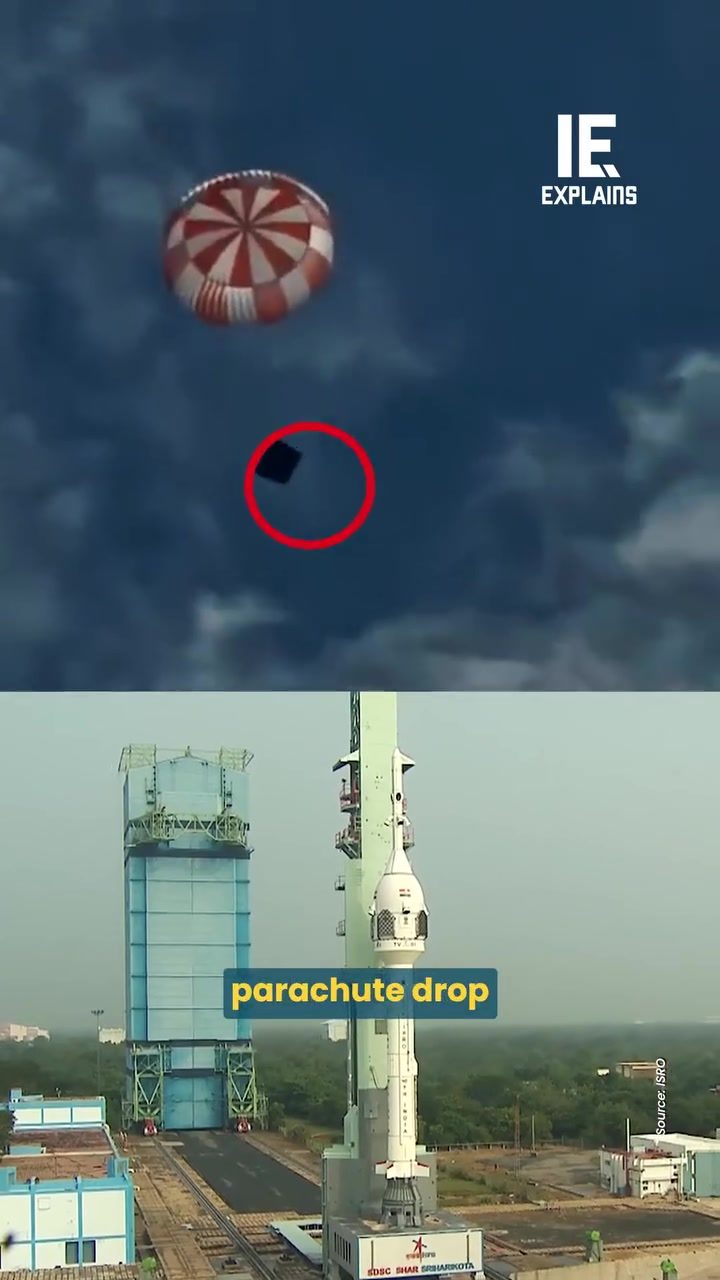
The Importance of ISRO's Parachute Drop Test for Gaganyaan
On July 7, 2026, the Indian Space Research Organization (ISRO) successfully conducted the fifth Integrated Main Parachute Air Drop Test (IMAT-05) for the Gaganyaan human spaceflight program. This test was a critical step in preparing for India's first human space mission. The test involved dropping a single main parachute with a dummy mass from 2.5 kilometers using an Indian Air Force IL-76 aircraft at the ADRDE drop zone in Madhya Pradesh.
Why This Matters
The successful completion of IMAT-05 is a significant milestone in India's journey toward human spaceflight. The test aimed to validate the structural integrity and design margins of the main parachute under the maximum loads expected during the first uncrewed Gaganyaan G1 mission. This parachute system is crucial for safely returning the crew module to Earth.
Main Discussion
The Gaganyaan Program
The Gaganyaan program is ISRO's ambitious initiative to send Indian astronauts to space. The program involves multiple phases, including uncrewed and crewed missions. The success of IMAT-05 brings ISRO one step closer to achieving this milestone.
The Role of Parachutes
The parachute system is a critical component of any space mission, especially during the return phase. The Gaganyaan crew module will use a complex system of ten parachutes of four types: apex covers, drogues, pilots, and three mains. These parachutes work together to ensure a soft splashdown in the sea.
The Test Details
The IMAT-05 test involved several key steps. An extractor parachute deployed a drogue to stabilize the payload. Following this, the main parachute opened, slowing the payload to a safe landing speed. The test verified the parachute's ability to handle the forces experienced during the descent, ensuring its reliability for the actual mission.
Collaborative Effort
IMAT-05 was a collaborative effort between ISRO, the Defence Research and Development Organisation (DRDO), the Indian Air Force, and the Indian Army. This collaboration highlights the interdisciplinary nature of space exploration and the importance of teamwork in achieving complex missions.
Practical Tips
While the specifics of parachute design and testing are highly technical, there are some general insights that can be applied to any complex project:
- Thorough Testing: Simulate real-world conditions as closely as possible to ensure the reliability of critical components.
- Collaboration: Engage experts from various fields to leverage diverse expertise and perspectives.
- Iterative Approach: Conduct multiple tests to refine and validate designs, ensuring they meet all necessary standards.
Important Takeaways
The successful completion of IMAT-05 is a testament to ISRO's commitment and expertise in space exploration. The test not only validated the parachute system but also brought India closer to achieving its goal of human spaceflight. The collaborative efforts and rigorous testing standards set by ISRO serve as a benchmark for future space missions.
Conclusion
The parachute drop test conducted by ISRO is a pivotal step in the Gaganyaan program. It underscores the importance of thorough testing, collaboration, and iterative design in space exploration. As India moves closer to sending astronauts to space, the success of IMAT-05 serves as a promise of the exciting milestones to come.
Watch the Reel
Questions readers ask
What is the significance of ISRO's parachute drop test for the Gaganyaan mission?
The parachute drop test is crucial for validating the safety measures of the crew module's return to Earth. It ensures that the parachute system can withstand the expected loads during the mission's critical phases, such as the splashdown.
How does the parachute test contribute to India's human spaceflight program?
The successful parachute test brings India one step closer to achieving its first human space mission. It demonstrates the country's advancements in space technology, particularly in ensuring the safe return of astronauts to Earth.
What specific objectives did the IMAT-05 test aim to achieve?
The IMAT-05 test aimed to validate the structural integrity and design margins of the main parachute. It was conducted under maximum expected loads to ensure the parachute's reliability during the actual mission.
Why was the Indian Air Force involved in the parachute drop test?
The Indian Air Force provided the IL-76 aircraft used to drop the parachute from 2.5 kilometers. This collaboration highlights the interagency support for India's space program and the critical role of the Air Force in conducting high-altitude tests.
What happens during a parachute drop test for a space mission?
During a parachute drop test, a dummy mass is attached to the parachute to simulate the weight of the crew module. The parachute is then dropped from a high altitude to test its deployment and functionality under realistic conditions.
What is the next step for ISRO after a successful parachute drop test?
Following a successful parachute drop test, ISRO will likely proceed with further tests, including more parachute trials and uncrewed missions. These steps are essential for refining the technology and ensuring the safety of future crewed missions.
How does the parachute system help in a space mission?
The parachute system is vital for decelerating the crew module during re-entry and ensuring a safe landing or splashdown. It helps to mitigate the impact of the module as it descends through the atmosphere, protecting the crew inside.
Related deep dives
Similar reads based on topic and creator.




Recent articles
Fresh deep dives from the latest Reels we unpacked.




Comments
Be the first to comment.