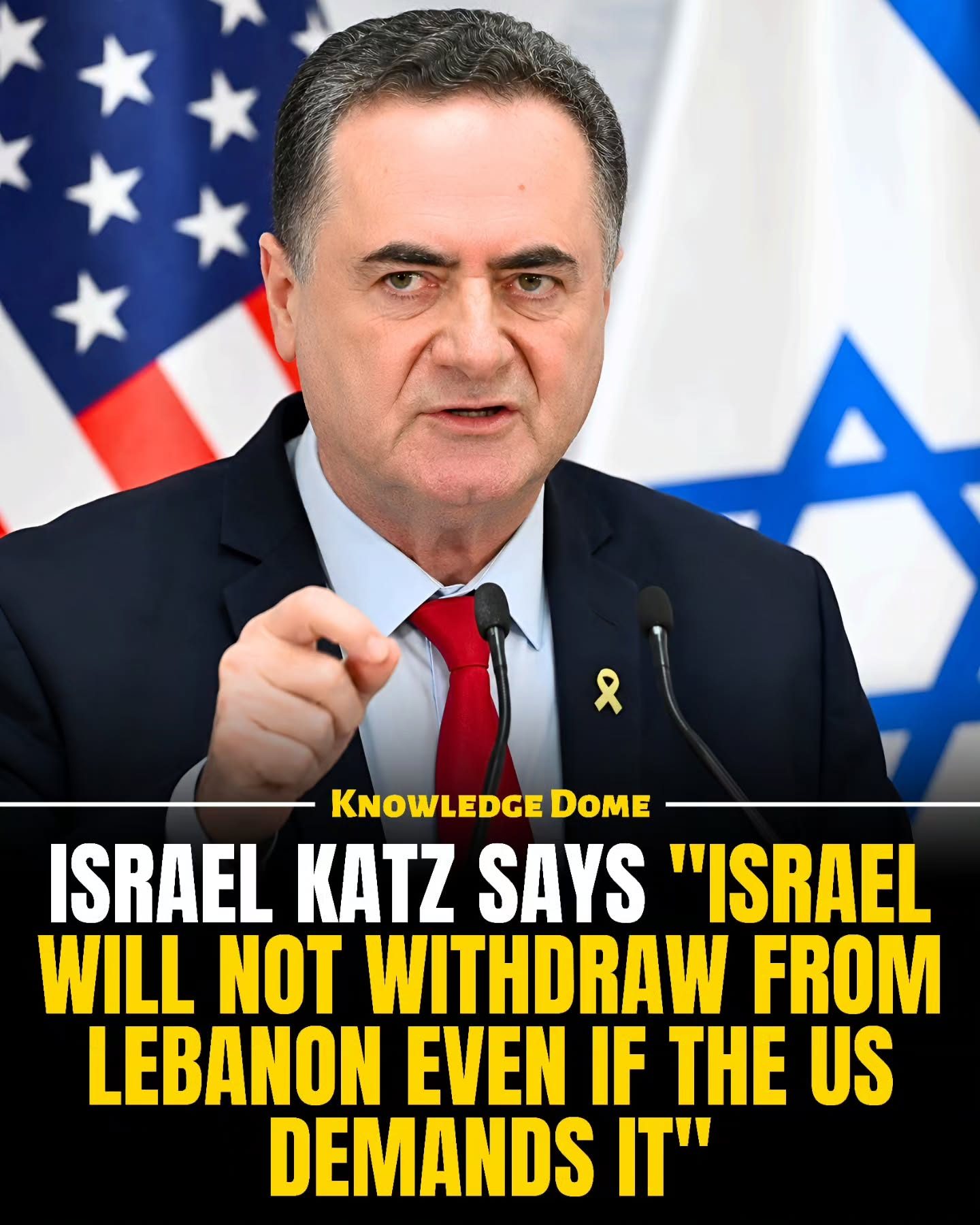
Israel's Stance on Southern Lebanon Withdrawal
Israel's Defense Minister, Israel Katz, has made a bold statement affirming Israel's commitment to maintaining its military presence in southern Lebanon, irrespective of any potential demands from the United States. This stance underscores the complex and volatile geopolitical dynamics of the region.
Why This Matters
Israel's decision not to withdraw from southern Lebanon is rooted in historical and strategic considerations. Understanding this decision requires delving into the broader context of Israel's security concerns, the historical lessons it has learned, and the current state of the region.
Understanding Israel's Position
Historical Context
Israel's experience in southern Lebanon is marked by periods of withdrawal and subsequent insecurity. In the past, security zones established to protect Israeli borders were often targeted by Hezbollah and other militant groups, leaving Israeli soldiers and nearby civilians vulnerable to attacks. These experiences have shaped Israel's current stance, as Katz emphasized the need to avoid repeating past mistakes.
Current Security Concerns
The security situation in southern Lebanon remains tenuous. The region has witnessed significant damage to homes and infrastructure, making it unsafe and unstable. Katz pointed out that the severity of the damage makes a safe withdrawal impossible at this time. The persistent threat from Hezbollah and other armed groups continues to pose a significant security risk, making Israel's presence in the region a strategic necessity.
U.S. Influence and Israel's Independence
Katz's message to his American counterpart underscores Israel's determination to act independently on matters of national security. While the United States is a key ally, Israel maintains that its decisions are guided by its own security assessments rather than external pressures. This stance highlights the delicate balance Israel must maintain between international relations and its own security imperatives.
Strategic Implications
Regional Stability
Israel's decision to stay in southern Lebanon has broader implications for regional stability. The presence of Israeli forces in the area serves as a deterrent to potential aggression from Hezbollah and other militant groups. This strategy aims to prevent a resurgence of conflict, which could destabilize the region further and draw in other actors, including Iran and Syria.
Diplomatic Relations
Maintaining a strong military presence in southern Lebanon also sends a clear message to the international community about Israel's resolve. While this decision may strain relations with the United States and other allies, it underscores Israel's commitment to protecting its citizens and securing its borders. This stance could influence future diplomatic negotiations and regional alliances, as other nations assess Israel's willingness to defend its interests.
Long-term Planning
Israel's long-term strategy in southern Lebanon is likely to involve continued military operations, coupled with efforts to rebuild and stabilize the region. This dual approach aims to address the immediate security concerns while also fostering a more stable environment for future negotiations. The focus will be on ensuring that any future withdrawal is done in a manner that minimizes risks to Israeli citizens and enhances regional security.
Practical Tips for Understanding the Situation
Stay Informed
Keeping up with the latest developments in the region is crucial for understanding the evolving dynamics. Follow reliable news sources and expert analysis to stay informed about changes in Israel's strategy and the broader geopolitical landscape.
Contextualize Historical Events
Understanding the historical context of Israel's involvement in southern Lebanon provides valuable insights into current decisions. Familiarize yourself with past conflicts, security measures, and their outcomes to grasp the rationale behind Israel's current stance.
Monitor Diplomatic Channels
Pay attention to official statements and diplomatic communications between Israel and the United States, as well as other key actors in the region. These interactions can offer clues about potential shifts in policy and the broader strategic calculations at play.
Important Takeaways
- Israel's decision to maintain its military presence in southern Lebanon is driven by historical lessons and current security concerns.
- The region's damaged infrastructure and ongoing threats from militant groups necessitate a continued Israeli presence.
- Israel's stance underscores its commitment to independent decision-making, even in the face of potential international pressure.
- The long-term strategy involves balancing military operations with efforts to stabilize and rebuild the region.
Conclusion
Israel's decision to stand firm in southern Lebanon reflects a combination of historical lessons, strategic calculations, and a commitment to national security. While this stance may have diplomatic ramifications, it is grounded in a thorough assessment of the region's complexities and the need to protect Israeli citizens. As the situation in southern Lebanon continues to evolve, understanding Israel's motivations and strategies will be key to navigating the broader geopolitical landscape.
Watch the Reel
Questions readers ask
Why is Israel maintaining its military presence in southern Lebanon?
Israel is maintaining its military presence in southern Lebanon due to historical security issues and current threats. The presence is seen as a deterrent to potential hostilities and a means to maintain regional stability.
How does Israel's stance affect U.S.-Israel relations?
Israel's decision to maintain its military presence in southern Lebanon, despite potential U.S. demands for withdrawal, could create tension in U.S.-Israel relations. However, Israel's commitment to regional stability and independence in strategic matters is a key factor in its decision.
What are the historical lessons that have shaped Israel's defense policy?
Israel's historical experiences, including past withdrawals and subsequent conflicts, have shaped its defense policy. The country has learned from the complexities and security challenges of leaving regions, such as southern Lebanon, and these lessons inform its current stance.
How does Israel's military presence contribute to regional stability?
Israel's military presence in southern Lebanon is aimed at preventing potential threats from escalating into full-scale conflicts. By maintaining a strong presence, Israel seeks to deter hostile actions and contribute to overall stability in the Middle East.
What are the primary security concerns for Israel in southern Lebanon?
Israel's primary security concerns in southern Lebanon include potential threats from Hezbollah and other militant groups. The country aims to protect its northern border and prevent cross-border attacks, which have been a significant issue in the past.
How does Israel's defense strategy in southern Lebanon impact neighboring countries?
Israel's defense strategy in southern Lebanon could influence the security dynamics of neighboring countries, such as Syria and the Palestinian territories. While it may reduce immediate threats, it could also provoke reactions from regional actors, affecting broader regional security.
What would be the implications of a potential withdrawal from southern Lebanon?
A potential withdrawal from southern Lebanon could lead to increased threats along the border, as seen in past withdrawals. Israel is concerned that a power vacuum could be exploited by militant groups, potentially leading to heightened conflict and instability in the region.
Recent articles
Fresh deep dives from the latest Reels we unpacked.




Comments
Be the first to comment.