Iran-U.S. Peace Talks Disrupted: A Breakdown of the Walkout
On Sunday, June 21, 2026, the Iran delegation walked out of crucial peace talks with the United States in Bürgenstock, Switzerland, marking a significant disruption in diplomatic efforts. The talks, which were intended to continue with the support of Qatar and Pakistan, took a dramatic turn just 80 to 90 minutes after they began. The sudden walkout was a direct response to a strong social media post from US President Donald Trump, escalating tensions between the two nations.
Context / Why This Matters
The peace talks in Bürgenstock were aimed at resolving long-standing disputes between Iran and the United States. The involvement of Qatar and Pakistan as mediators underscored the international effort to find a diplomatic solution. However, the talks quickly derailed due to Trump's online remarks, which had far-reaching implications for both sides.
The Preceding Events and Trump’s Remarks
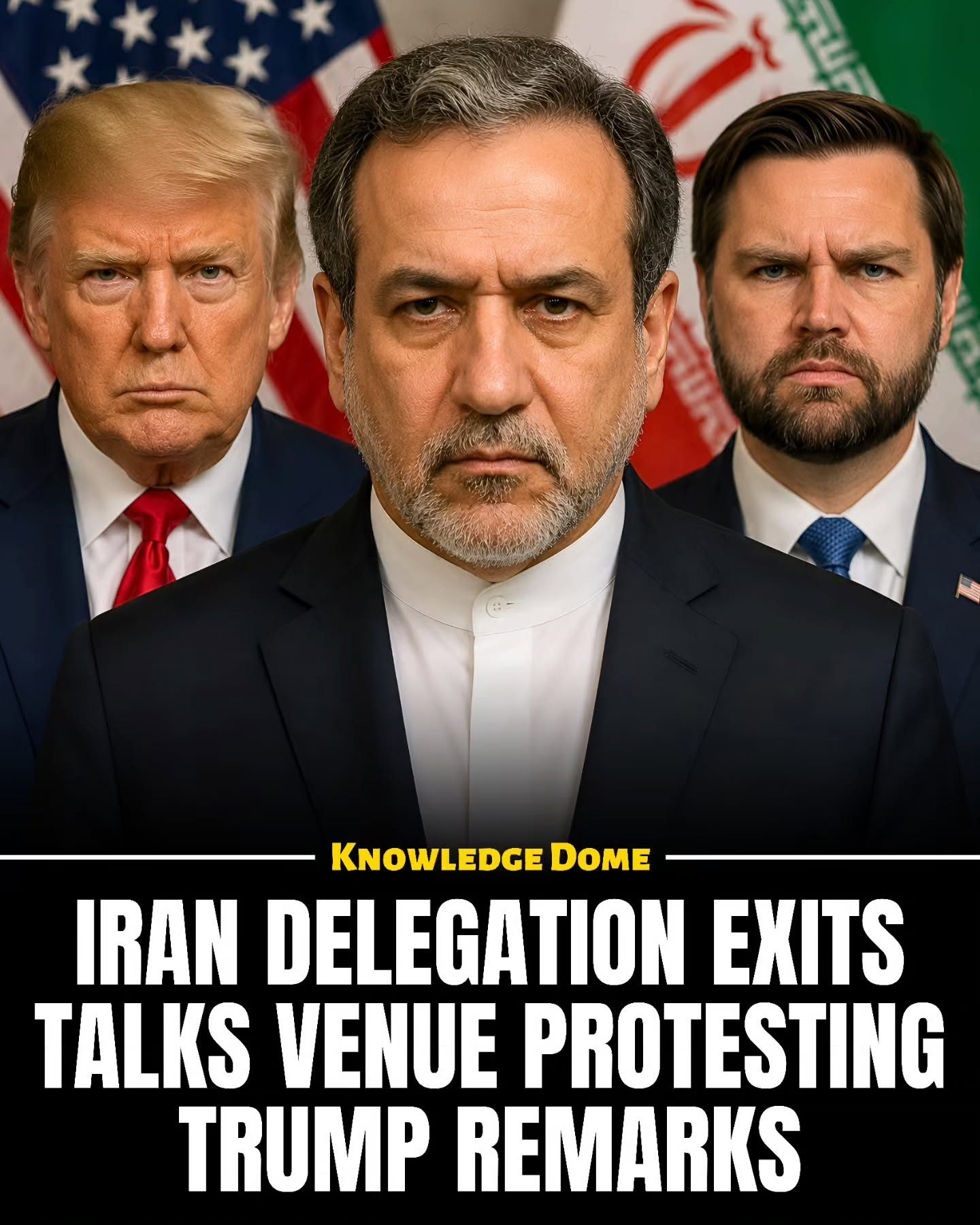
A composite photograph depicting a political landscape featured Donald Trump, Qassem Soleimani, and an unidentified man, with the flags of the United States and Iran in the background. This image became a stark visual representation of the tense situation that unfolded. The text overlay on the image highlighted the Iran delegation’s exit and their protest against Trump's remarks.
Trump's social media post was the catalyst for the dramatic turn of events. He demanded that Tehran cease its proxy groups in Lebanon, a clear reference to Hezbollah. Additionally, he threatened that the US could resume heavy bombing against Iran, warning that these strikes could be even more severe than previous ones. Trump also issued a stern warning about the Strait of Hormuz, stating that any attempt by Iran to close it would result in severe consequences. The Strait of Hormuz is a critical waterway for global oil trade, and controlling it is a significant geopolitical concern.
Iranian Response
The Iranian delegation, upon hearing Trump's remarks, refused to return to the negotiating table after a break. Iranian state-linked outlets described the US president’s words as threatening and insulting, claiming they violated the terms of the interim agreement that had been signed earlier. Iranian officials asserted that the remarks made it difficult to proceed with normal talks and underscored the ongoing tense situation.
The Reaction
The reactions from both sides were strong. Iran’s chief negotiator, Mohammad Bagher Ghalibaf, warned the US to be cautious with its words and emphasized that Iran’s armed forces were prepared to respond. Meanwhile, US Vice President JD Vance, along with Jared Kushner and Steve Witkoff, maintained a calmer tone during the talks. Despite the walkout, Qatari and Pakistani diplomats continued to mediate, sending messages between the sides to prevent a complete collapse of the talks.
Main Discussion
The Role of Social Media in Diplomatic Crises
The use of social media by world leaders has become increasingly common, but it also poses significant risks. In this case, Trump's post on social media escalated tensions and disrupted diplomatic efforts. It highlighted the delicate balance between public statements and diplomatic negotiations, especially in high-stakes situations.
The Importance of the Strait of Hormuz
The Strait of Hormuz is one of the world’s most strategic waterways, through which a significant portion of the global oil supply passes. Controlling it is a critical geopolitical concern for both Iran and the United States. Trump's warning about the Strait of Hormuz underscored the high stakes involved and the potential for further conflict if tensions were not managed carefully.
Practical Tips
For World Leaders
When engaging in diplomatic negotiations, world leaders should be mindful of the impact of their public statements, especially on social media. Statements that are perceived as threatening or insulting can quickly escalate tensions and hinder progress.
For Mediators
In cases of high-stake negotiations, mediators like Qatar and Pakistan played a crucial role in maintaining communication and preventing a complete collapse. Their efforts to keep lines of communication open were essential for managing the crisis and exploring potential next steps.
Important Takeaways
The sudden walkout of the Iranian delegation from the peace talks in Bürgenstock highlighted the fragility of diplomatic efforts in the face of contentious public statements. Trump's social media post had far-reaching implications, underscoring the delicate nature of international relations. The incident also served as a reminder of the geopolitical importance of the Strait of Hormuz and the need for careful management of such critical issues.
Conclusion
The disruption of the Iran-U.S. peace talks in Bürgenstock serves as a stark reminder of the complexities involved in diplomatic negotiations. Trump's remarks and the subsequent walkout by the Iranian delegation highlighted the challenges of maintaining a balanced approach in high-stakes situations. As the world continues to navigate these delicate issues, the importance of careful communication and mediation cannot be overstated.
Watch the Reel
Questions readers ask
Why did the Iranian delegation leave the peace talks in Switzerland?
The Iranian delegation walked out of the peace talks in response to a strong social media post made by U.S. President Donald Trump. The remarks were seen as provocative and escalated tensions, leading to the dramatic exit by the Iranian delegation just 80 to 90 minutes into the talks.
What was the purpose of the Iran-U.S. talks in Bürgenstock, Switzerland?
The talks were intended to address and resolve long-standing disputes between Iran and the United States with the support of Qatar and Pakistan as mediators. The goal was to find a diplomatic solution to a serious geopolitical situation.
How did Qatar and Pakistan support the talks?
Qatar and Pakistan were actively involved in mediating the talks. Their participation was crucial to facilitate dialogue and find a resolution. Their involvement underscored the international effort to achieve a diplomatic breakthrough.
What was the immediate reaction to Trump's remarks from the Iranian delegation?
The Iranian delegation reacted swiftly to Trump's remarks by walking out of the talks, which were just 80 to 90 minutes into the meeting. This abrupt exit marked a significant disruption in the diplomatic efforts and escalated tensions between the two nations.
What was the timeline of events leading to the disruption?
The talks began on Sunday, June 21, 2026, in Bürgenstock, Switzerland. The Iranian delegation walked out approximately 80 to 90 minutes into the meeting due to Donald Trump's controversial social media post. This event disrupted the ongoing negotiations and highlighted the fragility of the diplomatic process.
What was the geopolitical significance of the Iran-U.S. peace talks?
The peace talks were significant because they aimed to address long-standing disputes between Iran and the United States. The involvement of international mediators, such as Qatar and Pakistan, added to the importance of the talks, as they represented a collaborative effort to achieve a peaceful resolution.
What impact did Trump's remarks have on the Iran-U.S. relations?
Trump's remarks significantly escalated tensions between Iran and the United States. The remarks resulted in the Iranian delegation's abrupt walkout, disrupting the peace talks and complicating future diplomatic efforts. The incident underscored the sensitivity of the negotiations and the potential for external factors to derail progress.
Recent articles
Fresh deep dives from the latest Reels we unpacked.




Comments
Be the first to comment.