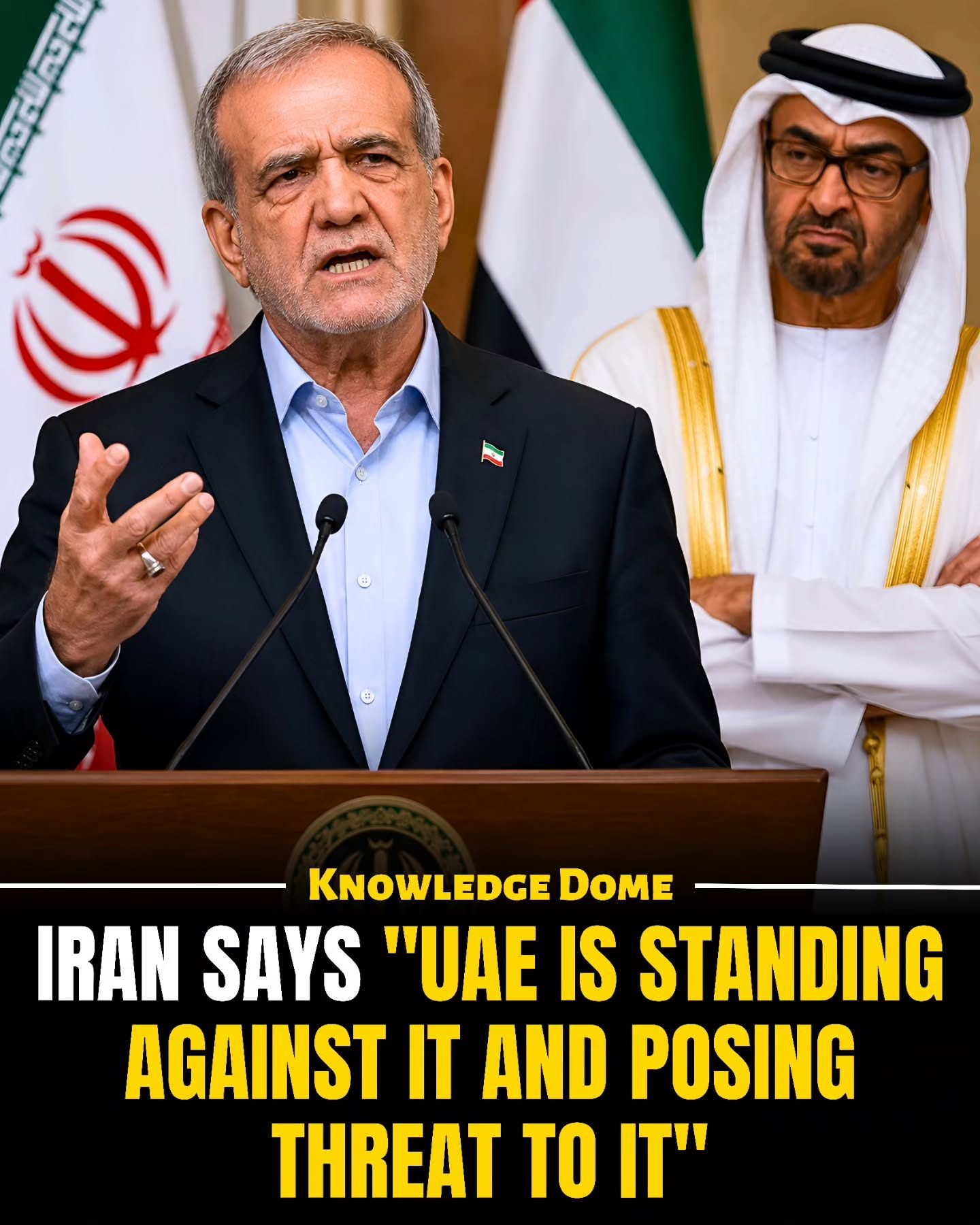
The Escalating Tensions Between Iran and the UAE
The recent escalation in tensions between Iran and the United Arab Emirates (UAE) has drawn significant international attention. At the heart of this dispute is Iran's accusation that the UAE is actively working against its interests and posing a security threat. The situation has become increasingly volatile, with both countries exchanging strong statements and warnings.
Why This Matters
Understanding the dynamics of this conflict is crucial for several reasons. The Middle East is a region of strategic importance, with various nations vying for influence. The UAE and Iran, while geographically close, have distinct geopolitical interests. The UAE's growing defense ties, particularly with the United States and Israel, have heightened tensions. This conflict not only affects regional stability but also has broader implications for global security.
Regional Stability
The UAE and Iran are key players in the Middle East, and their ongoing conflict could destabilize the region further. The UAE's strategic location and growing defense capabilities make it a significant force in the region. Iran, on the other hand, has long been a dominant player with its own set of allies and adversaries. The current escalation could lead to a broader conflict, drawing in other regional powers and potentially leading to a full-blown crisis.
Economic Implications
The UAE and Iran are both significant economic players in the region. The UAE's ports, particularly in Dubai and Abu Dhabi, are crucial for maritime trade routes. Any disruptions in these routes could have a ripple effect on global trade. Iran, with its vast resources and strategic location, is also a key player in the global economy. A prolonged conflict could impact energy markets, commodity prices, and international trade.
Strategic Alliances
The UAE's defense ties with the United States and Israel are a significant point of contention. Iran views these alliances as a direct threat to its national security. The UAE, however, sees these alliances as essential for its defense and sovereignty. The conflict highlights the delicate balance of power in the region and the importance of strategic alliances in maintaining stability.
Military Posturing
One of the most alarming aspects of the current situation is the military posturing by both sides. Iran has issued strong warnings, stating that any aggression from the UAE would be met with a response targeting strategic and important locations. This includes the potential use of military force, raising fears of a broader conflict. The UAE, in response, has emphasized its right to sovereign choices and its commitment to its defense ties.
The Conflicting Statements
Iran's Claims
Iran has been vocal about its concerns regarding the UAE's defense ties and international relationships. Tehran has explicitly warned the UAE not to allow its land, waters, or airspace to be used by U.S. or Israeli forces. According to Iran, such cooperation poses a direct danger to its national security. This stance is backed by strong military warnings, indicating a readiness to take aggressive action if necessary.
UAE's Response
The UAE has categorically rejected Iran's claims and strongly condemned the statements. Abu Dhabi has asserted that its defense ties and international relationships are a matter of sovereign choice. The UAE insists that Iran has no right to interfere in its decisions, highlighting the strategic importance of its alliances with the United States and Israel.
The Path Forward
The current situation is fraught with tension and uncertainty. Both countries have taken firm stances, and the potential for escalation remains high. Diplomatic efforts and international mediation will be crucial in de-escalating the situation and preventing a broader conflict. The international community must play a proactive role in fostering dialogue and understanding between the two nations.
Diplomatic Efforts
Diplomatic engagement is essential for resolving the current crisis. Both Iran and the UAE have a responsibility to engage in constructive dialogue to address their grievances. The international community, including key players like the United States, can play a crucial role in facilitating such discussions. Regional powers also have a vested interest in maintaining stability and should actively support diplomatic efforts.
Economic Considerations
Economic interests are a significant factor in this conflict. The UAE's strategic location and growing defense capabilities make it a valuable ally for many nations. Iran, with its vast resources and strategic importance, also has a significant role to play in the global economy. Economic incentives can be used to promote peace and stability in the region. Trade agreements, investment opportunities, and economic cooperation can help build bridges and foster understanding between the two countries.
Strategic Alliances
The UAE's defense ties with the United States and Israel are a crucial aspect of the current situation. These alliances are seen as essential for the UAE's security and sovereignty. At the same time, Iran views these ties as a direct threat to its national security. Finding a balance between these competing interests will be vital in resolving the conflict. Strategic alliances should be built on mutual respect and understanding, rather than perceived threats and hostility.
Practical Tips for Navigating the Conflict
Stay Informed
Keeping abreast of the latest developments is essential. Following reputable news sources and expert analysis can provide valuable insights into the evolving situation. This knowledge can help individuals and organizations make informed decisions and mitigate risks.
Maintain Dialogue
Engaging in dialogue and maintaining open communication channels can help bridge differences and build understanding. This applies to both individuals and nations. Dialogue should be constructive, respectful, and aimed at finding common ground and solutions.
Foster Economic Cooperation
Economic cooperation can be a powerful tool for fostering peace and stability. Trade agreements, investment opportunities, and joint ventures can help build bridges and promote understanding. Economic cooperation should be based on mutual benefit and respect for each other's interests.
Support Diplomatic Efforts
Supporting diplomatic efforts is crucial in resolving the current crisis. Individuals and organizations can play a role by advocating for peace, supporting mediation efforts, and promoting constructive dialogue. International organizations and regional powers also have a significant role to play in fostering peace and stability.
Important Takeaways
The current situation between Iran and the UAE highlights the delicate balance of power in the Middle East. The conflict underscores the importance of strategic alliances, economic considerations, and diplomatic efforts in maintaining stability. While the situation is fraught with tension, there are opportunities for dialogue, cooperation, and understanding. The international community, including key players and regional powers, must play a proactive role in facilitating peace and stability in the region.
Conclusion
The escalating tensions between Iran and the UAE are a complex issue with far-reaching implications. The conflict is rooted in strategic alliances, economic interests, and military posturing. While the situation is volatile, there are opportunities for dialogue, cooperation, and understanding. The international community must play a proactive role in fostering peace and stability in the region. By supporting diplomatic efforts, fostering economic cooperation, and maintaining open communication channels, we can work towards a resolution and mitigate the risks of a broader conflict.
Watch the Reel
Questions readers ask
What are the main issues driving the tensions between Iran and the UAE?
The primary issues include Iran's accusation that the UAE is threatening its national security and regional stability, as well as differing geopolitical interests. Additionally, the UAE's strengthening defense ties with the United States and Israel have heightened Iran's concerns.
How has the recent escalation in tensions affected the Middle East?
The escalating tensions have drawn significant international attention and have the potential to disrupt regional stability. The volatile situation has led to strong statements and warnings from both countries, impacting the broader Middle East security landscape.
What is the significance of the geographic proximity between Iran and the UAE?
The geographic proximity between Iran and the UAE makes their conflict a crucial factor in Middle Eastern affairs. Their close location means that any escalation in tensions can quickly affect the broader region, including maritime disputes and security threats in the Gulf.
Why are the UAE's defense ties with other countries a concern for Iran?
Iran views the UAE's growing defense ties, particularly with the United States and Israel, as a direct threat to its own security and regional influence. These alliances are seen as an attempt to contain Iran and counter its interests in the Middle East.
How do the UAE and Iran differ in their geopolitical interests?
The UAE and Iran have distinct geopolitical interests, with the UAE often aligning with Western powers and seeking to expand its global influence. In contrast, Iran pursues an independent foreign policy, often at odds with Western interests, and seeks to maintain its regional dominance.
What role do maritime disputes play in the Iran-UAE conflict?
Maritime disputes, particularly in the Persian Gulf, are a significant aspect of the Iran-UAE conflict. Both countries have competing claims over certain waters and islands, leading to tensions and security threats that can escalate quickly.
How can understanding the Iran-UAE conflict help in navigating Middle East security threats?
Understanding the dynamics of the Iran-UAE conflict provides insights into the complex web of alliances and rivalries in the Middle East. This knowledge can help in assessing potential security threats and developing strategies to mitigate risks and promote stability in the region.
Recent articles
Fresh deep dives from the latest Reels we unpacked.




Comments
Be the first to comment.