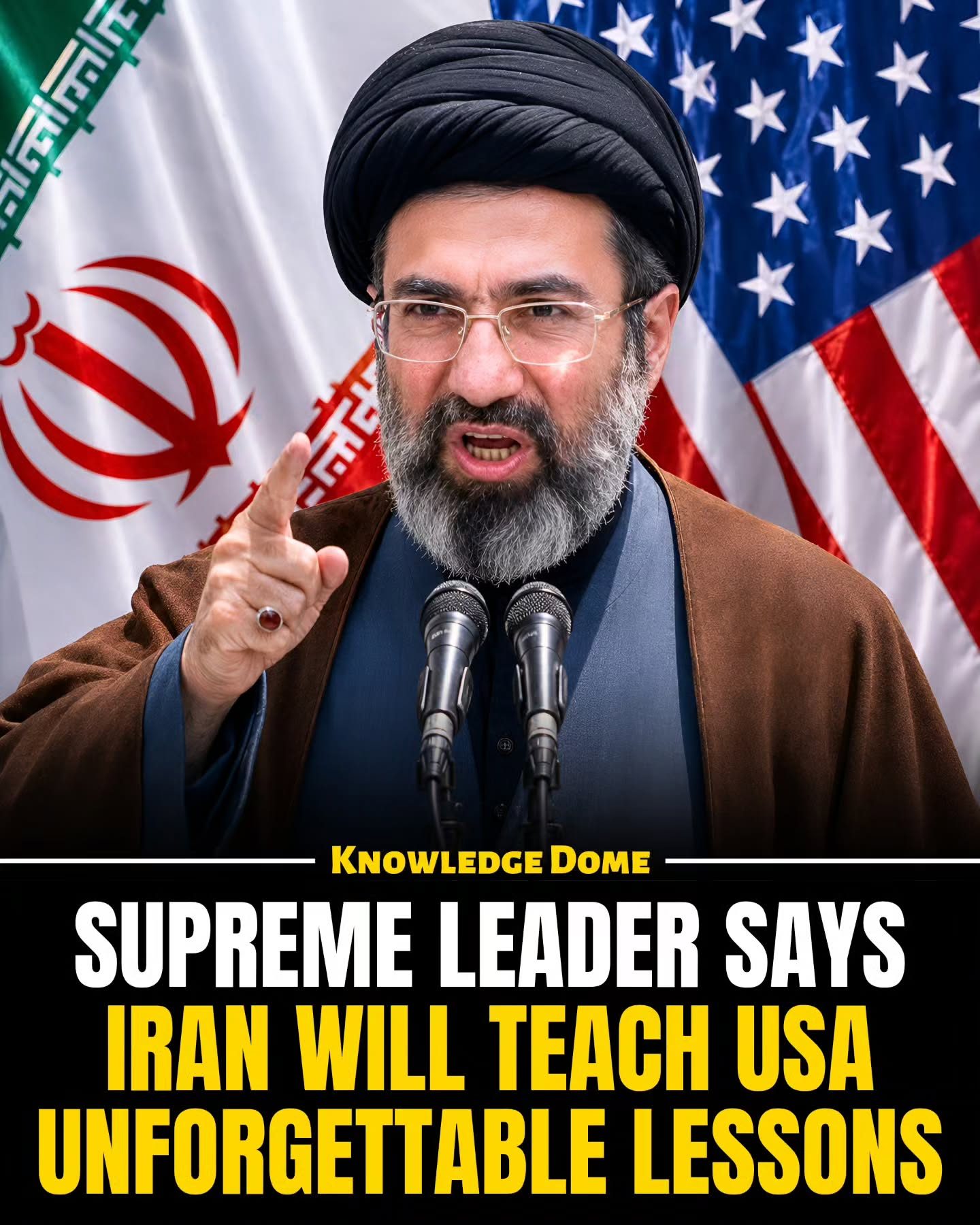
Iran's Supreme Leader Warns the United States
Ayatollah Mojtaba Khamenei, Iran's Supreme Leader, has issued a stark warning to the United States, stating that Iran and its allies in the Axis of Resistance will retaliate with "unforgettable lessons" if faced with continued pressure. The message, widely disseminated across Iranian state media and social platforms, comes as tensions between the two countries escalate.
The Supreme Leader's statement underscores the deep-seated mistrust and animosity that has characterized the relationship between Iran and the United States for decades. The message is a direct response to recent actions and statements from the U.S, particularly those related to a breakdown in an interim regional agreement.
Context / Why this matters
To understand the significance of Khamenei's warning, it is essential to delve into the historical context and the current geopolitical landscape. The United States and Iran have had a contentious relationship since the 1979 Islamic Revolution, which led to the overthrow of the U.S.-backed Shah and the establishment of the Islamic Republic. Since then, the two nations have been at odds over various issues, including Iran's nuclear program, human rights violations, and support for militant groups in the Middle East.
The recent breakdown in an interim regional agreement has further strained relations. Tehran's suspension of some of its commitments under the agreement is a clear indication of its frustration with what it perceives as the United States' unreliability. This ongoing issue is a focal point for the Supreme Leader's recent statements.
Main discussion
The Axis of Resistance and United Front
The Axis of Resistance, a term coined by former Iranian President Mahmoud Ahmadinejad, refers to a loose alliance of anti-Israeli and anti-American regional actors, including Iran, Syria, Hezbollah, and Hamas. Khamenei's statement emphasizes the unity and readiness of these allies to respond collectively to any military pressure or strikes from the United States.
The Unforgettable Lessons
The term "unforgettable lessons" is a stark reminder of the potential consequences of escalating tensions. While the specific actions Iran and its allies might take are not detailed, the message is clear: any further pressure or aggression from the United States will not go unanswered. This rhetoric is a call to the Iranian people to stay united and resilient in the face of external threats.
Trust and Commitments
Khamenei's statement accuses the United States of being unreliable and breaking its promises, particularly in recent agreements. This distrust is rooted in a history of contentious dealings, including the U.S.'s unilateral withdrawal from the Joint Comprehensive Plan of Action (JCPOA) in 2018, which was the result of President Donald Trump's decision not to renew waivers that allowed businesses to continue trade with Iran.
The Call for Strength and Unity
The Supreme Leader's call for the Iranian people to remain strong and united is a potent reminder of the internal dynamics at play. It underscores the importance of national solidarity in the face of external pressures. This unity is seen as a critical factor in deterring and responding to potential military actions from the United States.
Practical tips
For those seeking to understand the complexities of the Iran-U.S. relationship, it's essential to stay informed about the following areas:
-
Historical Context: Familiarize yourself with the key events and agreements that have shaped the relationship between Iran and the United States over the past four decades. This includes the Islamic Revolution, the Iran-Iraq War, and various nuclear agreements.
-
Current Developments: Stay updated on the latest developments in the region, particularly those related to Iran's nuclear program, U.S. sanctions, and regional conflicts.
-
Regional Dynamics: Pay attention to the Axis of Resistance and other regional alliances. Understanding the geopolitical landscape and the various actors involved can provide valuable context for analyzing current and future events.
-
U.S. Policy: Follow the U.S. government's policies and statements regarding Iran, as these can have a significant impact on the region and global politics. This includes monitoring changes in administration, shifts in diplomatic efforts, and the imposition of sanctions.
Important takeaways
The Supreme Leader's warning to the United States highlights several critical points:
-
Escalating Tensions: The relationship between Iran and the United States remains fraught with tension, and recent developments suggest a further deterioration.
-
Regional Alliances: The Axis of Resistance plays a crucial role in Iran's foreign policy and military strategy. Understanding the dynamics of this alliance is essential for grasping the broader geopolitical landscape.
-
Domestic Unity: The call for national unity underscores the internal importance of public support in the face of external pressures.
-
U.S. Reliability: The Supreme Leader's statement reaffirms Iran's skepticism about the reliability of U.S. commitments, which has deep historical and political roots.
Conclusion
The warning from Iran's Supreme Leader, Ayatollah Mojtaba Khamenei, serves as a stark reminder of the ongoing tensions between Iran and the United States. As the two nations remain at odds, the potential for further escalation looms large. Understanding the historical context, current developments, and regional dynamics is crucial for navigating the complexities of this geopolitical landscape. The message also highlights the importance of unity and resilience in the face of external pressures, as well as the critical role of regional alliances in shaping Iran's foreign policy.
Watch the Reel
Questions readers ask
What did Ayatollah Khamenei warn the US about?
Ayatollah Khamenei warned the US that Iran and its allies in the Axis of Resistance will retaliate with 'unforgettable lessons' if the US maintains its pressure on Iran.
What sparked Ayatollah Khamenei's warning to the US?
The warning came in response to recent actions and statements from the US, particularly the breakdown of a regional agreement between the two nations.
How was Ayatollah Khamenei's message to the US disseminated?
The message was widely shared through Iranian state media and social media platforms.
What does the warning indicate about US-Iran relations?
The warning highlights the long-standing mistrust and hostility between the two countries, and it is a direct response to recent US activities.
What is the Axis of Resistance mentioned in the warning?
The Axis of Resistance refers to a coalition of Iranian-backed militant groups and allies in the Middle East, including Hezbollah in Lebanon and militias in Iraq and Syria.
What kind of response can Iran and the Axis of Resistance be expected to deliver?
The specifics of the retaliation are not detailed, but it suggests a significant and memorable response, likely involving military action or other forms of retaliation.
Why does the Supreme Leader's message matter in the context of US foreign policy towards Iran?
The message is significant because it underscores the challenges the US faces in dealing with Iran, especially in the context of regional security and stability, and how US actions can be perceived as threats by Iran.
Recent articles
Fresh deep dives from the latest Reels we unpacked.




Comments
Be the first to comment.