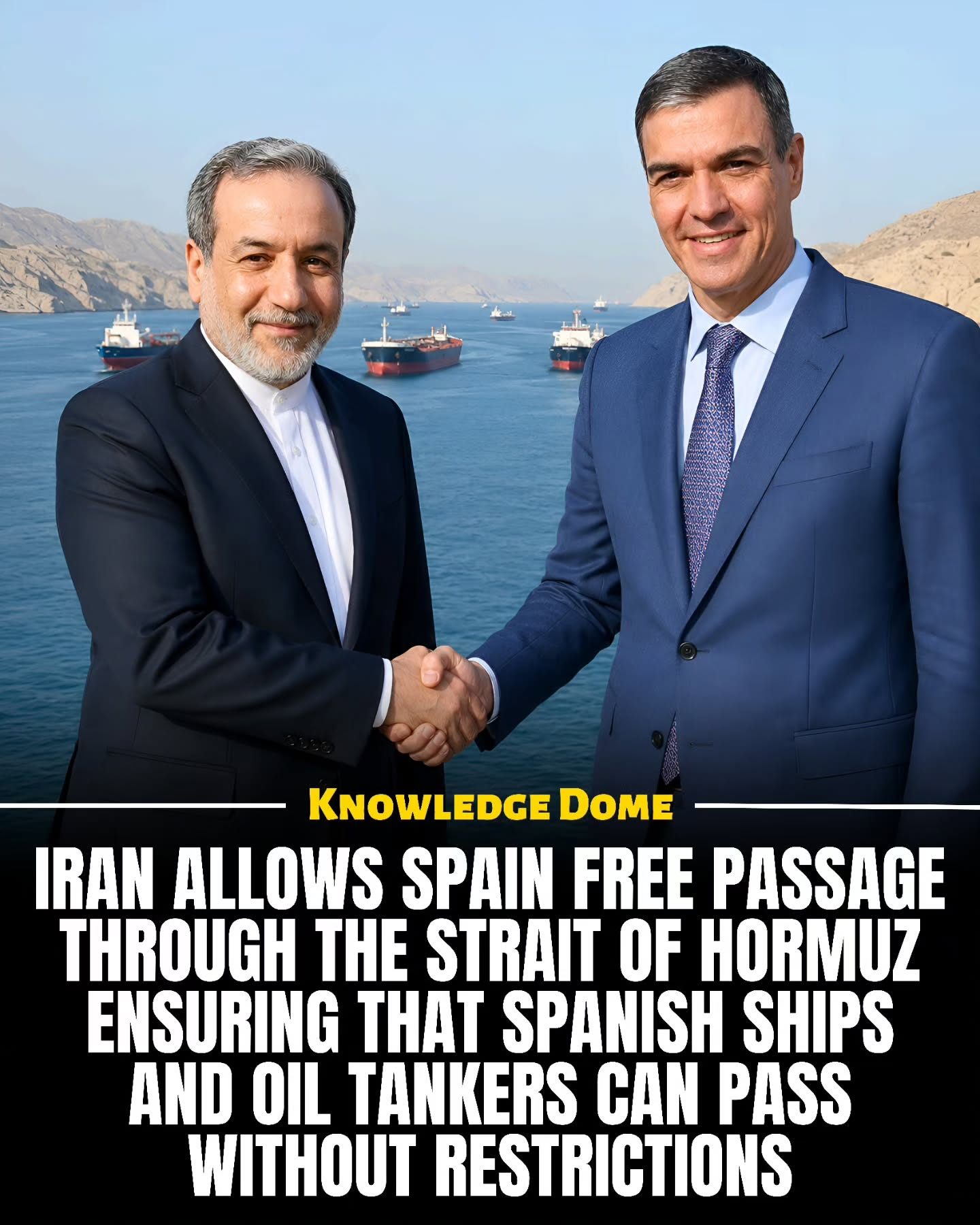
Iran's Selective Free Passage Policy in the Strait of Hormuz
The Strait of Hormuz, a critical chokepoint for global oil trade, is at the center of a developing geopolitical dynamic. Iran has reportedly implemented a new travel rule that grants free passage to ships and oil tankers flying the Spanish flag. This move is not a blanket policy but a selective one, aimed at rewarding countries that have maintained neutrality in the Middle East conflict and have not participated in military actions or imposed sanctions against Iran.
Context: The Strategic Importance of the Strait of Hormuz
The Strait of Hormuz is a narrow waterway located between the Persian Gulf and the Gulf of Oman. It serves as a crucial passageway for oil tankers, with approximately 21 million barrels of oil passing through daily, accounting for about 30% of global sea-borne traded oil. This strategic location makes it a hotspot for geopolitical tensions and a focal point for international maritime security.
Political Motives Behind the New Policy
Iran's decision to grant free passage to Spanish vessels appears to be politically motivated. Spain has refused to allow its airspace or military bases to be used for operations against Iran, a stance that has likely influenced Iran's decision. This selective policy is seen as a way to reward countries that maintain neutrality and avoid taking sides in the ongoing Middle East conflicts.
The policy is not just about economic benefit; it's also about strategic alliances and diplomatic signalling. By offering free passage, Iran is likely seeking to strengthen ties with Spain and potentially other countries that adopt a similar stance. This move could also serve as a diplomatic tool to pressure other nations to reconsider their positions on Iran.
The Selective Nature of the Policy
While Spain is reportedly one of the countries benefiting from this new rule, it is clear that this is not a universal policy. Only a few countries are expected to receive this kind of free passage. The criteria for this selectivity are not fully clear, but it is likely based on a country's stance towards Iran and its role in the Middle East conflict. This means that while Spanish vessels can pass through without restrictions, other countries may still face tolls, delays, or transit fees.
Spain's Official Stance and Uncertainty
Spain’s Foreign Ministry has not officially confirmed the exemption, adding a layer of uncertainty to the situation. While the report is circulating widely, the lack of official confirmation suggests that the policy may still be in a state of flux. This uncertainty could lead to uncertainties for shipping companies and vessel operators, who need to navigate the Strait of Hormuz with precision and foresight.
For shipping companies, the Strait of Hormuz remains a critical route to watch closely. The potential for reduced transit fees and delays for Spanish vessels could offer a competitive advantage, but the lack of clarity means that companies need to remain vigilant and adaptable.
Practical Tips for Vessel Operators
Given the selective nature of this policy, vessel operators need to stay informed about the latest developments. Here are some practical tips:
-
Stay Informed: Keep abreast of official announcements from both Iran and your home country. Policies can change rapidly, and staying informed can help you prepare for any changes.
-
Prepare for Uncertainty: Since the situation is not fully clear, be prepared for potential changes in transit conditions. Have contingency plans in place for additional tolls, delays, or other restrictions.
-
Review Insurance Policies: Ensure that your insurance policies cover potential disruptions or additional costs that may arise from changes in transit policies.
-
Engage with Diplomats: If your vessel is affected by these changes, consider engaging with your country’s diplomatic representatives to gain clarity and support.
Important Takeaways
-
Geopolitical Influence: The Strait of Hormuz remains a critical point for geopolitical influence, and this new policy is a clear example of how strategic decisions can impact global trade.
-
Neutrality Pays: Countries that maintain neutrality in the Middle East conflict are likely to benefit from such policies, highlighting the value of diplomatic neutrality in complex geopolitical scenarios.
-
Selective Benefits: The policy is not universal; only a few countries are expected to benefit, underscoring the need for precise policy navigation.
-
Uncertainty and Preparedness: The lack of official confirmation means that shipping companies need to stay vigilant and adaptable, preparing for potential changes in transit conditions.
Conclusion
Iran's new travel rule in the Strait of Hormuz is a significant development with far-reaching implications for global trade and geopolitics. While Spanish vessels stand to benefit from this policy, the selective nature means that other countries need to navigate the situation with caution. For vessel operators, staying informed, preparing for uncertainty, and engaging with diplomatic channels are crucial steps to manage this evolving landscape. The Strait of Hormuz will continue to be a pivotal point, and understanding these developments will be essential for anyone involved in maritime trade.
Watch the Reel
Questions readers ask
Why has Iran chosen to grant free passage to Spanish ships through the Strait of Hormuz?
Iran's decision to grant free passage to Spanish ships is a strategic move to strengthen diplomatic ties. By rewarding countries like Spain, who have maintained neutrality in the Middle East, Iran aims to foster better relations and potentially encourage other nations to adopt a similar stance.
What is the strategic significance of the Strait of Hormuz?
The Strait of Hormuz is a narrow waterway between the Persian Gulf and the Gulf of Oman and is crucial for global oil transit, with approximately 21 million barrels of oil passing through it daily. It's a critical chokepoint for global oil trade, making it a key point of interest in international geopolitics.
What is the goal of Iran's selective free passage policy?
Iran's selective free passage policy is designed to reward countries that have remained neutral in Middle East conflicts. By offering this incentive, Iran hopes to bolster diplomatic ties and encourage other nations to reconsider their positions on Iran.
Are all countries granted free passage for their ships through the Strait of Hormuz under Iran's new policy?
No, Iran's policy is not a blanket one. It is selective and specifically targets countries that have maintained neutrality in the Middle East and have not participated in military actions or imposed sanctions on Iran.
How might Iran's policy impact global oil transit and international relations?
By granting free passage to Spanish ships, Iran could influence global oil transit by making the route more accessible and potentially lowering transit costs. This move could also reshape international relations, as countries may re-evaluate their stances on Iran to gain similar benefits.
What does this policy reveal about Iran's stance on Middle East diplomacy?
Iran's policy indicates a willingness to engage in diplomatic efforts and reward neutral countries. It also demonstrates Iran's desire to exert influence in the region and encourage other nations to adopt policies that favor Iran's interests.
Recent articles
Fresh deep dives from the latest Reels we unpacked.




Comments
Be the first to comment.