iPhone's Dominance in the U.S. Smartphone Market
The iPhone's influence in the smartphone market is undeniable, especially in the United States. Since its introduction by Steve Jobs at the 2007 Macworld conference in San Francisco, the iPhone has become a global phenomenon, with over 1.2 billion units sold worldwide. This iconic device, recognized by its sleek design and innovative features, has not only captured consumer attention but also significantly impacted the global and U.S. smartphone markets.
Why this matters
The smartphone market is fiercely competitive, with numerous brands vying for market share. Understanding the dynamics of this market, particularly the dominance of iPhone in the U.S., is crucial for consumers, tech enthusiasts, and industry professionals alike. The shifting market shares among top brands like Apple, Samsung, Lenovo, and OnePlus provide insights into consumer preferences and brand strategies.
Main discussion
The Global Landscape
Globally, the smartphone market is diverse, with various brands competing for consumer attention. While iPhone has a respectable 16% market share worldwide, its impact is most pronounced in the U.S. market. This discrepancy highlights the differences in consumer preferences and market strategies between global and U.S. markets.
The U.S. Market: iPhone's Stronghold
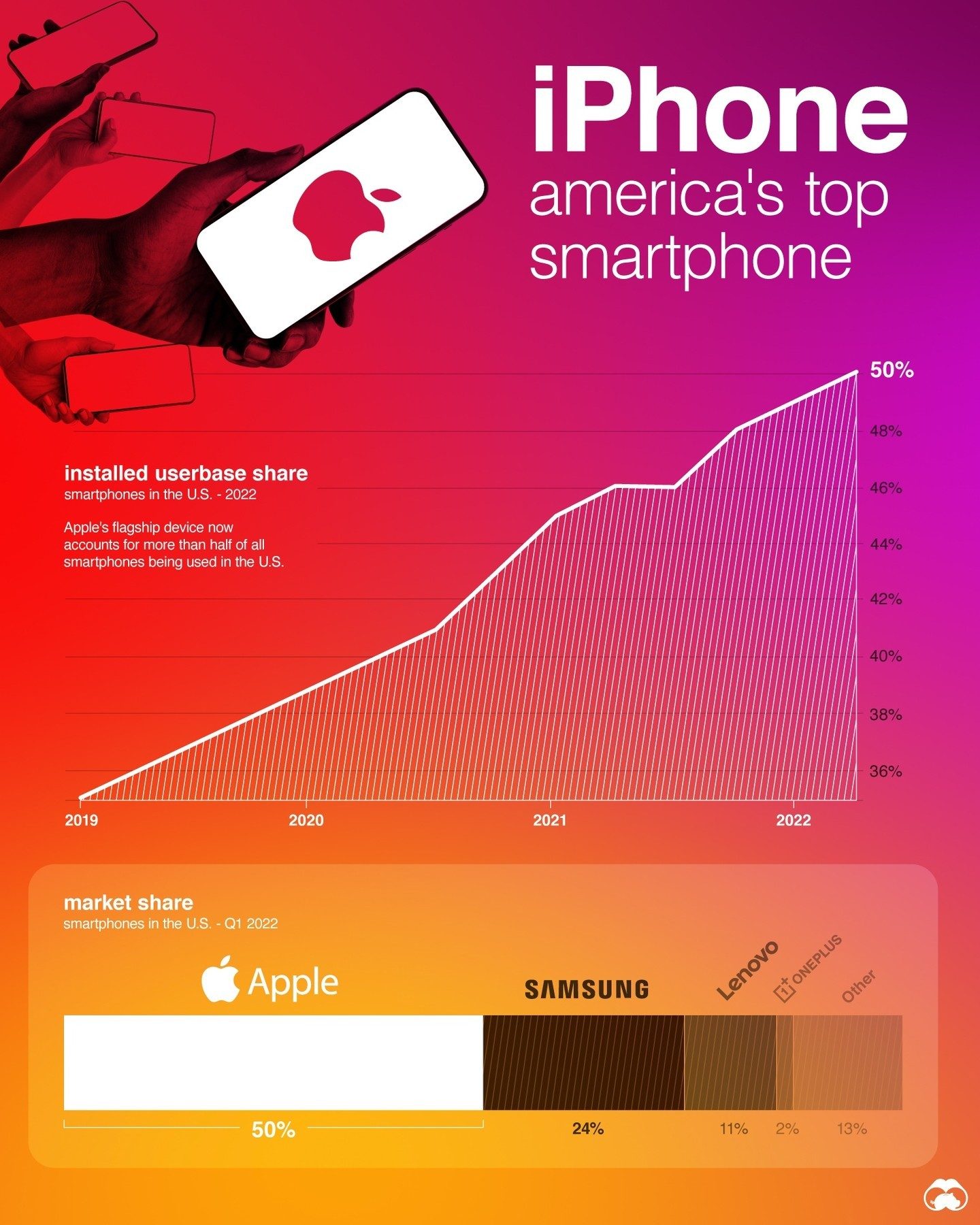
In the U.S., iPhone dominates with a formidable 50% market share of the installed user base, according to recent data from Counterpoint Research via the Financial Times. This dominance is a testament to Apple's successful brand strategy, product innovation, and loyal customer base. The iPhone's user-friendly interface, robust ecosystem, and consistent software updates have contributed to its sustained popularity.
Competitor Analysis
While iPhone leads the market, other brands like Samsung, Lenovo, and OnePlus also hold significant shares. Samsung, known for its versatile and innovative devices, holds a substantial portion of the market. Lenovo and OnePlus, with their competitive pricing and feature-rich devices, cater to a different segment of the market, focusing on affordability and performance.
Practical tips
For Consumers
When choosing a smartphone, considering brand loyalty, user interface, and ecosystem integration can help make an informed decision. For those who prioritize a seamless user experience and integration with other Apple devices, the iPhone is a strong contender. However, for those seeking more affordability and a range of features, exploring options from Samsung, Lenovo, or OnePlus might be beneficial.
For Industry Professionals
Understanding market trends and consumer preferences is essential for staying competitive. Brands can focus on innovation, user experience, and ecosystem integration to attract and retain users. Regularly updating software and incorporating user feedback can enhance product satisfaction and brand loyalty.
Important takeaways
- The iPhone holds a dominant 50% market share in the U.S., showcasing its strong consumer appeal.
- Globally, the iPhone has a 16% market share, highlighting the varied preferences in different regions.
- Competitors like Samsung, Lenovo, and OnePlus also hold significant market shares with their unique offerings.
- Consumer preferences, brand loyalty, and product innovation are critical factors influencing market dynamics.
Conclusion
The iPhone's dominance in the U.S. smartphone market is a testament to its impactful design, innovative features, and successful brand strategy. While competitors like Samsung, Lenovo, and OnePlus hold notable market shares, the iPhone's influence remains unparalleled. For consumers, understanding these market dynamics can aid in making informed purchasing decisions. For industry professionals, staying attuned to these trends can help in developing strategies to compete effectively in this dynamic market.
Watch the Reel
Questions readers ask
What percentage of the U.S. smartphone market does the iPhone control?
As of recent data, the iPhone commands over 50% of the installed user base in the U.S. smartphone market. This significant market share underscores Apple's stronghold in the American smartphone industry.
What factors have contributed to the iPhone's dominance in the U.S. market?
Several factors have driven the iPhone's success, including Apple's effective brand strategy, continuous product innovation, and a highly loyal customer base. These elements combined have helped the iPhone maintain its leading position in the U.S. smartphone market.
How does iPhone's market share in the U.S. compare to its global market share?
While the iPhone dominates the U.S. market with over 50% of the installed user base, its global market share is lower. Globally, iPhone has a significant presence, but competition from brands like Samsung and other Android-based devices is more pronounced in other regions.
What are the key differences between iPhone and Android market shares in the U.S.?
In the U.S., iPhone holds a substantial lead over Android devices, with over half of the installed user base. Android, while still popular, lags behind iPhone in terms of market share, indicating a preference for Apple's ecosystem and features among U.S. consumers.
How has Apple's product innovation influenced its market dominance?
Apple's commitment to product innovation has been a cornerstone of its market dominance. By consistently introducing new features, improving design, and enhancing user experience, Apple manages to keep its devices appealing and competitive, thereby maintaining a strong user base.
What role does Apple’s loyalty program play in maintaining its market share?
Apple’s loyalty program, which includes seamless integration of services like iCloud, Apple Music, and the App Store, plays a crucial role in retaining customers. Once users are invested in the Apple ecosystem, they are more likely to continue purchasing iPhones, further solidifying Apple's market share.
What trends have been observed in the U.S. smartphone market in 2022?
In 2022, the U.S. smartphone market continued to see iPhone's dominance, with Apple's installed base growing. The trend also highlights a preference for high-quality, innovative devices, which aligns well with Apple's brand strategy. Meanwhile, Android devices continue to compete but face challenges in matching iPhone's market penetration.
Related deep dives
Similar reads based on topic and creator.


Recent articles
Fresh deep dives from the latest Reels we unpacked.




Comments
Be the first to comment.