Investment Decision Paralysis
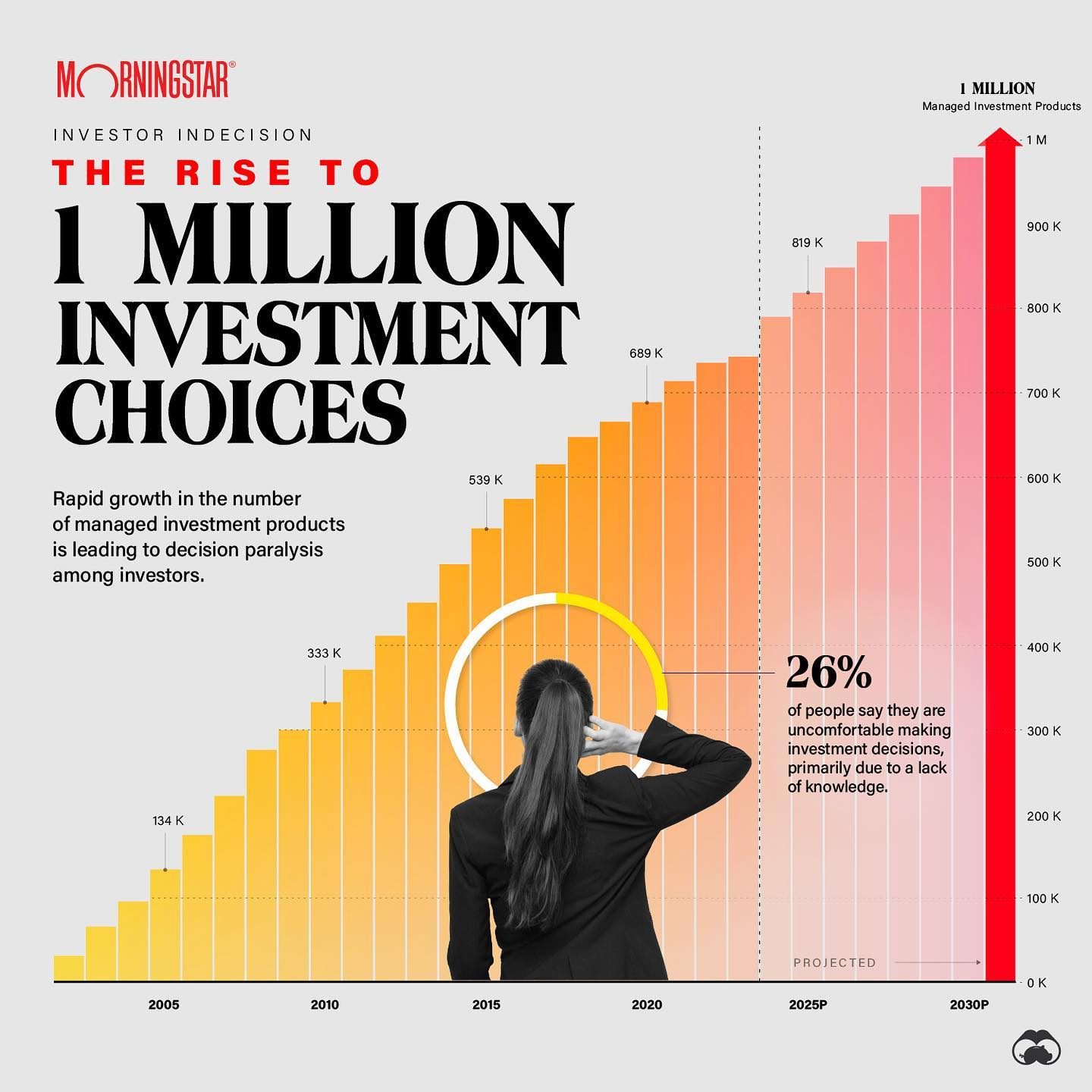
By 2031, the world of investing will be significantly more crowded, with an estimated one million managed investment products available. This rapid growth, while offering more choices, is also contributing to a phenomenon known as decision paralysis among investors. Understanding this trend is crucial for anyone navigating the investment landscape today.
Why This Matters
The rise in the number of managed investment products is a double-edged sword. On one hand, it provides investors with a wider array of options to tailor their portfolios to their specific needs and risk tolerances. On the other hand, this abundance of choices can be overwhelming, leading to indecision and inaction. This is particularly relevant given that 26% of people feel uncomfortable making investment decisions due to a lack of knowledge. The graph showing the projected growth from 2005 to 2030 highlights this trend, indicating that the problem is only going to get more pronounced.
The Growth of Managed Investment Products
Historical Context
The growth of managed investment products has been steady and significant. From 2005 to 2020, the number of these products has increased substantially, and this trend is expected to continue. By 2031, the projection is that there will be one million managed investment products available. This growth is driven by various factors, including technological advancements, regulatory changes, and the increasing complexity of financial markets.
Factors Driving Growth
Several factors are contributing to the rapid growth of managed investment products:
-
Technological Advancements: The rise of fintech and digital platforms has made it easier for financial institutions to create and manage new investment products. This has led to a proliferation of options, from robo-advisors to algorithmic trading platforms.
-
Regulatory Changes: Changes in financial regulations have opened up new opportunities for product creation. For instance, rules governing mutual funds, ETFs, and other investment vehicles have evolved, allowing for more diverse and innovative products.
-
Market Complexity: The complexity of financial markets has increased, with new asset classes and investment strategies emerging. This has created a demand for more specialized and tailored investment products.
-
Consumer Demand: Investors are increasingly seeking products that align with their personal values and financial goals. This has led to the creation of products that cater to specific niches, such as sustainable investing, socially responsible investing, and impact investing.
The Impact on Investors
Decision Paralysis
The sheer number of investment choices can be paralyzing. With so many options available, investors may find it difficult to make decisions, leading to inaction. This phenomenon is known as decision paralysis, and it can have significant implications for an investor's financial well-being. Studies have shown that indecision can lead to missed opportunities and suboptimal investment outcomes.
Lack of Knowledge
A significant contributor to decision paralysis is a lack of knowledge. The 26% of people who feel uncomfortable making investment decisions due to a lack of knowledge highlight a critical issue in the investing world. With so many products available, it can be challenging for investors to understand the nuances of each product and make informed decisions.
The Role of Financial Advisors
Given the complexity of the investment landscape, the role of financial advisors has become increasingly important. Financial advisors can help investors navigate the plethora of options, providing guidance and expertise to make informed decisions. They can also help investors understand the risks and benefits of different investment products, tailored to their specific goals and risk tolerances.
Practical Tips for Navigating Investment Choices
1. Understand Your Financial Goals
Before making any investment decisions, it's crucial to have a clear understanding of your financial goals. Are you investing for retirement, a down payment on a house, or your child's education? Understanding your goals will help you narrow down your investment choices and make more informed decisions.
2. Assess Your Risk Tolerance
Your risk tolerance is a critical factor in determining which investment products are suitable for you. If you are risk-averse, you may want to consider products like bonds or money market funds. On the other hand, if you are comfortable with higher risk, you might explore stocks or more aggressive investment strategies.
3. Diversify Your Portfolio
One of the best ways to navigate the complex world of investment products is to diversify your portfolio. This means spreading your investments across different asset classes, sectors, and geographies. Diversification can help reduce risk and improve the overall performance of your portfolio.
4. Seek Professional Advice
If you're feeling overwhelmed by the number of investment choices, consider seeking professional advice. A financial advisor can provide guidance and expertise, helping you make informed decisions and navigate the complexities of the investment landscape.
5. Stay Informed
The investment world is constantly evolving, with new products and strategies emerging all the time. Staying informed about these changes can help you make better investment decisions. Read financial news, attend seminars, and take advantage of educational resources to stay up-to-date.
Important Takeaways
- The number of managed investment products is projected to reach one million by 2031, contributing to decision paralysis among investors.
- A lack of knowledge is a significant contributor to decision paralysis, with 26% of people feeling uncomfortable making investment decisions.
- Understanding your financial goals, assessing your risk tolerance, diversifying your portfolio, seeking professional advice, and staying informed are practical tips for navigating the complex world of investment products.
Conclusion
The rapid growth of managed investment products presents both opportunities and challenges for investors. While the abundance of choices can be overwhelming, understanding the underlying factors and taking practical steps can help investors make informed decisions. By staying informed, seeking professional advice, and diversifying your portfolio, you can navigate the complex world of investment products and achieve your financial goals.
Watch the Reel
Questions readers ask
What are managed investment products and why are they growing?
Managed investment products are funds or schemes where a professional manager allocates investments on behalf of individuals. They are growing due to increased demand for tailored investment strategies and the proliferation of new investment ideas and technologies.
How will the increase in managed investment products affect my investment decisions?
The increase in managed investment products will provide more opportunities to diversify and tailor your portfolio, but it may also make the decision process more complex and time-consuming. It's important to develop a clear investment strategy to avoid feeling overwhelmed.
What is investment decision paralysis and how can I avoid it?
Investment decision paralysis is a state of overwhelm leading to indecision and inaction due to too many choices. To avoid it, focus on your investment goals, risk tolerance, and stick to a structured decision-making process. Consider consulting with a financial advisor for guidance.
How can I navigate the growing number of managed investment products?
To navigate the growing number of managed investment products, start by assessing your financial goals and risk tolerance. Use investment graphs and other tools to compare products, and consider seeking professional advice to help you make informed decisions.
What trends should I expect in managed investments by 2031?
By 2031, expect a wider variety of investment opportunities, including more niche and thematic funds. Technological advancements will also likely play a significant role in shaping investment trends, with AI and machine learning potentially influencing investment strategies.
How can I stay informed about new investment opportunities without feeling overwhelmed?
Stay informed by following reputable financial news sources and setting up alerts for significant changes in the market. Additionally, periodically review your investment strategy with a financial advisor to ensure you are making informed decisions without becoming paralyzed by the sheer number of choices.
Recent articles
Fresh deep dives from the latest Reels we unpacked.




Comments
Be the first to comment.