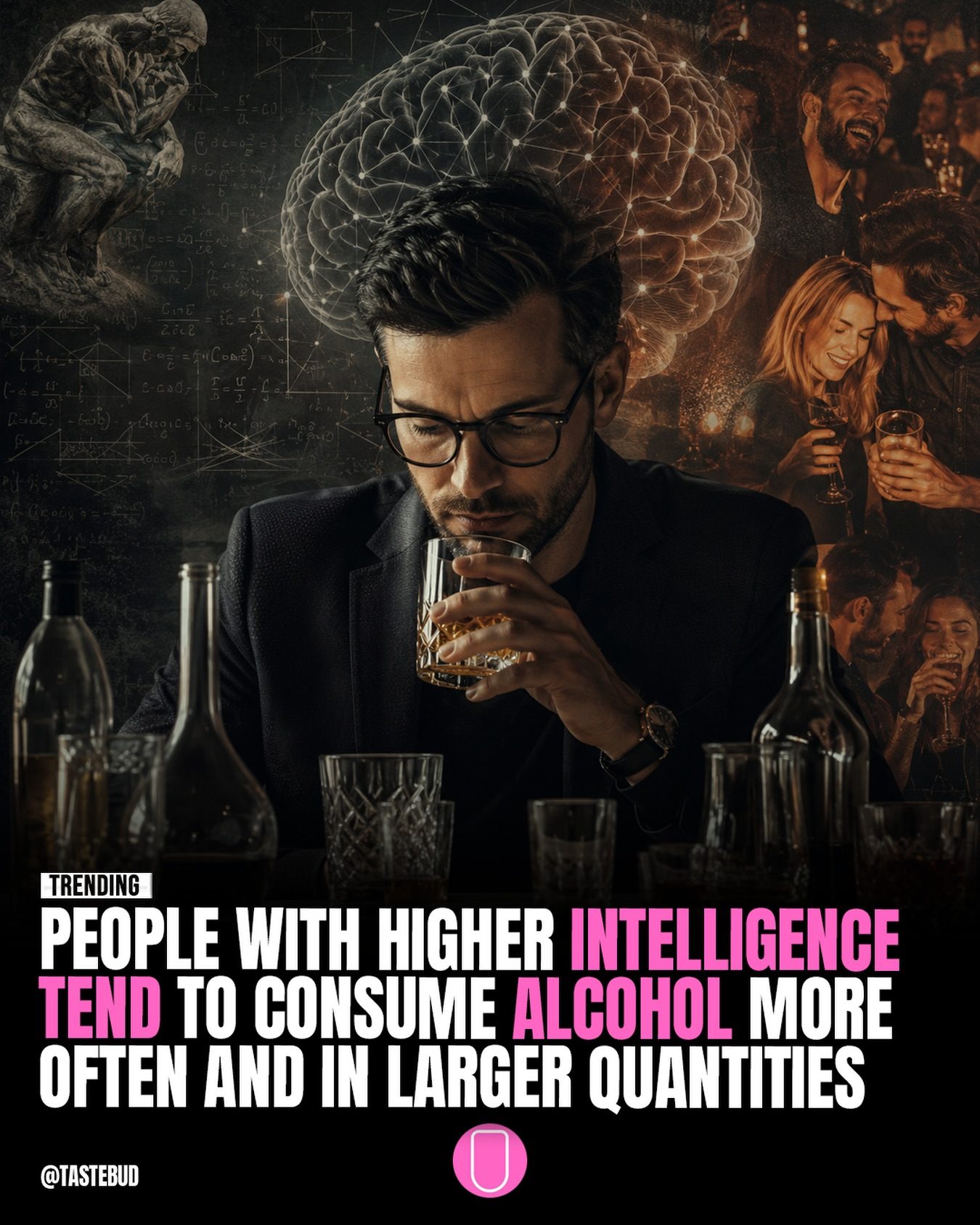
Alcohol Consumption and Intelligence
The connection between cognitive ability and alcohol consumption has been a topic of interest for researchers. Studies have shown a correlation between higher intelligence and more frequent alcohol use, particularly in adulthood. However, it's crucial to understand that correlation does not imply causation. This relationship is influenced by a variety of factors, including social environments, personality traits, and career settings.
Why This Matters
Understanding the potential link between intelligence and alcohol consumption can provide insights into broader patterns of behavior and decision-making. It's important to consider the multifaceted nature of human behavior, which is shaped by numerous factors beyond just intelligence. This helps avoid simplistic conclusions and promotes a more nuanced understanding of how different aspects of our lives interconnect.
Main Discussion
The Correlation Between Intelligence and Alcohol Consumption
Research indicates that individuals with higher cognitive abilities tend to consume alcohol more frequently and in larger quantities. This trend has been observed in various studies, but it's essential to clarify that this doesn't mean that intelligence directly causes increased alcohol consumption. Instead, the relationship is likely influenced by a complex interplay of social, psychological, and environmental factors.
Social and Environmental Factors
Social environments play a significant role in shaping behavior. People with higher intelligence may be more likely to engage in social activities that involve drinking, such as attending networking events, social gatherings, or business meetings. Additionally, high-achieving individuals often work in stressful environments, where alcohol might be used as a coping mechanism.
Personality Traits
Personality traits also contribute to the relationship between intelligence and alcohol consumption. Highly intelligent individuals often exhibit traits such as openness to new experiences, curiosity, and a willingness to explore different lifestyles. These traits can lead to a greater willingness to try and consume alcohol, especially in social settings.
Career Settings
Career settings can significantly influence drinking habits. Professionals in high-pressure fields, such as finance, law, or medicine, may use alcohol to unwind and manage stress. The fast-paced and demanding nature of these careers can create an environment where alcohol consumption is more prevalent. However, this does not mean that intelligence alone drives this behavior; rather, it is the combination of a high-stress work environment and individual coping mechanisms.
The Role of Cognitive Ability
It is worth noting that cognitive ability itself does not directly cause increased alcohol consumption. Instead, the relationship is likely due to the complex interplay of social, psychological, and environmental factors. Individuals with higher cognitive abilities may be more prone to engaging in activities that involve alcohol, such as attending business meetings or social gatherings. These activities can influence drinking habits, but they are not solely determined by intelligence.
Practical Tips
Understanding Personal Motivations
To better understand your own alcohol consumption, it's helpful to reflect on your personal motivations and the contexts in which you drink. Consider how social environments, personality traits, and career demands might influence your behavior. Recognizing these factors can help you make more informed decisions about your alcohol use.
Creating a Balanced Lifestyle
Maintaining a balanced lifestyle can help manage alcohol consumption. This includes setting boundaries, engaging in regular physical activity, and practicing stress management techniques. Creating a routine that supports overall well-being can reduce the reliance on alcohol as a coping mechanism.
Building Supportive Social Networks
Surrounding yourself with a supportive social network can help mitigate the influence of peer pressure and environmental factors. Seeking out social groups that prioritize healthy behaviors and activities can provide a more positive influence on your drinking habits.
Managing Career Stress
For professionals in high-stress careers, it's important to develop effective stress management strategies. This might include seeking professional support, practicing mindfulness, or engaging in hobbies and activities that promote relaxation. Addressing stress in a proactive manner can reduce the need for alcohol as a coping mechanism.
Important Takeaways
The connection between higher cognitive ability and increased alcohol consumption is influenced by a variety of factors, including social environments, personality traits, and career settings. Understanding these factors can help individuals make more informed decisions about their alcohol use and develop healthier coping mechanisms.
Conclusion
The relationship between intelligence and alcohol consumption is complex and multifaceted. While there is a correlation, it's essential to recognize that this does not imply a direct causal relationship. Instead, it highlights the need to consider the broader context of human behavior, which is shaped by a combination of social, psychological, and environmental factors. By understanding these influences, individuals can make more informed decisions about their alcohol use and promote a healthier, more balanced lifestyle.
Watch the Reel
Questions readers ask
Does higher IQ directly cause increased alcohol consumption?
No, higher IQ does not directly cause increased alcohol consumption. The correlation between the two is influenced by various factors, such as social environments, personality traits, and career demands, rather than a direct causal relationship.
What are the key factors that influence the correlation between IQ and alcohol use?
Key factors influencing the correlation between IQ and alcohol use include social environments, personality traits, and career demands. These factors shape behavior and decision-making processes, contributing to the observed correlation.
Why is it important to study the link between alcohol consumption and cognitive ability?
Studying the link between alcohol consumption and cognitive ability provides insights into broader patterns of behavior and decision-making. It helps to understand the multifaceted nature of human behavior, which is influenced by numerous factors beyond just intelligence.
Are there specific personality traits associated with higher IQ and alcohol consumption?
While the article does not specify particular personality traits, it suggests that traits like openness to experience, or extroversion, could influence both IQ and alcohol consumption. These traits might predispose individuals to environments where alcohol use is more prevalent.
How does the social environment impact the relationship between IQ and alcohol use?
Social environments play a significant role in shaping alcohol consumption habits. Individuals with higher IQs may be more likely to engage in social activities where alcohol is present, contributing to the observed correlation with increased alcohol use.
What role do career demands play in the correlation between IQ and alcohol consumption?
Career demands can influence alcohol consumption habits, as individuals with higher IQs may have more stressful or demanding jobs that could lead to increased alcohol use as a coping mechanism.
What are the potential limitations of research on alcohol and intelligence?
Research on alcohol and intelligence may face limitations due to the complexity of human behavior and the multitude of influencing factors. It's essential to consider the broader context of individuals' lives when interpreting these findings, as alcohol use does not directly result from intelligence.
Related deep dives
Similar reads based on topic and creator.




Recent articles
Fresh deep dives from the latest Reels we unpacked.




Comments
Be the first to comment.