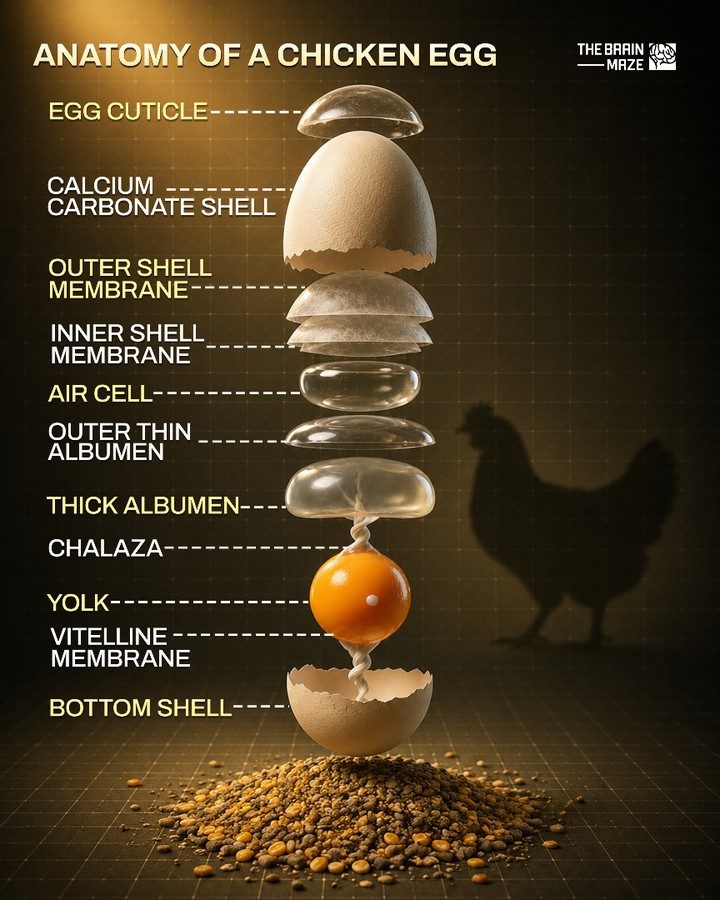
Chicken Egg Anatomy
Chicken eggs are complex structures, each a marvel of natural engineering designed to protect and nourish a developing embryo. The outer layers, in particular, are critical for the egg's overall strength and defense. Inside, layers of albumen cushion the yolk, and the chalazae keep it centered and stable.
Context / Why This Matters
Understanding the various layers of a chicken egg provides insights into how nature ensures the survival of new life. Each component—from the outer cuticle to the inner membranes—plays a crucial role in supporting the embryo's growth and development. For anyone interested in poultry, cooking, or biology, knowing the intricate details of egg anatomy can be fascinating and practical.
Main Discussion
The Outer Layers
The egg cuticle, the outermost layer, is a thin, protective coating. It acts as the first line of defense, sealing the pores of the shell and preventing the entry of bacteria. Beneath the cuticle lies the calcium carbonate shell, which provides structural strength and rigidity. This layer is composed primarily of calcium carbonate, making it both sturdy and porous enough to allow for gas exchange.
Shell Membranes and the Air Cell
Within the shell, there are two important membranes: the outer shell membrane and the inner shell membrane. These membranes line the inside of the shell and support the air cell, a small pocket of air located at the wide end of the egg. The air cell is vital for the embryo's development, as it allows for the exchange of oxygen and carbon dioxide.
The air cell grows larger as the egg ages, and this change can indicate the freshness of the egg. When the egg is first laid, the air cell is tiny, but over time, it expands as the egg loses moisture and the contents shrink.
Albumen and Chalazae
The albumen, commonly known as the egg white, is composed of several layers: the outer thin albumen and the thick albumen. These layers serve multiple purposes, including providing cushioning and protection for the yolk and the developing embryo. The albumen also contains water, proteins, and other nutrients essential for the embryo's growth.
The chalazae are cord-like structures that anchor the yolk in the center of the egg. These strands help keep the yolk stable and prevent it from moving too much within the shell. The stability of the yolk is crucial for the embryo's development, as it ensures that the yolk remains in the correct position for the embryo to access its nutrients.
Yolk and Vitelline Membrane
The yolk is the rich, nutrient-dense center of the egg, providing all the essential components needed for the embryo's growth. It is surrounded by a thin membrane called the vitelline membrane, which separates the yolk from the albumen. This membrane helps maintain the integrity of the yolk and keeps it intact within the egg.
Germinal Disc
At the surface of the yolk, the germinal disc is a small, white spot that marks the point where embryonic development begins. This is where the sperm fertilizes the egg, and the embryo starts to form. The germinal disc is a critical component of the egg, as it is the site of all future development.
Practical Tips
Storing Eggs
To maintain the freshness of eggs, store them in the refrigerator. The cooler temperature helps slow down the growth of the air cell, extending the egg's shelf life. Always keep eggs in their carton to protect them from physical damage and to minimize moisture loss.
Cooking Eggs
When cooking eggs, be mindful of the heat. The albumen and yolk have different cooking times, so adjusting the heat accordingly can help achieve the desired consistency. For scrambled eggs, cook over low heat to prevent the albumen from becoming too tough. For poached or boiled eggs, ensure the water is at the right temperature to avoid overcooking the yolk.
Checking Freshness
To check the freshness of an egg, place it in a bowl of water. Fresh eggs will sink to the bottom and lie flat on their sides. Eggs that are a few days old may stand on one end, while those that float are past their prime and should be discarded.
Important Takeaways
Understanding the structure and function of the various layers of a chicken egg provides a deeper appreciation for this remarkable natural creation. From the protective cuticle to the nourishing yolk, each layer plays a vital role in supporting the embryo's development. Knowing these details can also be practical for storing, cooking, and evaluating the freshness of eggs.
Conclusion
The chicken egg is a testament to nature's engineering prowess. Its intricate layers and components work together to protect and nourish a developing embryo, ensuring the survival of new life. Whether you're a poultry enthusiast, a biology student, or simply someone who enjoys cooking with eggs, gaining a deeper understanding of egg anatomy can be both fascinating and beneficial.
Watch the Reel
Questions readers ask
What are the primary functions of the outer layers of a chicken egg?
The outer layers of a chicken egg, including the cuticle and shell, serve to protect the embryo from external threats such as bacteria and physical impacts. The cuticle provides a thin layer of protection and helps prevent the shell from becoming contaminated. The shell, primarily composed of calcium carbonate, offers structural strength and rigidity. The outer membrane ensures the eggs stability.
How does the albumen contribute to the development of an embryo?
The albumen, or egg white, serves multiple purposes. It provides a cushion for the yolk, protecting the developing embryo from physical shocks. Additionally, the albumen contains valuable proteins and water, which nourish the embryo as it grows. The albumen also plays a role in maintaining the egg's initial shape.
What is the role of the chalazae in an egg's structure?
The chalazae are rope-like structures that suspend the yolk in the center of the egg. By keeping the yolk centered, the chalazae prevent it from sticking to the shell membranes, which is crucial for the proper development of the embryo. This centralized position ensures that the embryo receives adequate nourishment and protection.
Why is the vitelline membrane important in egg biology?
The vitelline membrane is a thin layer surrounding the yolk. It helps contain the yolk's nutrients and prevents the mixing of the yolk with the albumen. This separation is vital for maintaining the integrity of the yolk and ensuring that the embryo receives the necessary nutrients in a controlled manner. It is the second membrane of the eggs inner layers.
What is the purpose of the air cell in a chicken egg?
The air cell is a small pocket of air located at the wide end of the egg, between the shell membranes. It forms as the egg cools and the contents contract. The air cell plays a crucial role in the embryo's respiratory system, allowing for gas exchange between the embryo and the outside environment. This exchange is essential for the embryo's survival and development.
How does the egg shell's calcium content contribute to its strength?
The egg shell is primarily composed of calcium carbonate, which gives it structural strength and rigidity. This composition makes the shell strong enough to protect the embryo while being light enough to facilitate incubation. The shell's calcium content also serves as a vital mineral source for the developing chick, providing the necessary resources for bone and structural development.
What is the significance of the inner membranes in an egg's structure?
The inner membranes of a chicken egg consist of two thin layers that lie just beneath the shell. These membranes provide an additional barrier of protection for the embryo and help maintain the egg's structure. They also play a role in preventing the loss of moisture from the egg, ensuring that the embryo remains hydrated and protected during its development.
Recent articles
Fresh deep dives from the latest Reels we unpacked.




Comments
Be the first to comment.