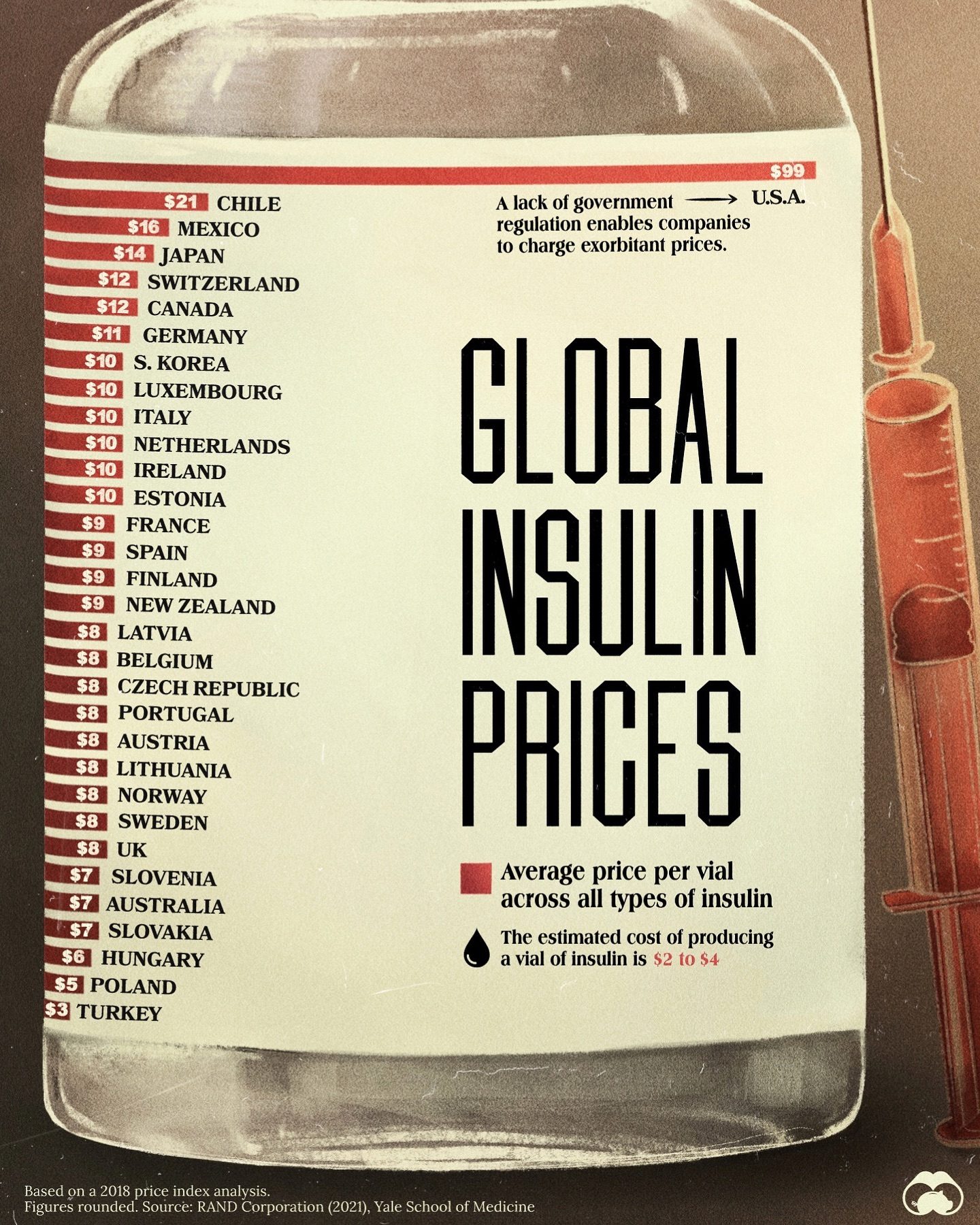
Insulin prices vary significantly across the globe, with the United States standing out as the most expensive country for this life-saving medication. An infographic comparing insulin prices across various countries highlights this disparity, with the U.S. having the highest average price and Turkey having the lowest. This comparison is based on a 2021 publication by the RAND Corporation, which analyzed a 2018 price index.
Context / Why This Matters
Insulin is a critical medication for people with type 1 diabetes and many with type 2 diabetes. It helps regulate blood sugar levels, preventing serious complications. The high cost of insulin in the U.S. has become a significant issue, affecting the health and financial well-being of many individuals. Understanding the global price differences can shed light on potential solutions and policy changes that could make insulin more affordable.
This infographic provides a snapshot of the average cost of insulin per vial across all types, revealing stark contrasts between countries. The estimated production cost of a vial of insulin is surprisingly low, ranging from $2 to $4. This stark contrast between production costs and retail prices underscores the significant role that market dynamics and regulatory environments play in determining the final price that consumers pay.
Main Discussion
Global Price Variations
The infographic shows a wide range of prices across different countries. Here are some key highlights:
- United States: At $99 per vial, the U.S. has the highest average price for insulin. This high cost is often attributed to a lack of government regulation, which allows pharmaceutical companies to set exorbitant prices.
- Turkey and Chile: Both countries have the lowest prices, at $21 per vial. This is significantly lower than the U.S. and other high-cost countries.
- Europe and Asia: Prices in countries like Germany, Italy, and Japan range from $10 to $16 per vial. These prices are still higher than in Turkey and Chile but much lower than in the U.S.
- Canada and Mexico: Neighboring countries of the U.S., Canada and Mexico, have prices of $12 and $16 respectively, which are also lower than the U.S. but higher than many European countries.
Factors Influencing Prices
Several factors contribute to the variation in insulin prices across countries. These include:
- Government Regulation: Countries with stricter regulations on drug pricing tend to have lower insulin prices. In the U.S., the lack of such regulations allows companies to charge higher prices.
- Market Competition: Countries with more competitive markets may see lower prices due to increased competition among pharmaceutical companies.
- Healthcare Systems: The structure of healthcare systems can also influence drug prices. Countries with robust public healthcare systems often negotiate lower prices for essential medications.
Impact on Patients
The high cost of insulin in the U.S. has significant implications for patients. Many people with diabetes struggle to afford their medication, leading to rationing or forgoing doses, which can result in severe health complications. The global price comparison underscores the need for policy changes that could make insulin more affordable in the U.S.
Practical Tips
If you or someone you know is struggling with the high cost of insulin, consider the following tips:
- Explore Generic Insulin: Some countries allow for the production and use of generic insulin, which can be significantly cheaper than branded versions.
- Negotiate with Insurance: If you have insurance, work with your provider to negotiate lower copayments for insulin.
- Seek Patient Assistance Programs: Many pharmaceutical companies offer patient assistance programs to help cover the cost of insulin for those who qualify.
- Advocate for Policy Changes: Engage with local and national legislators to advocate for policies that would lower the cost of insulin.
Important Takeaways
- Global Price Variation: Insulin prices vary significantly across countries, with the U.S. having the highest average price.
- Production Costs: The estimated production cost of insulin is much lower than the retail price in many countries.
- Regulatory Impact: Government regulation and market competition play crucial roles in determining insulin prices.
- Patient Impact: High insulin prices can lead to serious health complications for patients who cannot afford their medication.
Conclusion
The comparison of insulin prices across different countries reveals a stark disparity, with the U.S. facing the highest costs. Understanding the factors influencing these prices and the impact on patients can guide efforts to make insulin more affordable. Whether through policy changes, increased competition, or improved healthcare systems, addressing the high cost of insulin is a critical step in ensuring better health outcomes for people with diabetes.
Watch the Reel
Questions readers ask
Why are insulin prices in the United States significantly higher than in other countries?
The high cost of insulin in the U.S. can be attributed to several factors, including market dynamics such as limited competition among manufacturers and the influence of pharmaceutical companies. Additionally, regulatory environments in the U.S. allow for higher pricing strategies. The lack of government intervention to control prices further contributes to the high cost of insulin in the U.S.
Which country has the lowest average insulin cost?
According to a 2021 study by the RAND Corporation, Turkey has the lowest average cost of insulin. This significant difference in pricing highlights the global disparity in insulin affordability and is based on a 2018 price index of insulin costs across various countries.
What is the significance of the 2021 Rand Corporation’s report on insulin prices?
The 2021 report by the RAND Corporation provides valuable insights into the global disparities in insulin prices. By analyzing a 2018 price index, the report offers a comprehensive comparison of insulin costs in the United States vs. the rest of the world, highlighting the U.S. as the most expensive country for this essential medication. This comparison is crucial for understanding the financial burden faced by many individuals in the U.S. due to high insulin prices.
How do insulin prices in the U.S. compare to other developed countries?
Insulin prices in the U.S. are notably higher than in other developed countries, many of which have implemented measures to control and reduce the cost of insulin. This comparison underscores the need for policy changes in the U.S. to address the issue of high insulin costs and improve accessibility for patients who rely on this critical medication.
What impact does the high cost of insulin have on individuals with diabetes in the U.S.?
The high cost of insulin in the U.S. significantly affects the health and financial well-being of individuals with type 1 diabetes and many with type 2 diabetes. It can lead to rationing of insulin, which can result in serious health complications, including hospitalizations and long-term health issues. This financial burden also contributes to economic stress and reduced quality of life for those who depend on insulin.
What are some factors influencing insulin prices across different countries?
Several factors influence insulin prices across different countries, including market competition, regulatory policies, and government interventions. For instance, countries with robust generic markets and strong price regulation tend to have lower insulin prices compared to the U.S., where market dynamics and regulatory environments allow for higher prices.
What is an alternative to insulin prices on the USA?
Biopharmaceutical companies produce alternatives such as biosimilars, which are biological products highly similar to already approved biologic medications. These are cheaper by comparison, and are employed in some countries by the local health regulatory authorities to reduce the cost of insulin. There are currently no biosimilar insulin products in the USA, but there are hopes from the medical community that they will be approved and made available in the USA.
Recent articles
Fresh deep dives from the latest Reels we unpacked.




Comments
Be the first to comment.