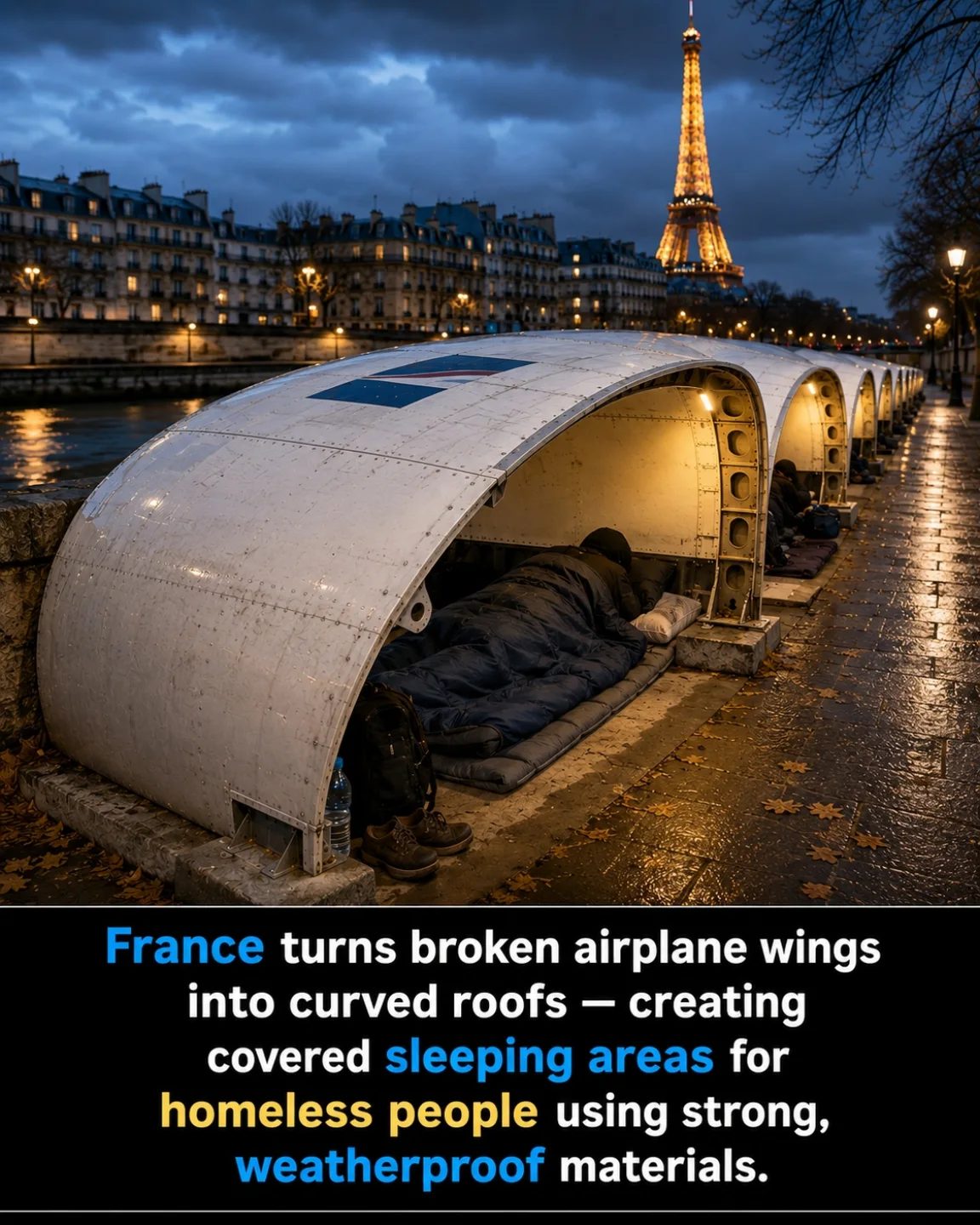
Homeless Shelter Innovation in France
In France, a unique and practical solution has emerged to address homelessness. This is not a new shelter design, but a repurposing of an unusual and readily available resource: retired, decommissioned, or broken airplane wings.
Context / Why this matters
Homelessness is a complex issue affecting communities worldwide. Traditional shelters, while essential, often face challenges such as limited space, funding constraints, and the need for quick, scalable solutions. This innovative repurposing of airplane wings offers a novel approach to providing immediate, safe, and secure sleeping areas for those in need.
Main discussion
The origins of the idea
The concept of repurposing airplane wings for shelter might seem unusual, but it is both practical and innovative. With France's rich aviation industry, decommissioned or damaged airplane wings have become a viable resource for creating shelters. These wings are strong, durable, and offer natural curvature, which can be highly effective in creating weatherproof structures.
How the shelters are constructed
The process of transforming airplane wings into shelters involves several steps. First, the wings are carefully inspected and prepared to ensure they are structurally sound. Next, they are repurposed to create curved roofs. These roofs can offer a substantial amount of coverage, making them ideal for use in shelter construction. The durable, weatherproof materials used in airplane wings provide excellent protection against the elements. The shelters are outfitted with additional materials to create secure, enclosed spaces, making them suitable for overnight stays.
Benefits of using airplane wings
Using airplane wings for shelter construction has several benefits:
- Durability: Airplane wings are designed to withstand extreme weather conditions and are made from strong, lightweight materials.
- Weatherproofing: The curved shape of the wings naturally sheds rain and snow, providing excellent protection from the elements.
- Immediate availability: The availability of decommissioned airplane parts in France makes this a quick and scalable solution.
- Cost-effectiveness: Repurposing existing materials can be a cost-effective alternative to building shelters from scratch.
Success stories and impact
The initiative has already seen positive results. The shelters have been well-received by those experiencing homelessness, who appreciate the stability and security they provide. The unique design has also attracted attention from various organizations, which are now exploring similar repurposing projects.
Practical tips
For those interested in repurposing materials for social impact projects, here are some practical tips:
- Research available resources: Identify materials that are readily available and can be repurposed for your project. This can include decommissioned industrial parts, salvaged construction materials, or even recycled plastics.
- Assess structural integrity: Ensure that the materials you plan to use are safe and structurally sound. In the case of airplane wings, this means conducting a thorough inspection to ensure they are free from defects.
- Work with experts: Collaborate with architects, engineers, and other professionals who can help you design and build your structures safely and effectively.
Important takeaways
Repurposing airplane wings for shelters showcases the potential for innovative, resourceful solutions in addressing homelessness. This approach not only provides a practical solution to immediate needs but also highlights the importance of sustainability and cost-effectiveness in social impact projects. By leveraging available resources and thinking creatively, it is possible to make a significant impact on some of the world's most pressing issues.
Conclusion
By turning broken airplane wings into curved roofs, France has demonstrated a practical and sustainable solution to providing shelter for those experiencing homelessness. This innovative project offers a model for other communities looking to address homelessness with creative and resourceful solutions. As the need for affordable and effective shelter solutions continues to grow, initiatives like these will become increasingly important.
Watch the Reel
Questions readers ask
Why were airplane wings chosen for repurposing into homeless shelters in France?
Airplane wings were chosen due to their durability, weatherproof nature, and the fact that many retired or decommissioned wings are readily available. These wings can provide strong, curved shelter materials, offering a unique solution to immediate housing needs.
How do the repurposed airplane wing shelters benefit the homeless in France?
These shelters offer a safe, secure, and weatherproof space for individuals experiencing homelessness. They provide immediate relief from the elements and can be quickly deployed, addressing the urgent need for temporary housing.
What are the advantages of using airplane wings as shelter materials?
Airplane wings are exceptionally durable and weather-resistant, making them ideal for outdoor shelters. Their curved shape allows for unique and sturdy structural designs, and their abundance as recycled airplane parts makes them a cost-effective solution.
Can these shelters be easily assembled and disassembled?
While specific assembly details are not mentioned, the design is intended to be durable and weatherproof, suggesting a robust build. Most likely, the shelters can be assembled and disassembled with some effort, allowing for flexibility in placement and relocation as needed.
Are there plans to expand this innovative homeless solution across other regions in France or beyond?
The article does not provide specific details about expansion plans. However, given the success and benefits of this approach, it is plausible that other regions in France or even internationally might adopt similar initiatives to tackle homelessness.
How do these airplane wing shelters compare to traditional homeless shelters?
Unlike traditional shelters that face challenges such as limited space and funding constraints, airplane wing shelters offer a unique, durable, and weatherproof solution. They provide immediate, safe, and secure sleeping areas, addressing the urgent need for temporary housing in a scalable and innovative way.
What role does the repurposing of airplane wings play in addressing homelessness in France?
The repurposing of airplane wings plays a significant role in providing immediate, innovative solutions for homelessness. By utilizing readily available, durable materials, these shelters offer a practical and swift response to the critical need for shelter, complementing existing efforts to combat homelessness.
Related deep dives
Similar reads based on topic and creator.



Recent articles
Fresh deep dives from the latest Reels we unpacked.




Comments
Be the first to comment.