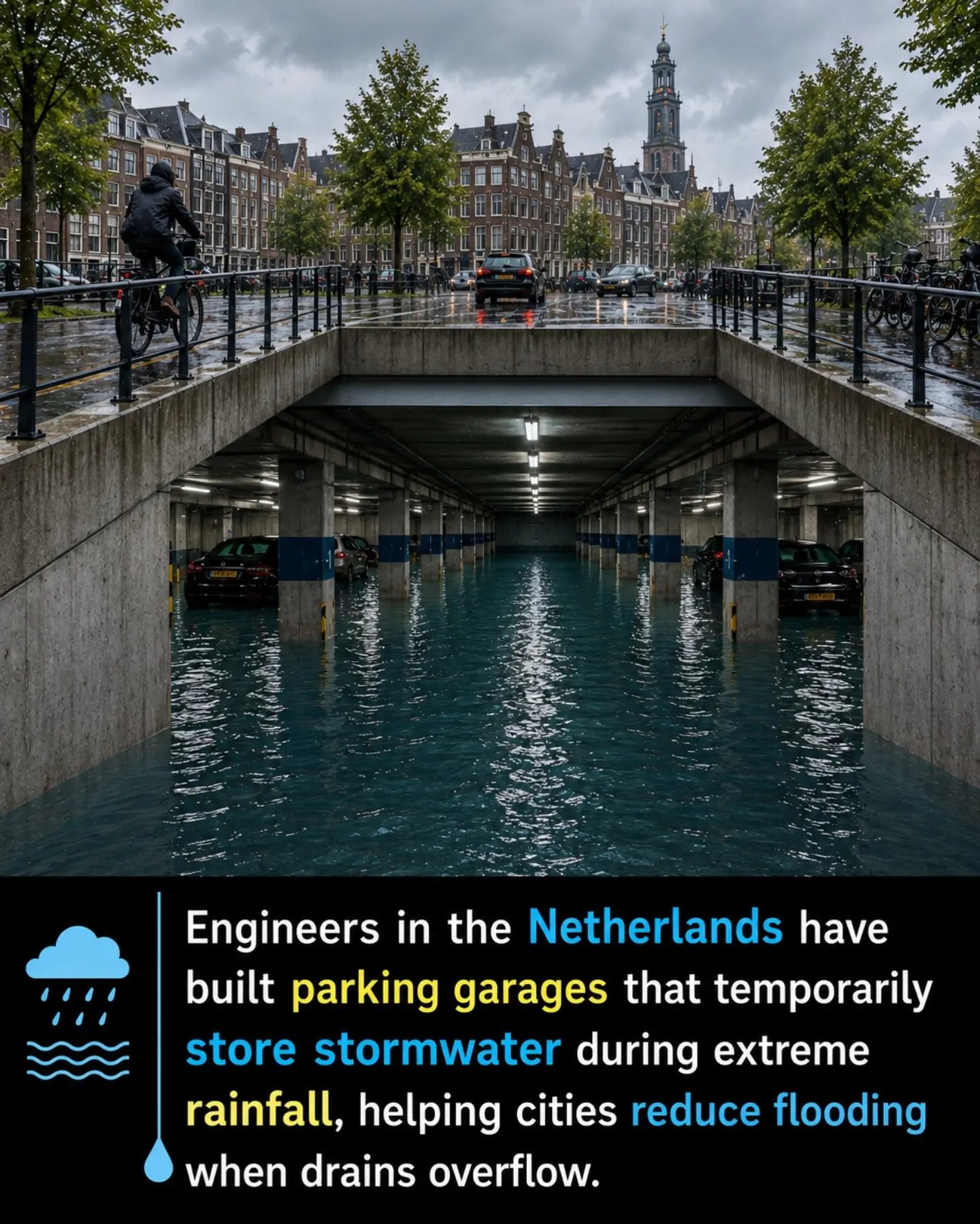
Flood Mitigation in the Netherlands
The Netherlands' unique approach to flood mitigation involves innovative urban planning, particularly in the design of parking garages. The country has developed a strategy to temporarily store stormwater in parking garages to manage heavy rainfall and minimize flooding. Engineers have designed these structures to double as reservoirs, helping cities cope with extreme weather events.
Context / Why this matters
Flooding is a significant challenge for cities worldwide, especially in areas with heavy rainfall and limited drainage infrastructure. The Netherlands, known for its flat terrain and extensive water management systems, faces unique challenges. Traditional drainage systems can overflow during extreme rainfall, leading to widespread flooding and damage. By repurposing parking garages as temporary water storage, the country has found an effective and space-efficient solution to mitigate flood risks.
Main discussion
The Dutch Approach to Urban Flood Management
The Dutch approach to urban flood management integrates multiple strategies, including traditional canals, dikes, and innovative engineering solutions. The use of parking garages as temporary water storage is a modern addition to this infrastructure. These garages are built with reinforced foundations and waterproof materials, ensuring they can safely hold large volumes of water without compromising structural integrity. This dual-purpose design is crucial in densely populated urban areas where space is a premium.
Benefits of Temporary Water Storage in Parking Garages
There are several benefits to using parking garages for temporary water storage:
- Space Efficiency: Urban areas often lack open spaces for traditional flood management systems. By utilizing existing parking garages, cities can maximize space utilization without compromising on infrastructure.
- Reduced Flooding Risks: During heavy rainfall, water levels in drains and rivers can rise rapidly, leading to overflows. By diverting stormwater into parking garages, cities can prevent overflows and reduce the risk of flooding in residential and commercial areas.
- Cost-Effective Solutions: Retrofitting existing parking garages with water storage capabilities is often more cost-effective than constructing new flood management infrastructure from scratch. This approach leverages existing resources, saving both time and money.
The Design and Functionality of Flood-Resilient Parking Garages
The design of these parking garages involves several key considerations:
- Reinforced Foundations: The foundations of these garages are reinforced to withstand the additional weight of water. This ensures that the structure remains stable and secure, even when filled to capacity.
- Waterproof Materials: The use of waterproof materials ensures that the garage can hold water without leaking, maintaining structural integrity and preventing water damage to vehicles and property.
- Drainage Systems: These garages are equipped with efficient drainage systems that can quickly channel water back into the city's main drainage network once the rainfall subsides. This rapid drainage helps to restore normal operations as quickly as possible.
Practical tips
For cities looking to implement similar flood mitigation strategies, consider the following tips:
Assess Existing Infrastructure
Evaluate existing parking garages and other underground structures for their potential to be converted into temporary water storage facilities. Look for structures with robust foundations and ample space.
Consult with Engineers
Work with civil engineers and urban planners to design and retrofit existing structures. Ensure that the modifications meet safety and structural integrity standards.
Integrate with Existing Drainage Systems
Ensure that the new water storage system is integrated with the city's existing drainage infrastructure. This will facilitate efficient water management and reduce the risk of overflows.
Public Awareness and Safety
Educate the public about the potential for temporary water storage in parking garages. Ensure that safety measures are in place, such as clear signage and restricted access during heavy rainfall.
Important takeaways
The Importance of Adaptive Urban Design
The Netherlands' approach to flood mitigation highlights the importance of adaptive urban design. By repurposing existing infrastructure, cities can create more resilient and sustainable environments. This approach not only addresses immediate flooding risks but also prepares for future climate challenges.
The Role of Engineering in Flood Mitigation
Engineering plays a crucial role in developing effective flood mitigation strategies. The design of parking garages for temporary water storage involves complex engineering solutions that require careful planning and execution. Engineers must consider factors such as structural stability, waterproofing, and drainage systems to ensure the success of these projects.
Balancing Urban Development and Sustainability
Balancing urban development with environmental sustainability is essential for creating resilient cities. The use of parking garages for flood mitigation is an example of how urban development can be integrated with environmental needs. This approach not only reduces the risk of flooding but also optimizes the use of urban space.
Conclusion
The Netherlands' innovative use of parking garages for temporary water storage is a testament to the country's commitment to effective flood mitigation. By leveraging existing infrastructure and employing advanced engineering solutions, cities can create more resilient and sustainable environments. This approach not only addresses immediate flooding risks but also prepares for future climate challenges, ensuring that urban areas remain safe and livable.
Watch the Reel
Questions readers ask
How do parking garages in the Netherlands contribute to flood mitigation?
Parking garages in the Netherlands are designed to serve as temporary reservoirs during heavy rainfall. This innovative approach allows cities to store excess stormwater, reducing the risk of urban flooding in densely populated areas.
What makes the Netherlands a unique case study for urban flood control?
The Netherlands' flat terrain and extensive water management systems present unique challenges for flood control. The country's innovative approach to integrating flood mitigation techniques into urban planning, such as using parking garages as reservoirs, sets it apart as a leader in flood defense.
How do flood proof parking garages work?
Flood proof parking garages are designed with reinforced structures and waterproof materials. They can accommodate temporary floods without compromising their structural integrity, ensuring that stormwater can be stored safely during heavy rainfall.
What are the benefits of using parking garages as reservoirs?
Using parking garages as reservoirs helps cities manage heavy rainfall and minimizes the risk of flooding. This dual-purpose design optimizes urban space, provides additional flood management, and enhances overall city resilience against extreme weather events.
How does the Netherlands' approach to urban planning address flooding?
The Netherlands employs a strategic approach to urban planning by integrating flood mitigation techniques into infrastructure design. This is evident in the development of parking garages that double as temporary stormwater storage solutions, which helps in managing urban flood control effectively.
What role do parking garages play in the Netherlands' flood management systems?
In the Netherlands, parking garages play a critical role in flood management by providing temporary storage for stormwater. By doubling as reservoirs, these structures help alleviate pressure on traditional drainage systems, mitigating the impact of extreme rainfall and preventing widespread flooding.
How is this approach to flood management relevant to other cities?
This approach to flood management is applicable to cities worldwide, especially those with high urban densities and limited drainage infrastructure. By adopting similar strategies, cities can enhance their urban flood control capabilities and prepare for the challenges posed by heavy rainfall and extreme weather events.
Recent articles
Fresh deep dives from the latest Reels we unpacked.




Comments
Be the first to comment.