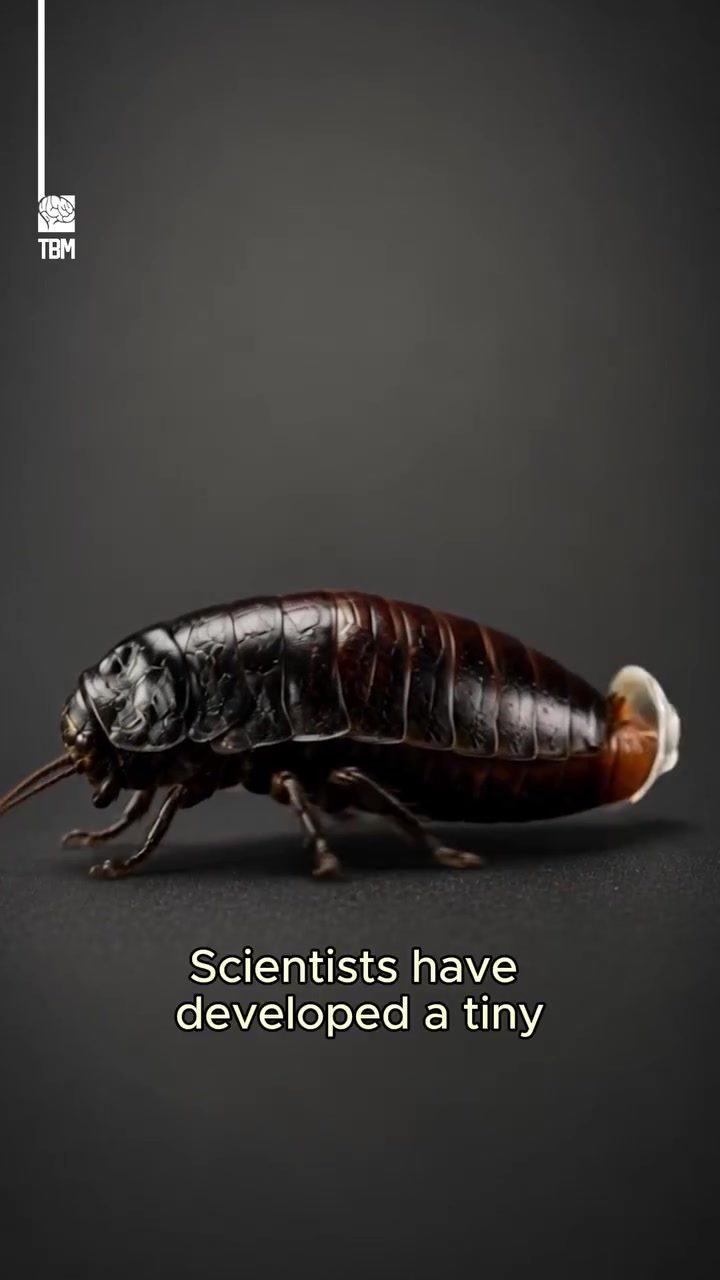
The tiny scuba suit, designed by researchers from Nanyang Technological University and Waseda University, represents a significant innovation in underwater exploration. This miniature suit allows cockroaches to survive and operate underwater for extended periods. The concept is intriguing, but why is it important?
Cockroaches are known for their resilience and ability to navigate through tight spaces, making them ideal candidates for rescue and exploration missions. However, their natural instincts do not include underwater survival. This is where the miniature scuba suit comes in. The 3D-printed, watertight suit connects to the cockroach's breathing openings, supplying air while allowing it to move freely underwater. This technology could revolutionize the way we approach search and rescue operations in environments where humans cannot safely venture.
Why This Matters
Underwater exploration and rescue missions often face significant challenges due to the hazardous nature of the environments involved. Traditional methods, such as using remotely operated vehicles (ROVs) or human divers, come with their own set of limitations and risks. Cockroaches, equipped with scuba suits and tiny cameras, could navigate through debris, collapsed structures, and other obstacles that are inaccessible to humans or bulky robots.
These cyborg insects could also carry small cameras, providing real-time visual feedback from dangerous or inaccessible areas. This capability could be invaluable in disaster scenarios, such as searching for survivors in flooded buildings or under rubble. The potential applications extend beyond Earth, as scientists envision these insects helping with exploration in extreme environments, including extraterrestrial landscapes like Mars.
Researchers from Nanyang Technological University and Waseda University are at the forefront of this innovative research. Their efforts highlight the potential of bio-inspired robotics and the integration of living organisms with advanced technology. This interdisciplinary approach could pave the way for new advancements in robotics, materials science, and environmental exploration.
The Technology Behind the Scuba Suit
The miniature scuba suit is designed to overcome the natural limitations of cockroaches in underwater environments. The suit is 3D-printed and watertight, ensuring that the cockroach can survive submerged for extended periods. The key innovation lies in the suit's ability to supply air to the cockroach's breathing openings while allowing it to move freely underwater.
This technology is not just about keeping the cockroach alive; it is also about controlling its movements. Researchers have developed methods to remotely control the cockroach's movements, enabling precise navigation through challenging terrains. This level of control is crucial for effective exploration and rescue missions.
Applications and Future Developments
The potential applications of this technology are vast. In the immediate future, these cyborg cockroaches could be deployed in search and rescue missions, providing valuable information from hazardous environments. As the technology advances, researchers hope to develop more advanced protective suits that could help these insects operate in even more extreme conditions.
One of the most exciting possibilities is the use of these insects in extraterrestrial exploration. The ability to navigate through harsh and unforgiving environments, such as the surface of Mars, could provide new insights into the geology and potential habitability of other planets.
Practical Tips for Implementing Technology
While the technology is still in the development phase, several practical tips can be considered for its future implementation:
-
Training and Control: Developing effective training methods and control systems for the cockroaches will be crucial. This includes understanding their natural behaviors and adapting the control mechanisms to enhance their navigational capabilities.
-
Material Science: The development of lightweight and durable materials for the scuba suits will be essential. Materials that can withstand extreme conditions and provide long-lasting protection are needed.
-
Integration of Sensors: Equipping the cockroaches with advanced sensors and cameras will enhance their effectiveness in exploration and rescue missions. Real-time data transmission and imaging capabilities are critical for successful operations.
-
Ethical Considerations: As with any bio-engineered technology, ethical considerations must be taken into account. Ensuring the well-being of the cockroaches and minimizing any potential harm is paramount.
Important Takeaways
The development of the miniature scuba suit for cockroaches represents a groundbreaking advancement in robotics and environmental exploration. This technology has the potential to revolutionize search and rescue missions, providing valuable information from hazardous and inaccessible environments. The collaboration between scientists from Nanyang Technological University and Waseda University underscores the importance of interdisciplinary research in driving innovation.
The technology's potential extends beyond Earth, offering new possibilities for extraterrestrial exploration. As researchers continue to refine and advance this technology, the future of underwater and space exploration looks brighter and more accessible than ever before.
Conclusion
The tiny scuba suit for cockroaches is more than just a novel idea; it is a practical solution to some of the most challenging problems in underwater exploration and rescue. By harnessing the natural abilities of cockroaches and combining them with advanced technology, scientists are paving the way for new advancements in robotics and environmental exploration. This technology has the potential to save lives and expand our understanding of the world and beyond.
Watch the Reel
Questions readers ask
What purpose does the tiny scuba suit serve for cockroaches?
The miniature scuba suit enables cockroaches to explore underwater environments by supplying air to their breathing openings, allowing them to stay submerged for extended periods while maintaining their agility. This opens up new possibilities for search and rescue missions in hazardous underwater conditions.
How do cockroaches benefit underwater rescue missions?
Cockroaches can navigate tight spaces and harsh conditions, making them excellent candidates for underwater rescue missions. With the help of the tiny scuba suit, they can survive and operate underwater, reaching areas that are inaccessible to humans or traditional robots.
Who developed the miniature scuba suit for cockroaches?
Researchers from Nanyang Technological University and Waseda University collaborated to create the innovative cockroach scuba suit. This bio-inspired technology leverages the natural abilities of cockroaches for enhanced underwater exploration.
How does the scuba suit work for cockroaches?
The 3D-printed, watertight suit connects to the cockroach's breathing openings, providing a constant air supply while allowing the insect to move freely underwater. This design ensures the cockroach can explore underwater environments effectively.
What advantages do cockroaches have over traditional robots in underwater exploration?
Cockroaches have a natural agility and resilience that allows them to navigate complex and tight spaces better than traditional robots. By using the miniature scuba suit, they can access and explore underwater environments that are challenging for conventional robots to reach.
Why are cockroach suits a significant innovation in underwater exploration?
Cockroach suits represent a significant advancement in underwater exploration as they enable biological creatures to navigate underwater environments efficiently. This innovation has the potential to transform search and rescue operations, offering new ways to explore and interact with underwater conditions.
Related deep dives
Similar reads based on topic and creator.
Recent articles
Fresh deep dives from the latest Reels we unpacked.




Comments
Be the first to comment.