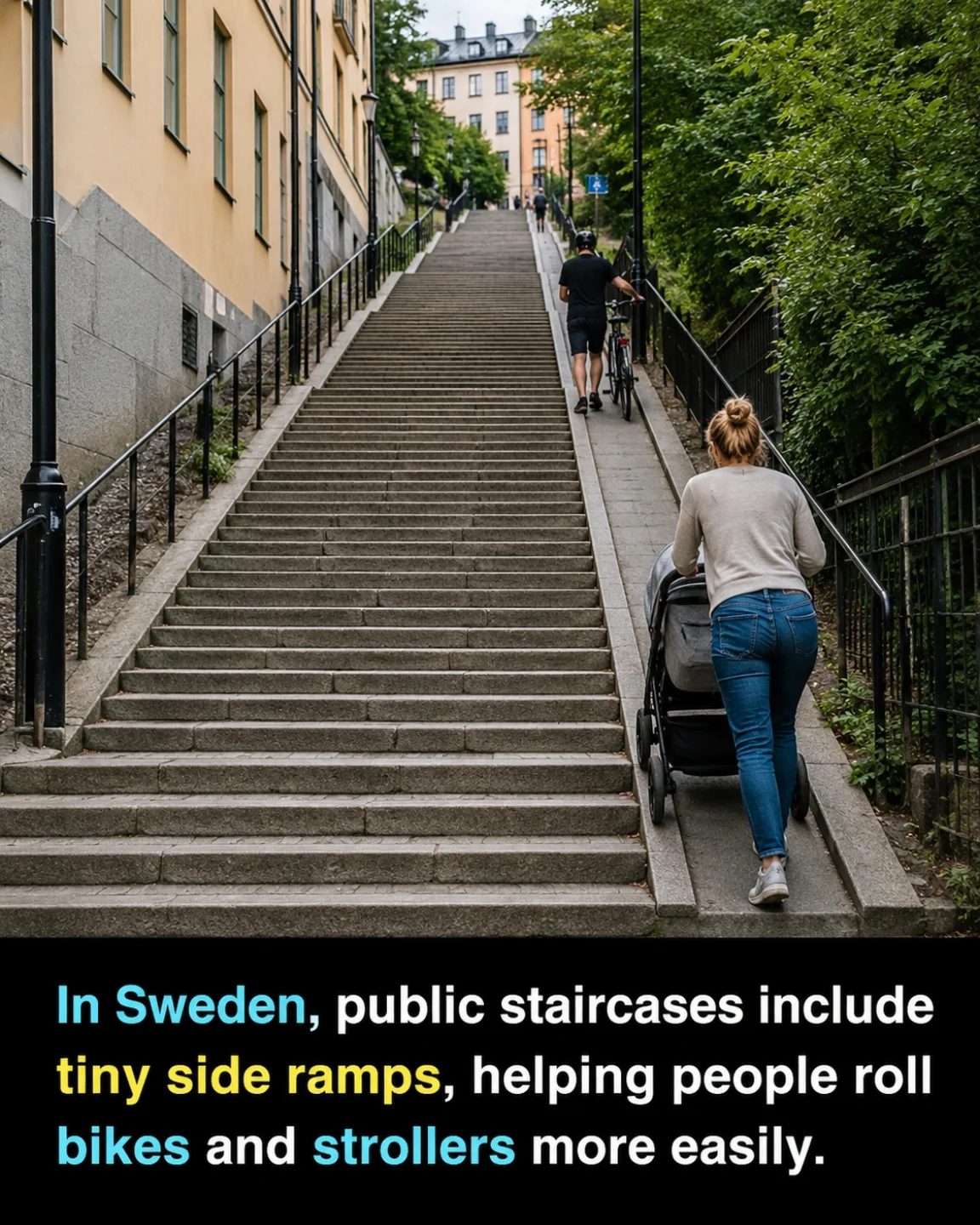
Accessible Public Staircases
Public staircases are a common fixture in urban environments, providing a means to navigate elevations and connect different levels of a city. In Sweden, these staircases are designed with a thoughtful and innovative feature: built-in side ramps. These ramps offer a practical solution to an everyday challenge, ensuring that staircases are more accessible to everyone.
Why This Matters
Public spaces should be designed to accommodate the diverse needs of all users. Sweden’s approach to incorporating side ramps into public staircases serves as a model for creating inclusive urban environments. This design feature addresses the needs of various users, including parents with strollers, cyclists, and individuals with mobility impairments, making the city more navigable and user-friendly.
Main Discussion
The Design and Functionality
The built-in ramps alongside public staircases in Sweden are a simple yet effective design solution. These ramps are located on the side of the staircase, allowing users to roll or push items like bikes and strollers up or down the ramp without needing to navigate the stairs. This design ensures that everyone, regardless of their mode of transportation or physical ability, can access the same pathways.
Promoting Accessibility and Inclusivity
One of the key benefits of this design is its promotion of accessibility and inclusivity. By providing an alternative route for those who cannot or prefer not to use the stairs, these ramps make public spaces more welcoming and usable for a broader range of people. This inclusivity is important for creating a sense of community and ensuring that public infrastructure serves everyone equally.
Benefits for Different Users
- Parents with Strollers: For parents pushing a stroller, navigating stairs can be challenging and time-consuming. The side ramps provide a smoother and more convenient path, allowing parents to reach their destination more easily.
- Cyclists: Cyclists often need to navigate through urban areas with their bikes. The built-in ramps enable them to move their bikes up or down the stairs without dismounting, making it easier to travel through the city.
- Individuals with Mobility Impairments: For those with mobility impairments, stairs can be a significant barrier. The side ramps offer a more accessible route, ensuring that everyone can navigate public spaces independently.
Urban Design and Public Safety
Incorporating ramps into public staircases is not just about convenience; it also enhances public safety. By providing an alternative path, these ramps reduce the risk of accidents and injuries that can occur when people attempt to navigate stairs with wheeled objects. This thoughtful design ensures a safer and more inclusive urban environment.
Practical Tips for Public Spaces
When designing or renovating public spaces, consider the following tips to enhance accessibility and inclusivity:
Consult with Users
Engage with the community to understand the specific needs and challenges faced by different user groups. This can help identify areas where accessibility can be improved and ensure that the design meets the needs of the diverse population.
Integrate Multiple Solutions
Incorporate multiple accessibility features, such as ramps, elevators, and lifts, to provide various options for different users. This approach ensures that everyone can navigate public spaces with ease.
Evaluate Existing Infrastructure
Assess the current infrastructure to identify areas where accessibility can be improved. This could involve adding ramps to existing staircases or modifying the design of new constructions to include accessible features from the outset.
Promote Universal Design Principles
Adopt universal design principles, which aim to create environments that are accessible and usable by everyone, regardless of age, ability, or circumstance. This approach ensures that public spaces are inclusive and welcoming to all.
Important Takeaways
Public staircases with built-in side ramps, as seen in Sweden, are an excellent example of thoughtful urban design. These ramps promote accessibility and inclusivity, making public spaces more navigable and user-friendly for a diverse range of users. The benefits extend to parents with strollers, cyclists, and individuals with mobility impairments, ensuring that everyone can access the same pathways.
This design also contributes to public safety by reducing the risk of accidents and injuries. By incorporating these features into public infrastructure, cities can create safer and more inclusive environments for all residents and visitors. Urban design that prioritizes accessibility and inclusivity leads to a more connected and welcoming community.
Conclusion
Public spaces should be designed with the needs of all users in mind. The inclusion of built-in side ramps alongside public staircases in Sweden is a practical and effective solution that makes urban environments more accessible and inclusive. By adopting similar design principles, cities can create public spaces that are safer, more convenient, and welcoming to everyone.
Watch the Reel
Questions readers ask
What are the primary benefits of Sweden's accessible public staircases with built-in side ramps?
Sweden's accessible public staircases offer numerous benefits. They provide an alternative route for those who cannot easily use stairs, such as individuals with mobility impairments or parents with strollers. Additionally, they make urban navigation more convenient for everyone, including cyclists and those carrying heavy items.
How do built-in side ramps improve urban navigation?
Built-in side ramps alongside public staircases improve urban navigation by providing a continuous, unobstructed path. This allows individuals to move between different levels of a city without needing to find alternative routes or maneuver around obstacles, such as separate, often narrow or winding, ramps.
Are these accessible staircases common throughout Sweden?
While the design is a model for inclusive urban environments, the prevalence of these staircases can vary by city and municipality. However, Sweden’s commitment to accessibility and universal design principles means that many urban areas are continually adopting and integrating these features into their public infrastructure.
Who can benefit from the side ramps on public staircases in Sweden?
The side ramps are designed to benefit a wide range of users. This includes individuals with mobility impairments, parents with strollers, cyclists, elderly individuals, and anyone carrying heavy or bulky items. The design aims to make public spaces more accessible and convenient for everyone.
What motivates Sweden's approach to inclusive public infrastructure?
Sweden's approach is motivated by a commitment to creating inclusive and accessible urban environments. The design of public staircases with built-in side ramps reflects broader principles of universal design, ensuring that public spaces cater to the diverse needs of all users, regardless of their abilities or circumstances.
How might other cities benefit from adopting similar designs?
By adopting similar designs, other cities can improve accessibility and inclusivity in their urban environments. This can lead to better navigation for all residents, increased public satisfaction, and a more cohesive and welcoming cityscape. Additionally, it sends a clear message about a city's commitment to accommodating the needs of its diverse population.
What are some of the challenges in implementing accessible public staircases with built-in side ramps?
While the benefits are clear, implementing such designs can present challenges. These may include higher initial construction costs, space constraints in existing urban environments, and the need for retrofitting older infrastructure. However, these challenges can be addressed through thoughtful planning and a commitment to inclusive design principles.
Recent articles
Fresh deep dives from the latest Reels we unpacked.




Comments
Be the first to comment.