Inflation and Currency Value
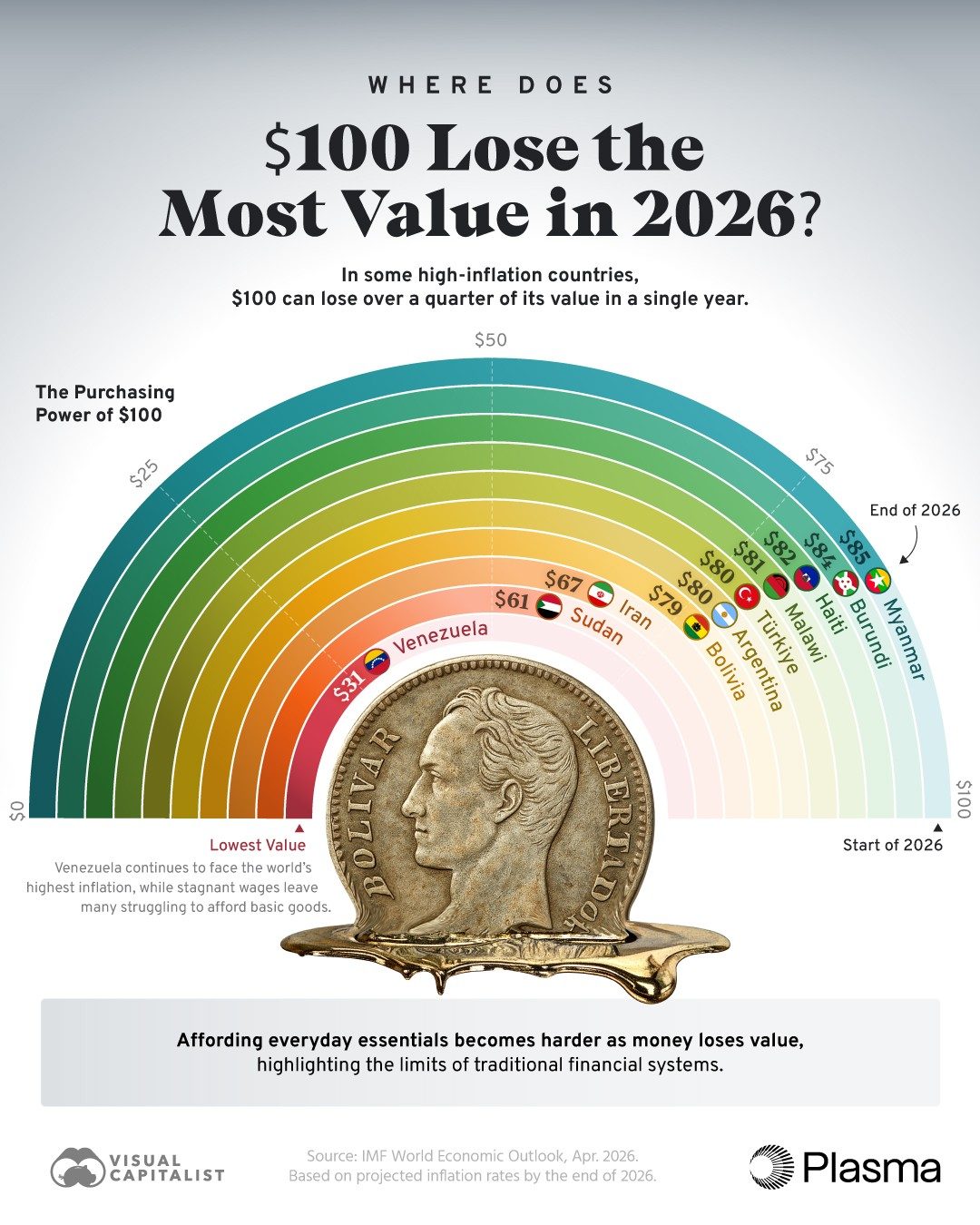
Inflation erodes the purchasing power of money, and in high-inflation countries, the effects can be dramatic. In some nations, $100 can lose more than a quarter of its value in just one year. This phenomenon poses significant challenges for individuals and families trying to afford everyday essentials. Understanding how inflation impacts currency value is crucial for navigating economic volatility.
Context / Why This Matters
Inflation is a critical economic indicator that affects everyone, from individuals managing household budgets to businesses planning for the future. When inflation is high, the cost of goods and services rises, reducing the purchasing power of a given amount of money. For people living in countries with severe inflation, this can mean that their savings and income rapidly lose value, making it difficult to maintain their standard of living.
Main Discussion
Understanding Inflation and Currency Value
Inflation erodes the value of money over time. When inflation rates are high, the price of goods and services increases, reducing the purchasing power of a fixed amount of currency. For instance, in countries with high inflation rates, $100 today might only be worth $75 or less a year later. This reduction in purchasing power can significantly impact daily life, making it harder to afford essentials.
The Impact on Everyday Life
In high-inflation environments, the cost of basic necessities like food, housing, and healthcare can skyrocket. This makes it challenging for individuals and families to plan their finances and meet their daily needs. For example, in Venezuela, the projected value of $100 is expected to drop significantly by the end of 2026, highlighting the severe impact of inflation on the local population.
Countries Most Affected
Several countries are projected to experience substantial losses in the value of their currency due to high inflation. According to the IMF World Economic Outlook, by the end of 2026, $100 will have lost more than a quarter of its value in nations like Venezuela, Iran, Turkey, Sudan, and others. These countries face significant challenges in managing their economies and preserving the value of their currency.
Managing Inflation with Foreign Currency
One strategy to mitigate the effects of high inflation is to hold a more stable foreign currency, such as the U.S. dollar. This approach allows individuals to preserve the value of their money and manage financial volatility more effectively. For instance, the Plasma One app enables users to add local currency, hold it in U.S. dollars, and withdraw locally as needed. This can be a valuable tool for those living in high-inflation countries, providing a way to safeguard their savings and income.
Traditional Financial Systems and Their Limitations
Traditional financial systems often struggle to address the challenges posed by high inflation. As money loses value, affording everyday essentials becomes increasingly difficult. This highlights the need for innovative solutions that can help individuals and businesses navigate economic instability. Digital finance apps like Plasma One offer a modern approach to managing currency and preserving value in volatile economic conditions.
The Role of IMF and Economic Outlook
The International Monetary Fund (IMF) plays a crucial role in monitoring and analyzing global economic trends, including inflation. Their World Economic Outlook provides valuable insights into the projected economic performance of various countries. This information is essential for policymakers, economists, and individuals looking to understand and navigate the complexities of inflation and currency value.
Practical Tips
Preserving Your Money's Value
- Hold Stable Foreign Currency: Consider converting a portion of your savings into a more stable foreign currency, such as the U.S. dollar, to preserve its value.
- Use Digital Finance Apps: Apps like Plasma One can help you manage your money more effectively by allowing you to hold and convert currencies as needed.
- Diversify Your Investments: Spread your investments across different asset classes to reduce the impact of inflation on your portfolio.
- Monitor Economic Indicators: Stay informed about economic trends and indicators to make better financial decisions. Resources like the IMF World Economic Outlook can provide valuable insights.
Navigating High Inflation
- Budget Carefully: Create a detailed budget to track your expenses and prioritize essential spending.
- Seek Professional Advice: Consult with financial advisors who have experience in high-inflation environments to get tailored advice.
- Explore Alternative Income Sources: Consider additional income streams, such as freelancing or part-time work, to supplement your primary income.
Important Takeaways
- Inflation significantly reduces the purchasing power of money, making it challenging to afford everyday essentials.
- High-inflation countries face severe economic challenges, with some losing more than a quarter of their currency's value in a year.
- Holding stable foreign currencies can help manage financial volatility and preserve the value of money.
- Traditional financial systems have limitations in addressing high inflation, highlighting the need for innovative solutions.
- Digital finance apps like Plasma One offer practical tools for managing currency and navigating economic instability.
- Staying informed about economic trends and seeking professional advice can help individuals make better financial decisions.
Conclusion
Inflation is a pervasive economic force that affects everyone, but it is particularly challenging for those living in high-inflation countries. Understanding how inflation impacts currency value and exploring strategies to manage financial volatility are crucial steps in preserving the value of your money. By holding stable foreign currencies, using digital finance apps, and staying informed, individuals can better navigate the complexities of high inflation and maintain their financial stability.
Watch the Reel
Questions readers ask
What is the projected loss in purchasing power of $100 by 2026 in countries with high inflation rates?
In countries experiencing high inflation, $100 could lose up to 25% of its value annually. By 2026, this could result in a cumulative loss of purchasing power, making it difficult to afford the same goods and services.
Which countries are expected to have the most significant currency devaluation by 2026?
Countries with historically high inflation rates, such as Venezuela, Argentina, and Zimbabwe, are likely to continue experiencing significant currency devaluation. However, even moderately high inflation countries, like Turkey and Brazil, could see notable losses in currency value.
How does inflation affect the future value of $100?
Inflation steadily diminishes the buying power of money. As prices rise, the same $100 will buy fewer goods and services. The future value of $100 is determined by the rate of inflation, with higher rates leading to more rapid devaluation.
What challenges does inflation pose for individuals and families?
Inflation makes everyday essentials increasingly costly, straining household budgets. Individuals and families may struggle to afford basic needs, such as food, housing, and healthcare, as their purchasing power diminishes.
How can understanding inflation help in navigating economic volatility?
By comprehending how inflation impacts currency value, individuals and businesses can make more informed financial decisions. This includes adjusting savings strategies, budgeting for increased costs, and planning for future expenses to mitigate the impact of inflation.
What is the quarterly inflation loss in high-inflation countries?
In high-inflation countries, the quarterly inflation loss can be significant. With an annual inflation rate of 25%, the quarterly loss would be approximately 6.25%, meaning that $100 could lose about $6.25 every three months, highlighting the rapid erosion of purchasing power.
Can inflation rates vary significantly among different countries?
Yes, inflation rates vary widely among countries. While some nations may experience mild inflation, others face hyperinflation, where prices double or triple in a short period. This disparity can lead to significant differences in the rate at which currency loses value from one country to another.
Recent articles
Fresh deep dives from the latest Reels we unpacked.




Comments
Be the first to comment.