Why It's Important to Track Quit Rates by Industry
Understanding the quit rates across different industries provides valuable insights into the dynamics of the labor market. These figures can reveal a lot about job satisfaction, pay, stability, and overall economic health. One key point from the U.S. Bureau of Labor Statistics data shows that some industries, like accommodation and food services, have significantly higher quit rates compared to sectors like government jobs. This disparity can offer a nuanced view of the current employment landscape.
The Data: Industry Quit Rates
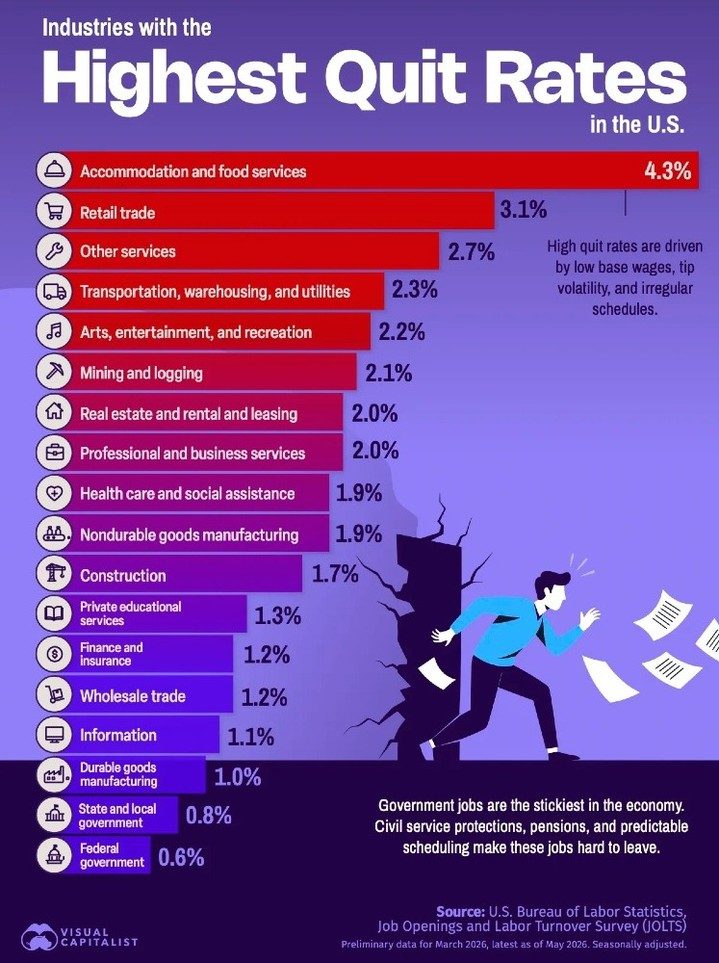
According to data from the U.S. Bureau of Labor Statistics, the quit rate varies widely across different sectors. Accommodation and food services lead with a quit rate of 4.3% in March 2026. This sector is followed by:
- Retail trade with a quit rate of 3.1%
- Other services at 2.7%
- Mining and logging with 2.3%
- Arts, entertainment, and recreation at 2.2%
- Real estate and rental and leasing with 2.0%
- Professional and business services also at 2.0%
- Health care and social assistance at 2.1%
On the other end of the spectrum, government jobs consistently show lower quit rates. State and local government sectors have a quit rate of 0.8%, while federal government jobs have the lowest quit rate at 0.6%. This significant difference can be attributed to several factors, including job security, benefits, and wage structures.
Factors Driving High Quit Rates
High quit rates in certain industries, particularly in accommodation and food services, are often driven by multiple factors. Low base wages, tip volatility, and irregular work schedules are common stressors. In addition, these industries often have high levels of physical and emotional demands, which can lead to higher burnout rates and increased turnover.
Factors Driving Low Quit Rates
Conversely, government jobs are known for their stability and benefits. Civil service protections, pensions, and predictable scheduling make these positions less likely to be vacated. These factors contribute to the lower quit rates observed in government sectors.
Why Do Some Workers Quit While Others Stay?
The decision to leave a job can be influenced by several factors, including compensation, work-life balance, and job security. Industries with high quit rates, such as accommodation and food services, often struggle with low wages and inconsistent work hours. Retail trade and other services also face similar challenges, leading to higher turnover.
On the other hand, industries with lower quit rates, like government jobs, tend to offer better job security, benefits, and predictable work schedules. These factors can lead to higher job satisfaction and retention rates.
Practical Tips for Employers
Want to improve retention in your industry? Here are some practical steps employers can take:
- Offer Competitive Wages and Benefits: Ensuring that employees feel fairly compensated can significantly reduce turnover. Consider offering competitive salaries, benefits, and perks that align with industry standards.
- Improve Work-Life Balance: Flexible schedules, remote work options, and adequate vacation time can help employees manage their personal and professional lives better. This can lead to increased job satisfaction and retention.
- Provide Opportunities for Growth: Offering training, development programs, and career advancement opportunities can motivate employees to stay with the company.
Practical Tips for Job Seekers
If you're considering a career change, it's essential to weigh the pros and cons of different industries. Consider the following tips:
- Research Industry Trends: Understand the current trends and job satisfaction rates in your desired industry. This can help you make an informed decision about where to apply.
- Look at Benefits and Stability: Besides salary, consider the overall benefits package, job stability, and work-life balance. Industries with lower quit rates often offer more stability and job satisfaction.
- Explore Growth Opportunities: Look for industries that offer opportunities for career growth and development. This can lead to long-term job satisfaction and a fulfilling career path.
Practical Tips for Government Workers
If you’re in a government job, you might be wondering what you can do to ensure you stay content and motivated. Here are a few tips:
- Seek Advancement Opportunities: Even in a stable job, it’s important to seek advancement. Look for promotions, training programs, and other ways to advance your career. This can keep your job interesting and challenging.
- Maintain a Healthy Work-Life Balance: Government jobs can sometimes be demanding, so make sure to take breaks and maintain a healthy work-life balance. This can prevent burnout and keep you motivated.
- Stay Informed: Stay updated on the latest developments in your field. Continuing education and professional development can keep your skills sharp and your job engaging.
Important Takeaways
Quitting a job is a significant decision that can impact both individuals and the broader economy. The data shows that certain industries, like accommodation and food services, have higher quit rates due to factors such as low wages, irregular schedules, and job insecurity. Conversely, sectors like government jobs benefit from civil service protections, pensions, and predictable scheduling, leading to lower quit rates.
Conclusion
Understanding quit rates across different industries can provide valuable insights into the labor market. Whether you're an employer, employee, or job seeker, recognizing the factors that influence job satisfaction and retention can help you make more informed decisions. By addressing the underlying issues that drive high quit rates and promoting stability and job satisfaction, industries can work towards reducing turnover and fostering a more stable workforce.
Watch the Reel
Questions readers ask
What are industry quit rates and why are they important?
Industry quit rates refer to the percentage of workers who voluntarily leave their jobs in a specific sector. They are important because they provide insights into job satisfaction, pay, and economic health. High quit rates can indicate issues within an industry, while low rates suggest stability and contentment. Tracking these rates can help identify trends in the job market and worker well-being.
Which industries typically have the highest quit rates?
Industries like accommodation and food services often have the highest quit rates. This is due to factors such as low pay, high stress, and limited benefits. These sectors can have high rates of turnover, making them less reliable for long-term employment. In contrast, government roles often have lower quit rates due to better stability and benefits.
Why do some industries have lower quit rates than others?
Industries with lower quit rates, such as government roles, often provide more stability, better benefits, and opportunities for growth. These factors contribute to higher job satisfaction and retention. In contrast, industries with high turnover often struggle with these issues, leading to more frequent job changes.
How do industry quit rates reflect the economic health of a job market?
Industry quit rates serve as a barometer for economic health. High quit rates in certain sectors can indicate broader economic issues, such as stagnant wages or lack of opportunities. Conversely, low quit rates can signal a robust economy where workers feel secure and satisfied in their roles. Analyzing these rates can help predict job market trends and inform policy decisions.
What can employers do to improve job satisfaction and reduce high turnover rates?
Employers can take several steps to improve job satisfaction and reduce turnover, including offering competitive pay and benefits, providing clear opportunities for career growth, fostering a positive work environment, and improving work-life balance. By addressing these areas, employers can create more stable and appealing workplaces, leading to lower quit rates and higher retention.
Which industries should I consider for job stability and lower turnover?
For job stability and lower turnover, consider industries such as government, healthcare, and finance. Government roles, in particular, are known for their job security and benefits, leading to higher retention rates. Healthcare and finance also tend to offer stable career paths with opportunities for growth, making them attractive for long-term employment.
What are the main reasons people quit their jobs, according to industry quit rates?
People often quit their jobs due to factors such as low pay, lack of career advancement, poor work-life balance, and unsatisfactory working conditions. High turnover jobs, like those in accommodation and food services, often experience these issues. Understanding these reasons can help employers address them and improve retention, while job seekers can use this information to make informed career decisions.
Recent articles
Fresh deep dives from the latest Reels we unpacked.




Comments
Be the first to comment.