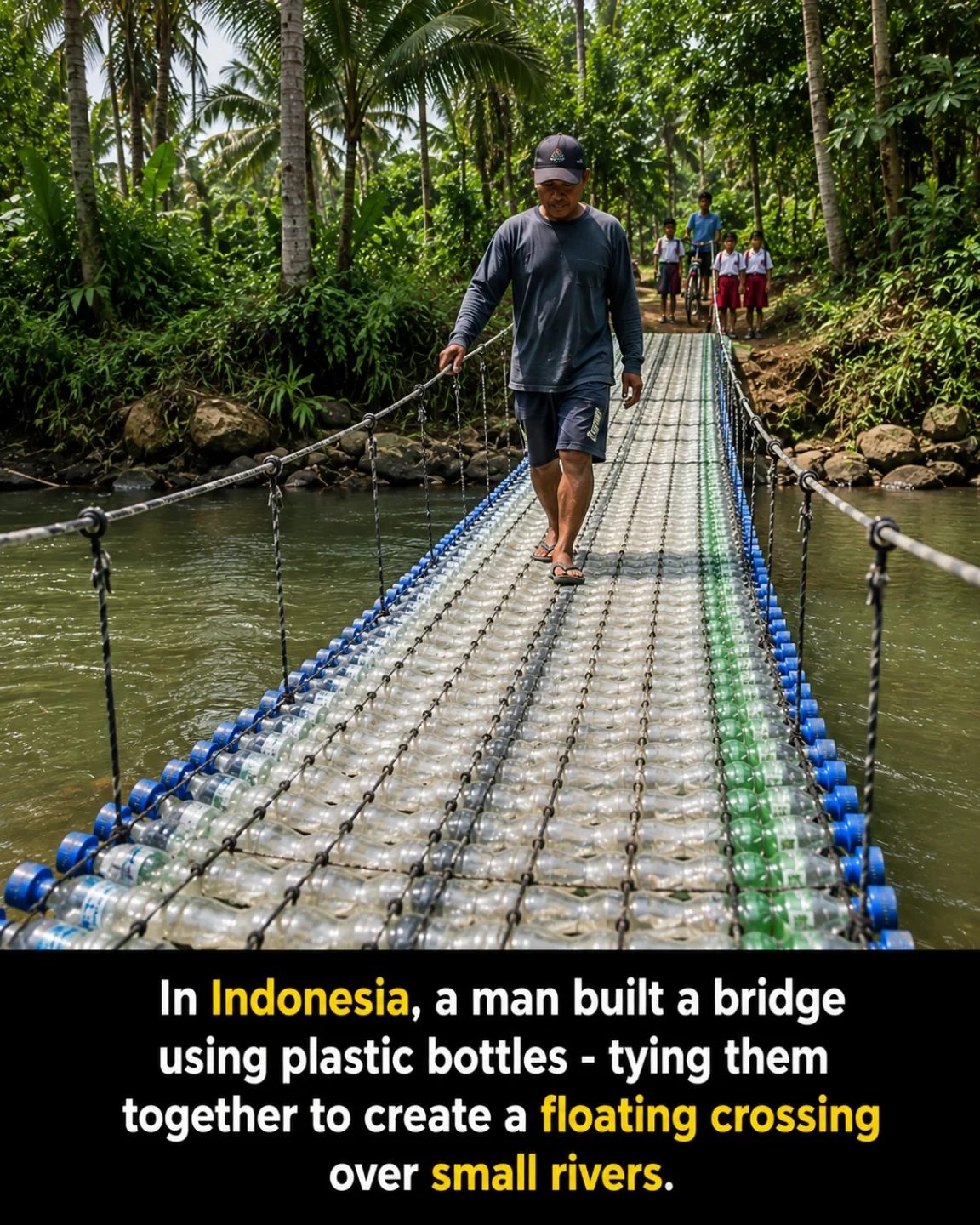
Floating Bridges: An Innovative Use of Recycled Plastic Bottles
Floating bridges constructed from plastic bottles offer a creative and sustainable solution for crossing small rivers, particularly in regions with limited resources. This approach not only addresses environmental concerns but also provides practical benefits to local communities.
Context / Why this matters
Plastic pollution is a global issue, with millions of tons of plastic waste ending up in oceans and waterways annually. In Indonesia, a country known for its extensive coastline and numerous rivers, plastic waste management is a significant challenge. Innovative solutions like floating bridges made from plastic bottles help to mitigate this problem by repurposing waste materials into functional infrastructure.
Main discussion
The Concept of Floating Bridges
Floating bridges have been used in various forms throughout history, often as temporary or emergency solutions. The modern concept of using plastic bottles to create these bridges adds a layer of ecologically responsible innovation. By tying plastic bottles together, these bridges can float on water, providing a stable crossing over small rivers.
How They Are Constructed
The construction process involves several key steps:
- Collection of Plastic Bottles: The first step is to gather a sufficient number of plastic bottles. These bottles are typically sourced from local waste or recycling centers.
- Securing the Bottles: The bottles are tied together in rows, usually using rope or strong string. This creates a stable platform that can support weight.
- Structural Integration: Additional elements, such as wooden planks or bamboo, can be added to the top of the floating structure to create a more solid walking surface.
- Anchoring and Stability: The bridge is anchored to the riverbanks or nearby stable points to prevent it from drifting. Ropes and stakes are commonly used for this purpose.
Benefits of Plastic Bottle Bridges
Environmental Impact
Using plastic bottles to build bridges reduces the amount of plastic waste that would otherwise end up in landfills or waterways. This not only helps to keep the environment clean but also encourages recycling and waste management.
Cost-Effective Solution
Building a bridge from plastic bottles is significantly cheaper than traditional construction methods. This makes it an attractive option for communities with limited financial resources, especially in rural or remote areas.
Community Engagement
The process of constructing these bridges often involves community participation, fostering a sense of collective responsibility and environmental stewardship.
Practical Applications and Success Stories
In Indonesia, the use of plastic bottle bridges has proven to be a practical and effective solution. These bridges provide safe and reliable crossings over small rivers, improving access to essential services and reducing travel time for local residents. The innovative use of recycled materials showcases how creativity and resourcefulness can lead to practical and sustainable solutions.
Practical tips
Building Your Own Plastic Bottle Bridge
If you're considering building a plastic bottle bridge, here are some practical tips to get you started:
- Assess the Site: Choose a location where the river is relatively calm and the current is not too strong. Measure the width of the river to determine the length of the bridge needed.
- Gather Materials: Collect a sufficient number of plastic bottles. The exact number will depend on the width and length of the bridge. You will also need ropes, wooden planks, and stakes for anchoring.
- Prepare the Bottles: Clean the bottles and ensure they are securely tied together in rows. This can be done by laying the bottles side by side and tying them with strong rope.
- Create the Bridge Structure: Add a layer of wooden planks or bamboo to the top of the floating structure to create a stable walking surface.
- Anchor the Bridge: Secure the bridge to stable points on either side of the river using ropes and stakes. Make sure the bridge is firmly anchored to prevent drifting.
- Test the Bridge: Before allowing people to use it, thoroughly test the bridge to ensure it can support the required weight and is stable.
Important takeaways
Floating bridges made from plastic bottles are a sustainable and cost-effective solution for crossing small rivers. They offer a practical way to utilize recycled materials, reduce plastic waste, and provide safe access to communities. By involving the local community in the construction process, these bridges can foster a sense of collective responsibility and environmental stewardship.
Conclusion
Innovative solutions like floating bridges made from plastic bottles demonstrate the power of creativity and resourcefulness in addressing environmental challenges. By repurposing waste materials into functional infrastructure, these bridges not only help to keep the environment clean but also provide practical benefits to local communities. Whether in Indonesia or elsewhere, the concept of using recycled materials for construction offers a promising path toward sustainability and community development.
Watch the Reel
Questions readers ask
How are the plastic bottles used to build the floating bridge?
The plastic bottles are typically filled with sand or other materials for stability and then interconnected with ropes or cables to form a durable, buoyant structure. This design allows the bridge to float on water while supporting the weight of pedestrians.
What are the benefits of using recycled plastic bottles for bridge construction?
Using recycled plastic bottles for bridge construction helps to reduce plastic waste in the environment. Additionally, this approach is cost-effective, making it an ideal solution for resource-limited areas. It also provides a practical way to cross small rivers, improving accessibility for local communities.
Can these floating bridges support vehicles as well as pedestrians?
The design of the floating bridges is generally intended for pedestrian use. While some designs may be able to support light vehicles, it’s important to assess the load capacity and stability of the bridge in each specific case. For larger vehicles, additional reinforcement may be necessary.
How does the construction of these bridges help with plastic pollution?
By repurposing plastic bottles that would otherwise end up in landfills or waterways, these floating bridges reduce the amount of plastic waste in the environment. This not only helps to clean up local ecosystems but also raises awareness about the potential uses for recycled materials.
What materials are typically used alongside the plastic bottles in the construction?
In addition to the plastic bottles, materials such as ropes, cables, bamboo, or other locally sourced materials are often used to create the structure. These materials help to stabilize the bridge and ensure its durability, making it a feasible solution for various environmental conditions.
Are there any specific regions in Indonesia where these floating bridges are more commonly used?
While the concept can be applied anywhere with small rivers and limited resources, these bridges are particularly useful in rural and remote areas of Indonesia. These regions often face challenges related to river crossings and plastic waste management, making the dual-purpose bridge an ideal solution.
How can I build a DIY floating bridge using recycled plastic bottles?
To build a DIY floating bridge, start by collecting and cleaning a large number of plastic bottles. Fill each bottle with sand or other weighted materials. Connect the bottles using ropes or cables, and arrange them in a pattern that will float and support the necessary weight. Ensure the bridge is securely anchored to prevent it from drifting.
Related deep dives
Similar reads based on topic and creator.



Recent articles
Fresh deep dives from the latest Reels we unpacked.




Comments
Be the first to comment.