Endangered Animals in Indonesia and Beyond
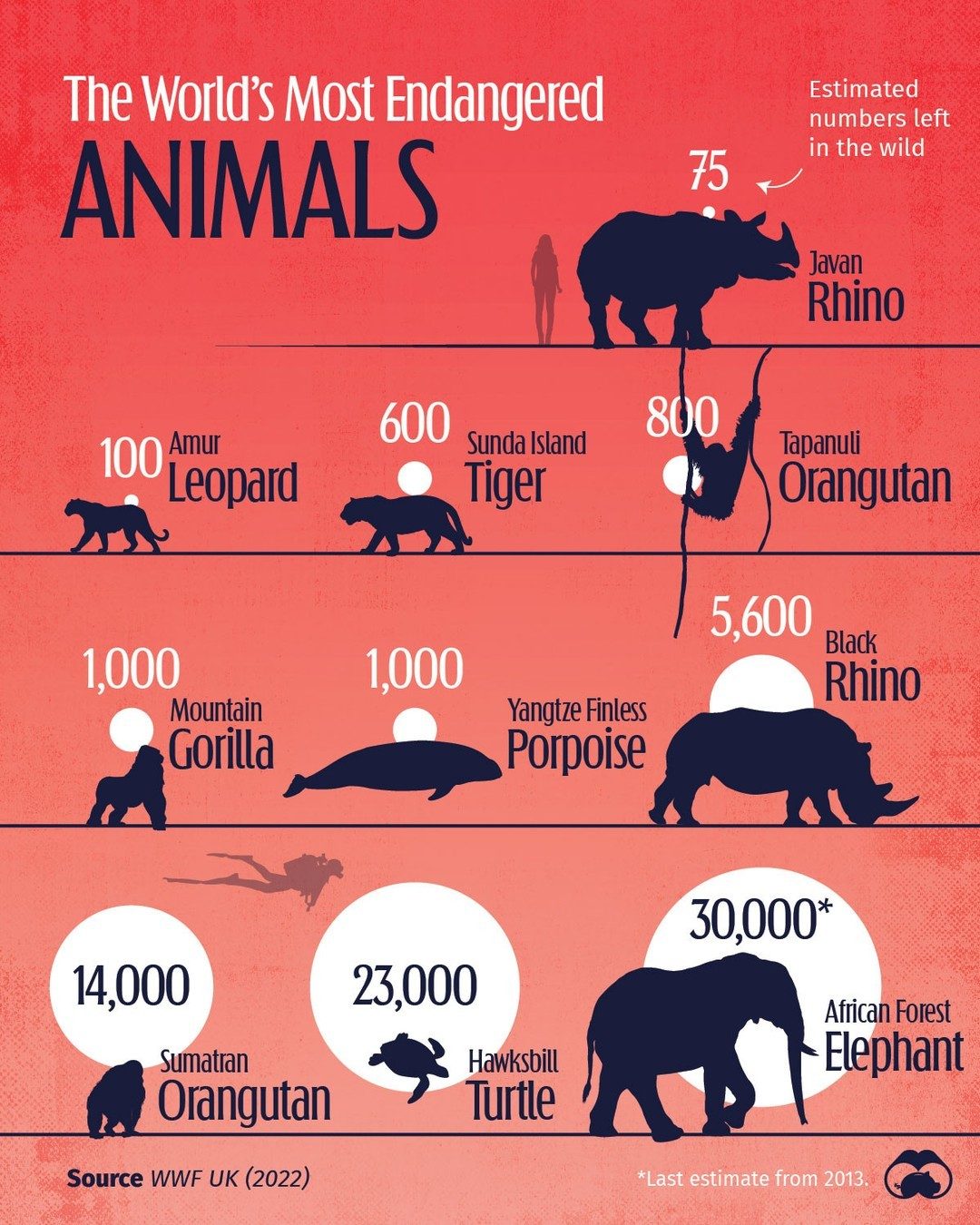
Indonesia is home to some of the world's most endangered animals, a stark reminder of the critical need for conservation efforts. Human activities have led to a significant decline in wildlife populations, with over 460 species declared extinct in the past decade. This article explores the most endangered animals by the numbers found in the wild, as estimated by the World Wildlife Fund (WWF) UK.
Context: Why This Matters
The decline in wildlife populations is a global issue that affects ecosystems, biodiversity, and even human health. Endangered species are often indicators of broader environmental problems, such as habitat destruction, climate change, and pollution. Understanding which species are most at risk helps prioritize conservation efforts and allocate resources effectively.
Main Discussion
The Javan Rhino
The Javan rhino (Rhinoceros sondaicus) is one of the most critically endangered large mammals. With an estimated 75 individuals left in the wild, the Javan rhino is on the brink of extinction. These rhinos are primarily found in Ujung Kulon National Park in Indonesia. Conservation efforts, including anti-poaching measures and habitat protection, are crucial for their survival.
The Amur Leopard
The Amur leopard (Panthera pardus orientalis) is another critically endangered species, with only around 100 individuals remaining in the wild. Found in the Russian Far East and northeastern China, the Amur leopard faces threats from habitat loss, poaching, and prey base decline. Conservation initiatives, including habitat restoration and community engagement, are essential for their recovery.
The African Forest Elephant
The African forest elephant (Loxodonta cyclotis) has an estimated 30,000 individuals left in the wild, but this number is based on a 2013 estimate. These elephants are crucial for maintaining the biodiversity of their forest habitats. Poaching for ivory and habitat destruction are the primary threats to their survival. Conservation efforts focus on anti-poaching patrols, community education, and sustainable development initiatives.
The Sunda Island Tiger
The Sunda Island tiger (Panthera tigris sumatrae), also known as the Sumatran tiger, is critically endangered with around 600 individuals remaining. These tigers are found in the Indonesian islands of Sumatra and parts of the Batak Islands. Deforestation, habitat fragmentation, and poaching are the main threats to their survival. Conservation strategies include habitat protection, anti-poaching measures, and community-based conservation programs.
The Tapanuli Orangutan
The Tapanuli orangutan (Pongo tapanuliensis) is one of the rarest great apes, with approximately 800 individuals left in the wild. Found in the Batang Toru forest in North Sumatra, Indonesia, these orangutans face threats from habitat destruction due to mining, logging, and agricultural expansion. Conservation efforts focus on habitat protection and sustainable land-use practices.
The Mountain Gorilla
The mountain gorilla (Gorilla beringei beringei) has around 1,000 individuals remaining in the wild. Found in the Virunga Mountains and Bwindi Impenetrable National Park in Uganda, these gorillas face threats from habitat loss, disease, and civil unrest. Conservation efforts include ecotourism, community-based conservation, and anti-poaching patrols.
The Yangtze Finless Porpoise
The Yangtze finless porpoise (Neophocaena asiaeorientalis asiaeorientalis) has around 1,000 individuals remaining in the wild. Found in the Yangtze River in China, these porpoises are threatened by habitat degradation, pollution, and boat collisions. Conservation initiatives focus on habitat restoration, pollution control, and sustainable fishing practices.
The Black Rhino
The black rhino (Diceros bicornis) has around 5,600 individuals remaining in the wild. Found in several African countries, including Namibia, South Africa, and Kenya, these rhinos face threats from poaching and habitat loss. Conservation efforts include anti-poaching measures, habitat protection, and community engagement.
The Sumatran Orangutan
The Sumatran orangutan (Pongo abelii) has around 14,000 individuals remaining in the wild. Found in the forests of Sumatra, Indonesia, these orangutans face threats from habitat destruction, poaching, and the illegal pet trade. Conservation efforts focus on habitat protection, anti-poaching measures, and community-based conservation programs.
The Hawksbill Turtle
The hawksbill turtle (Eretmochelys imbricata) has around 23,000 individuals remaining in the wild. Found in tropical and subtropical oceans worldwide, these turtles face threats from habitat destruction, poaching, and incidental capture in fishing gear. Conservation efforts include habitat protection, sustainable fishing practices, and community education.
Practical Tips
For those interested in supporting conservation efforts, here are some practical tips:
Support Conservation Organizations
Organizations like the World Wildlife Fund (WWF) work tirelessly to protect endangered species and their habitats. Donating to these organizations or volunteering your time can make a significant difference.
Reduce, Reuse, Recycle
Reducing your environmental footprint can help mitigate the threats facing endangered species. By reducing waste, reusing items, and recycling, you can contribute to a healthier planet for all species.
Raise Awareness
Educating others about the plight of endangered species can help garner more support for conservation efforts. Share information on social media, organize community events, or participate in local conservation projects.
Make Sustainable Choices
Opt for products that are sustainably sourced and avoid items that contribute to habitat destruction, such as palm oil from unsustainable sources. Supporting eco-friendly businesses can also make a positive impact.
Participate in Ecotourism
Ecotourism can provide economic incentives for conservation. By visiting national parks and wildlife reserves, you can support local communities and contribute to the protection of endangered species.
Important Takeaways
Endangered animals face numerous threats, including habitat destruction, poaching, and climate change. Conservation efforts are crucial for protecting these species and their habitats. By supporting conservation organizations, reducing your environmental footprint, raising awareness, making sustainable choices, and participating in ecotourism, you can contribute to the preservation of endangered animals.
Conclusion
The future of endangered animals like the Javan rhino, Amur leopard, and African forest elephant depends on sustained conservation efforts. By understanding the threats these species face and taking action, we can help ensure their survival and protect the biodiversity of our planet.
Watch the Reel
Questions readers ask
What are the most endangered animals in Indonesia?
Indonesia is home to several critically endangered species, including the Javan Rhino and the Sumatran Tiger. The Javan Rhino, with only around 74 individuals left in the wild, is one of the world's rarest large mammals. Other endangered species include the Sumatran Elephant, the Bali Starling, and the Komodo Dragon, each facing significant threats due to habitat loss and poaching.
Why is the Javan Rhino considered one of the most endangered animals in the world?
The Javan Rhino is on the brink of extinction with less than 80 individuals remaining. This critically low population makes it extremely vulnerable to threats such as poaching and disease. Conservation efforts are focused on protecting the remaining Javan Rhinos and their habitat in Ujung Kulon National Park, Indonesia.
How does the World Wildlife Fund (WWF) contribute to wildlife protection in Indonesia?
The World Wildlife Fund (WWF) plays a pivotal role in wildlife protection in Indonesia by conducting research, implementing conservation programs, and collaborating with local communities. They work tirelessly to safeguard endangered species, monitor wildlife numbers, and restore habitats, making a significant impact on the survival of Indonesia's unique wildlife.
What is the current status of the Amur Leopard population in Indonesia?
The Amur Leopard is critically endangered, with only a few hundred individuals remaining in the wild. While the Amur Leopard is primarily found in Russia and China, efforts to protect this species can provide valuable insights for conserving other endangered big cats, such as the Sumatran Tiger, in Indonesia.
What are the primary threats to Indonesia's endangered species?
The primary threats to Indonesia's endangered species include habitat destruction due to deforestation, agriculture, and urban development. Additionally, poaching, illegal wildlife trade, and climate change exacerbate the decline of these species. Understanding these threats is crucial for developing effective conservation strategies.
What can be done to preserve Indonesia's unique wildlife?
Preserving Indonesia's unique wildlife requires a multi-faceted approach. This includes enforcing stricter anti-poaching laws, promoting sustainable land use, and supporting local communities in conservation efforts. Additionally, raising awareness about the plight of endangered species and providing resources for wildlife protection are essential steps in safeguarding Indonesia's biodiversity.
How do endangered species in Indonesia serve as indicators of broader environmental problems?
Endangered species in Indonesia often act as sentinels for broader environmental issues. Their decline can signal problems such as habitat loss, pollution, and climate change. By protecting these species, conservation efforts can address these underlying environmental problems, benefiting both wildlife and human communities.
Recent articles
Fresh deep dives from the latest Reels we unpacked.




Comments
Be the first to comment.