India's Top 50 Companies: A Comprehensive Overview
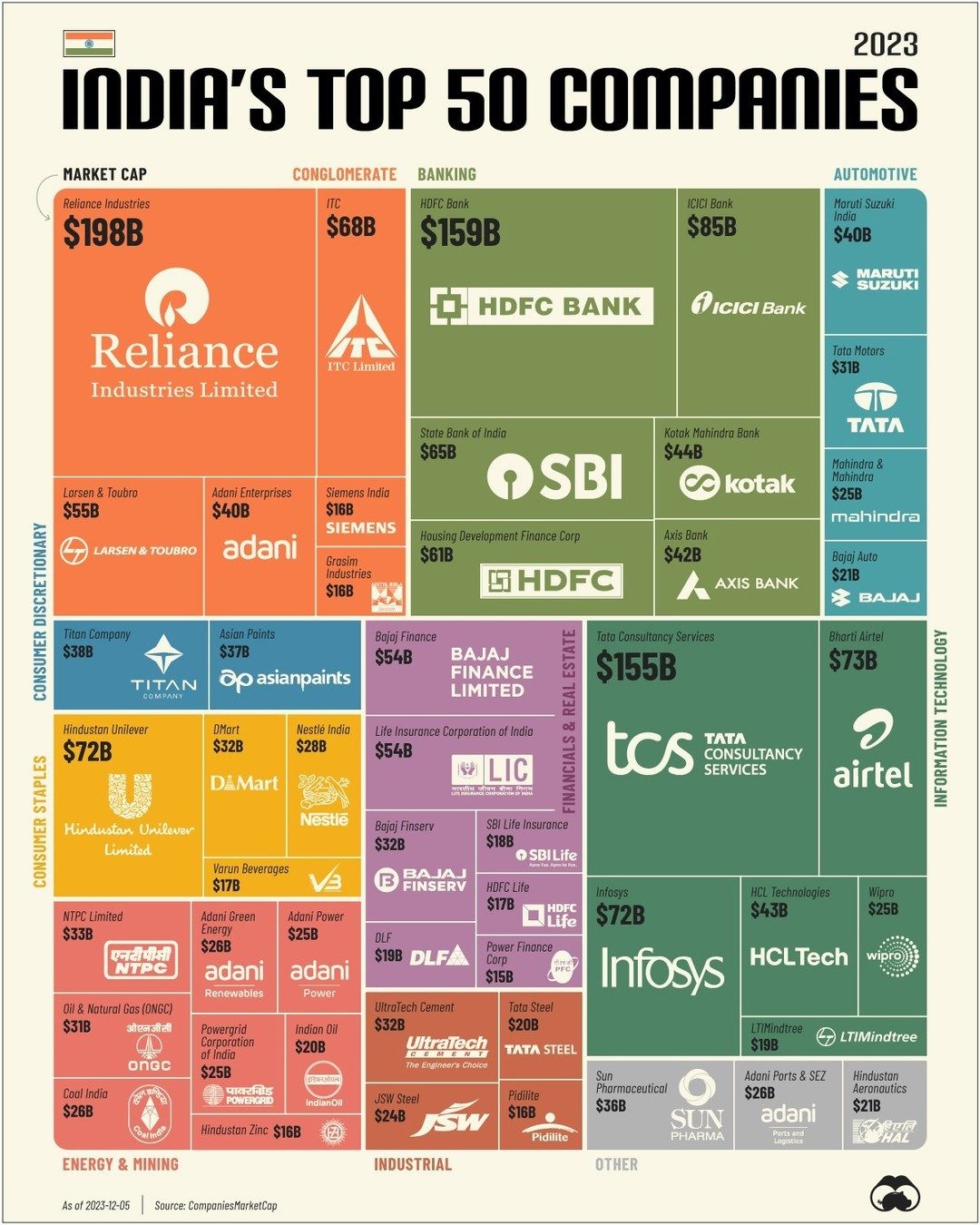
The Indian stock market's valuation reached a historic milestone in 2023, surpassing $4 trillion for the first time. This achievement places India as the world’s fifth-largest equity market, closely trailing Hong Kong, which stands at approximately $4.7 trillion. The collective market capitalization of India's top 50 companies exceeds $2.1 trillion, or ₹180 trillion in Indian Rupees. These companies span various sectors, including automotive, consumer discretionary, consumer staples, financials & real estate, and information technology. This article delves into the top 50 companies, providing insights into their market capitalization and industry distribution.
Why This Matters
Understanding the market capitalization of India's top companies offers valuable insights into the country's economic landscape. These companies are significant drivers of economic growth, influencing job creation, innovation, and overall market sentiment. By analyzing the top 50 companies, investors and stakeholders can gain a clearer picture of the sectors driving India's economic momentum and the potential opportunities and challenges within each industry.
Main Discussion
Market Capitalization and Sector Breakdown
India's top 50 companies are categorized into five key sectors: Automotive, Consumer Discretionary, Consumer Staples, Financials & Real Estate, and Information Technology. Each sector plays a crucial role in the broader economy.
Automotive Sector
The automotive sector is a vital contributor to India's economy, known for its robust supply chain and manufacturing capabilities. Key players in this sector include:
-
Reliance Industries: With a market capitalization of $198 billion, Reliance Industries is the top company in India. Although primarily known for its energy and petrochemicals divisions, its involvement in the automotive sector through various subsidiaries and partnerships is noteworthy.
-
Maruti Suzuki: Known for its extensive market presence and wide range of vehicles, Maruti Suzuki has a market capitalization of $85 billion.
-
Tata Motors: With a market cap of $40 billion, Tata Motors is another major player, known for its diverse range of vehicles, including passenger cars, commercial vehicles, and luxury brands like Jaguar and Land Rover.
-
Bajaj Auto: This company, valued at $21 billion, specializes in motorcycles, scooters, and three-wheelers, contributing significantly to India's automotive exports.
Consumer Discretionary
The consumer discretionary sector encompasses a broad range of products and services, from luxury goods to entertainment and leisure. Notable companies in this sector include:
-
Bharti Airtel: With a market capitalization of $73 billion, Bharti Airtel is a leading telecommunications company in India, offering a wide range of services, including mobile, broadband, and digital TV.
-
Asian Paints: This company, valued at $72 billion, is a major player in the paints and coatings industry, known for its high-quality products and extensive distribution network.
-
Tata Consultancy Services (TCS): The leading IT services company in India, TCS has a market capitalization of $72 billion, offering a wide range of IT services and solutions to clients worldwide.
Consumer Staples
Consumer staples are essential goods that people need regardless of economic conditions. Key companies in this sector include:
-
Hindustan Unilever: With a market capitalization of $72 billion, Hindustan Unilever is a leading player in the fast-moving consumer goods (FMCG) industry, known for its wide range of products, including food, beverages, and personal care items.
-
Nestle India: Valued at $28 billion, Nestle India is a major player in the food and beverage industry, offering a diverse range of products, including coffee, confectionery, and dairy products.
Financials & Real Estate
The financials and real estate sector is a cornerstone of India's economy, providing essential banking, insurance, and real estate services. Key companies in this sector include:
-
HDFC Bank: With a market capitalization of $68 billion, HDFC Bank is one of the largest private sector banks in India, known for its robust financial services and extensive branch network.
-
ICICI Bank: Another major player, ICICI Bank has a market capitalization of $159 billion and offers a wide range of financial services, including retail banking, corporate banking, and insurance.
-
Kotak Mahindra Bank: Valued at $25 billion, Kotak Mahindra Bank is a leading private sector bank in India, known for its customer-centric approach and innovative financial products.
Information Technology
The information technology sector is a significant contributor to India's economy, known for its talented workforce and innovative solutions. Key players in this sector include:
-
Tata Consultancy Services (TCS): Already mentioned in the consumer discretionary section, TCS's market capitalization of $72 billion underscores its importance in the IT sector.
-
Infosys: With a market capitalization of $155 billion, Infosys is a leading global IT services company, offering a wide range of solutions, including consulting, application development, and business process outsourcing.
-
Wipro: Valued at $18 billion, Wipro is another major IT services company, known for its innovative solutions and extensive client base.
Practical Tips
Understanding the market capitalization and sector distribution of India's top 50 companies can provide valuable insights for investors. Here are some practical tips to consider:
-
Diversify Your Portfolio: Investing across different sectors can help mitigate risks and maximize returns. For instance, including companies from the automotive, consumer discretionary, and information technology sectors can provide a balanced approach to investing.
-
Monitor Economic Trends: Staying updated with economic trends and market movements can help investors make informed decisions. For example, the recent surge in the Indian stock market highlights the importance of monitoring key economic indicators.
-
Analyze Financial Statements: Regularly reviewing financial statements and reports from companies can provide insights into their performance and potential for growth. This includes analyzing revenue, profit margins, and debt levels.
-
Consider Market Capitalization: Market capitalization is a critical metric that can indicate a company's size, stability, and growth potential. Investors should consider companies with strong market capitalization and a proven track record of performance.
Important Takeaways
- India has achieved a historic milestone with its stock market valuation hitting $4 trillion in 2023, positioning itself as the world's fifth-largest equity market.
- The top 50 companies in India span various sectors, including automotive, consumer discretionary, consumer staples, financials & real estate, and information technology.
- These companies play a crucial role in driving economic growth and innovation in India, contributing significantly to job creation and market sentiment.
- Diverse market capitalization and sector distribution offer opportunities for investors to build a balanced portfolio, mitigate risks, and maximize returns.
Conclusion
India's top 50 companies represent a diverse and robust economic landscape, driving innovation, job creation, and market growth. Understanding the market capitalization and sector distribution of these companies provides valuable insights for investors, allowing them to make informed decisions and maximize their returns. By staying updated with economic trends, monitoring financial statements, and diversifying their portfolios, investors can navigate the dynamic Indian market and capitalize on emerging opportunities.
Watch the Reel
Recent articles
Fresh deep dives from the latest Reels we unpacked.




Comments
Be the first to comment.